

Huo Xiang Zheng Qi San
Agastache Powder to Rectify the Qi
- Category
- Formulas that Expel Dampness
- Subcategory
- Formulas that Transform Damp Turbidity
- Ingredients
- 11 herbs
Actions
What does Huo Xiang Zheng Qi San do?
Huo Xiang Zheng Qi San releases an external Wind-Cold exterior while aromatically transforming internal turbid dampness and rectifying the Qi mechanism of the Spleen and Stomach. It is built for the combined "outside cold, inside damp" pattern rather than either problem alone, using aromatic transformation as its signature strategy.
- Releases the exterior and dispels Wind-Cold — Huo Xiang as chief, assisted by Zi Su Ye and Bai Zhi.
- Aromatically transforms damp-turbidity in the middle burner — Huo Xiang's aromatic quality is the formula's signature approach, distinct from bitter-drying or diuretic damp-resolving methods.
- Dries dampness, transforms Phlegm, and descends rebellious Stomach Qi to stop nausea/vomiting — Ban Xia, Hou Po, and Chen Pi.
- Strengthens the Spleen and drains dampness through urination — Bai Zhu, Fu Ling, and Da Fu Pi.
- Diffuses Lung Qi to assist the exterior release and regulate the Qi mechanism up and down — Jie Geng.
Source: cross-referenced against multiple online sources; Bensky & Barolet, Formulas & Strategies; classical formulation from the Tai Ping Hui Min He Ji Ju Fang (Formulas of the Peaceful Benevolent Dispensary, Song Dynasty, ~1078–1085 CE).
Indications
What is Huo Xiang Zheng Qi San used for?
Huo Xiang Zheng Qi San is used for the combined pattern of external Wind-Cold with internal damp-turbidity obstructing the Spleen and Stomach — the classic acute gastroenteritis-like or "travel/seasonal stomach flu" presentation with chills, headache, and digestive upset together.
- Chills, fever, and headache from an external Wind-Cold invasion, often with a heavy, congested sensation.
- Nausea, vomiting, and epigastric or abdominal fullness/distention from Stomach Qi failing to descend.
- Diarrhea or loose stool from damp-turbidity obstructing the Spleen and Intestines.
- Heaviness of the body and limbs, poor appetite, and a stifling sensation in the chest or epigastrium from internal dampness.
- Acute gastrointestinal upset associated with seasonal damp-heat weather, unfamiliar food or water, or travel ("Summerheat-damp" turbidity) — sometimes described in modern terms as gastroenteritis-type illness.
Source: cross-referenced against multiple online sources; Bensky & Barolet, Formulas & Strategies; Tai Ping Hui Min He Ji Ju Fang.
Western Uses:
What conditions is Huo Xiang Zheng Qi San used for in modern practice?
Huo Xiang Zheng Qi San releases an exterior wind-cold while transforming internal turbid dampness (the "stomach flu" picture of chills, nausea, vomiting, diarrhoea and a heavy head), so it is referenced for acute digestive-and-exterior upsets: influenza, "intestinal flu," non-specific acute colitis, acute gastroenteritis, and acute diarrhoea.
It is chosen for the exterior-cold-with-damp pattern, not for a diagnosis. Persistent vomiting and diarrhoea cause dehydration — especially dangerous in children and the elderly — and diarrhoea with blood, high fever, or severe pain needs medical assessment. Traditional-use correlates only, not a treatment claim.
Source: Sacred Lotus sources & references (pattern) + Bensky & Barolet, Formulas & Strategies; biomedical correlates as reference only. Not medical advice.
Ingredients
11 substances in Huo Xiang Zheng Qi San — each links to its full herb monograph.
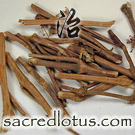 Huo Xiang12 gAromatic Herbs that Transform and Dissolve Dampness
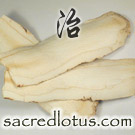 Bai Zhi6 gWarm, Spicy Herbs that Release the Exterior
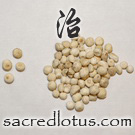 Ban Xia9 gWarm Herbs that Transform Phlegm-Cold
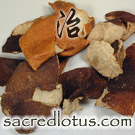 Chen Pi9 gRegulate the Qi
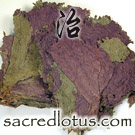 Zi Su Ye6 gWarm, Spicy Herbs that Release the Exterior
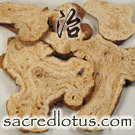 Bai Zhu12 gTonify Qi
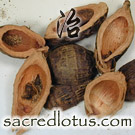 Da Fu Pi9 gRegulate the Qi
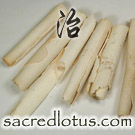 Fu Ling9 gRegulate Water and Drain Dampness
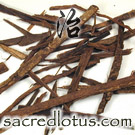 Hou Po9 gAromatic Herbs that Transform and Dissolve Dampness
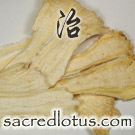 Jie Geng9 gWarm Herbs that Transform Phlegm-Cold
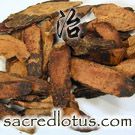 Zhi Gan Cao3 gTonify Qi
Preparation & dosage
How is Huo Xiang Zheng Qi San prepared?
Huo Xiang Zheng Qi San is classically a powder (san) simmered as a light decoction rather than a long-cooked, concentrated brew, keeping preparation brief so Huo Xiang's aromatic, volatile qualities are not driven off; today it is most commonly encountered as a standardized oral liquid, dropping pill, or capsule.
- Classical form — the named herbs are ground to a coarse powder and decocted briefly, rather than simmered for a long period, to preserve Huo Xiang's aromatic, dispersing action.
- Ginger/jujube — some formularies note fresh ginger and jujube are traditionally added when decocting the powder into a draught, in the same manner used for other Song-dynasty formulas from the same source text (for example, Su Zi Jiang Qi Tang). Flagged here because our composition data lists the eleven core herbs above without Sheng Jiang or Da Zao as separate ingredient entries — this preparation detail is a classical practice note, not a claim about the formula's core ingredient list.
- Modern forms — contemporary manufactured versions (oral liquid, dropping pills, capsules) standardize the dose and are the forms used in most recent clinical research.
- Taken warm, in divided doses, particularly at the onset of acute Wind-Cold-damp symptoms.
Source: cross-referenced against multiple online sources; Bensky & Barolet, Formulas & Strategies; Tai Ping Hui Min He Ji Ju Fang.
Safety — read before use
What are the cautions for Huo Xiang Zheng Qi San?
Huo Xiang Zheng Qi San is built for an external Wind-Cold/internal-damp pattern and is generally unsuitable for damp-heat or pure heat presentations; some traditional liquid preparations have historically used alcohol as a solvent, which is a relevant public-safety consideration rather than administration guidance.
- Not for damp-heat or heat-predominant patterns — signs such as high fever, thirst, yellow tongue coat, or scanty dark urine suggest heat rather than the cold-damp pattern this formula addresses.
- Not a substitute for care of severe or persistent vomiting/diarrhea — dehydration, high fever, or symptoms that worsen or persist warrant reassessment rather than continued self-use.
- Some traditional oral-liquid preparations have used alcohol as a solvent — a relevant consideration for children, pregnancy, or patients avoiding alcohol; formulations vary by manufacturer.
- Pregnancy — as with many formulas containing Qi-moving and aromatic herbs, caution and professional guidance is generally advised in pregnancy.
- Traditionally intended for short-term, acute-illness use rather than long-term or habitual use.
Source: cross-referenced against multiple online sources; Bensky & Barolet, Formulas & Strategies.
Originally Appeared In:
- Imperial Grace Formulary of the Tai Ping Era (Tai Ping Hui Min He Ji Ju Fang)
Notes:
How does Huo Xiang Zheng Qi San differ from related formulas?
Huo Xiang Zheng Qi San is distinguished by its combined exterior-interior strategy — releasing Wind-Cold while aromatically transforming dampness — setting it apart from formulas that address only the exterior or only internal dampness.
- Ping Wei San (Calm the Stomach Powder) — treats internal dampness obstructing the Spleen/Stomach with a similar Spleen-strengthening, Qi-regulating logic, but has no exterior Wind-Cold-releasing herbs (no Zi Su Ye/Bai Zhi) and no Jie Geng, making it a purely internal damp formula rather than a combined exterior-interior one.
- Huo Po Xia Ling Tang (Agastache, Magnolia Bark, and Poria Decoction) — shares several damp-transforming herbs (Huo Xiang, Hou Po, Ban Xia) but is generally described as addressing Damp-Warmth (damp with more heat) at the Qi level rather than a Wind-Cold exterior, and typically omits the Wind-Cold-releasing herbs.
- Er Chen Tang (Two-Cure Decoction) — the Phlegm-damp core (Ban Xia, Chen Pi, Fu Ling, Gan Cao) embedded within Huo Xiang Zheng Qi San's Phlegm-transforming assistants closely tracks Er Chen Tang's own composition, though Huo Xiang Zheng Qi San adds the exterior-releasing and Spleen-strengthening/Qi-diffusing herbs Er Chen Tang lacks.
- Classical source and lineage — Huo Xiang Zheng Qi San originates in the Tai Ping Hui Min He Ji Ju Fang (Formulas of the Peaceful Benevolent Dispensary, Song Dynasty Imperial Medical Bureau, ~1078–1085 CE), the same influential formulary source as Su Zi Jiang Qi Tang, and remains one of the most widely used patent formulas in East Asia for acute gastrointestinal/exterior-damp illness (known in Korean medicine as Gwakhyangjeongqisan/Gwakjeongtang).
Source: cross-referenced against multiple online sources; Bensky & Barolet, Formulas & Strategies.
Clinical Studies & Research:
Is there modern research on Huo Xiang Zheng Qi San?
Huo Xiang Zheng Qi San and its modern manufactured forms (such as Huoxiang Zhengqi oral liquid and dropping pills) have a substantial modern research base spanning gastrointestinal, dermatological, and heat-illness applications. This research is presented as scientific context on traditional use, not a therapeutic claim.
- A randomized, double-blind, placebo-controlled trial of a modified version of the formula (known in Korean medicine as Gwakjeongtang) evaluated efficacy and safety for diarrhea-predominant irritable bowel syndrome.
- A registered trial protocol (the "CHAIRS" study) examined Huoxiang Zhengqi for diarrhea-predominant irritable bowel syndrome using a randomized controlled design.
- Research on Huoxiang Zhengqi oral liquid has examined effects on gut microbiome composition, offering a mechanistic angle on its traditional damp-resolving, digestive action.
- A study of Huoxiang Zhengqi dropping pills examined effects related to exertional heat stroke, reflecting the formula's traditional use for summer-damp/heat-turbidity presentations.
Sources: PMID 42211410; PMID 34311755; PMID 35401199; PMID 39840114.
Sources & References
Compiled and edited by Thomas Dehli, Founder & Editor, Sacred Lotus Updated
The information here is referenced from numerous sources — teachers, practitioners, class notes from Five Branches University, the books below, and the published research literature, with citations given as resolvable PubMed identifiers. Where sources disagree, I have flagged the discrepancies directly. If facts couldn't be verified, I have left them out. How we source our content.
Reference information for students and practitioners — not medical advice. Consult a qualified practitioner. Terms of use.
Chinese Formulas Books & References
 https://amzn.to/4fYI3f8
 https://amzn.to/4j55NRA
 https://amzn.to/4gMROyv
 https://amzn.to/4h7msSK