
Herba Agastaches Rugosus, Herba Pogostemonis Patchouli, Agastache
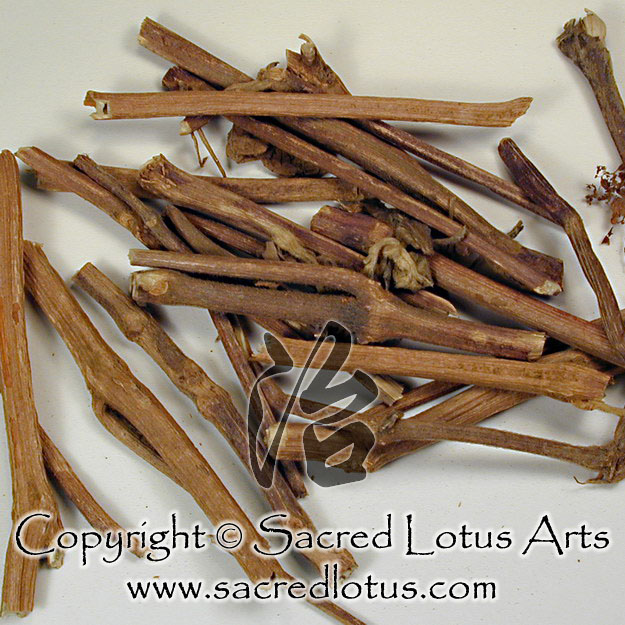
Materia Medica Data
- Temperature
- Slightly Warm
- Nature & Flavour
- Spicy, Slightly Warm
- Channels Entered
- LU, SP, ST
- Latin (pharmaceutical)
- Herba Agastaches Rugosus, Herba Pogostemonis
- Chinese
- 藿香
- Tone Marks
- huò xiāng
Chinese Herb Actions
What is Huo Xiang used for in Chinese medicine?
Huo Xiang aromatically transforms dampness, releases summer-damp exterior invasions, and harmonizes the Spleen and Stomach to stop nausea and vomiting. It is the chief herb of the classic formula Huo Xiang Zheng Qi San, used for the combined pattern of an external wind-cold invasion layered on internal digestive dampness — a very common presentation in humid summer weather (fullness, nausea, diarrhea, headache, chills).
Its main traditional actions:
- Aromatically transforms dampness & releases summer-damp from the exterior — for abdominal/epigastric fullness and distension, poor appetite, diarrhea, nausea, vomiting, and a greasy tongue coat from summer-dampness affecting the Spleen and Stomach, often with a mild accompanying exterior chill.
- Harmonizes the middle jiao, awakens the Spleen, stops vomiting — for nausea and vomiting, including morning sickness, especially where turbid dampness obstructs the middle burner.
- Traditionally applied for fungal skin conditions — topical use for dermatosis and fungal infections of the hands and feet.
Source: Sacred Lotus sources & references, cross-referenced against multiple online sources and materia medica consensus (Bensky, Chinese Herbal Medicine: Materia Medica, 3rd ed.; Chen & Chen, Chinese Medical Herbology and Pharmacology). Traditional-use framing; not medical advice.
Chinese Herb Dosage
What is the typical dosage of Huo Xiang, and how is it prepared?
Typically 5–10 g in decoction (some sources give 3–9 g, with fresh herb used at roughly double the dried dose). A key preparation point: because Huo Xiang's action depends on its aromatic volatile oils, it should be added late in the decoction process (added near the end of boiling, not simmered with the other herbs from the start) so the volatile constituents are not driven off — the same late-addition principle used for other aromatic damp-transforming herbs.
Source: Sacred Lotus sources & references; standard materia medica dosage ranges (Bensky; Chen & Chen). Reference only — not a prescription.
Chinese Herb Contraindications & Cautions
Are there cautions for using Huo Xiang?
Huo Xiang is aromatic and drying, so it is traditionally cautioned against in yin deficiency with heat/fire signs (e.g., blazing deficiency-fire, dry mouth/throat, or other heat-from-yin-deficiency presentations), since its warming, drying nature can aggravate an already depleted, hot-natured constitution.
Source: Sacred Lotus sources & references; materia medica consensus (Bensky; Chen & Chen). Traditional-use caution, not medical advice.
Chinese Herb Toxicity & Overdose
Low. Huo Xiang (both Agastache rugosa and Pogostemon cablin) has an extensive history of dietary, aromatic, and medicinal use — patchouli oil is also widely used in perfumery — with no significant toxicity reported at standard decoction doses. As with other aromatic herbs, its activity resides in volatile oil constituents, which is also why over-boiling reduces rather than strengthens its effect.
Source: materia medica consensus; pharmacology research (below). Reference note, not a safety guarantee.
Herb-Drug Interactions
No well-established clinical herb–drug interactions are documented for Huo Xiang. Preclinical research on patchouli essential oil describes effects on gut microbiota, intestinal barrier function, and inflammatory signalling (see Research) — laboratory findings that support general practitioner awareness in patients with significant gastrointestinal disease or on GI-active medications, but these are not demonstrated clinical drug interactions. (Flagged for practitioner confirmation.)
Western / Biomedical Research
Chinese Herb Clinical Studies & Research
Provided as research context — a summary of published biomedical study, not a therapeutic or medical claim.
Is there modern research on Huo Xiang (Agastache rugosa / Pogostemon cablin) and Huo Xiang Zheng Qi San?
Yes — substantial preclinical research on patchouli essential oil's gut and anti-inflammatory effects, plus clinical trials on the formula Huo Xiang Zheng Qi San (Huoxiang Zhengqi) itself. Both source plants are rich in volatile oils, with patchouli alcohol and pogostone identified as characteristic bioactive constituents.
- Formula-level clinical trials (Huoxiang Zhengqi) — a multi-center, double-blind, placebo-controlled randomized trial of Huoxiang Zhengqi oral liquid in 218 adults with mild atopic dermatitis (the CHARM trial) found a significantly greater reduction in eczema severity (EASI score) at 4 and 8 weeks versus placebo. A separate small randomized, double-blind, placebo-controlled pilot trial of a related formula (modified Gwakjeongtang, the Korean-tradition equivalent of Huoxiang Zhengqi) in diarrhea-predominant IBS found a significantly higher response rate than placebo (55% vs. 27%) with no adverse events.
- Heat-stroke protection (preclinical) — Huoxiang Zhengqi dropping pills reduced multi-organ injury from exertional heat stroke in animal models by supporting intestinal barrier integrity.
- Gut and inflammatory effects of patchouli essential oil (preclinical) — separate laboratory studies report that patchouli essential oil reduced colonic inflammation in a mouse model of ulcerative colitis, protected the intestinal barrier and reduced mucositis after chemotherapy in rats, and produced prebiotic-like shifts in gut microbiota in mice.
- Antiviral (preclinical) — pogostone, a patchouli constituent, reduced norovirus-induced inflammatory cell death (pyroptosis) in macrophage cell models.
The formula-level randomized trials are a meaningful step beyond pure preclinical work, though sample sizes remain modest and most mechanistic detail still comes from cell and animal studies.
Sources: PMID 40839987 (CHARM randomized controlled trial, Huoxiang Zhengqi oral liquid for atopic dermatitis); PMID 42211410 (randomized controlled trial, modified Gwakjeongtang for IBS-D); PMID 39840114 (Huoxiang Zhengqi dropping pills, heat-stroke organ protection, preclinical); PMID 39182705 (patchouli essential oil mechanism in ulcerative colitis, preclinical); PMID 31883475 (patchouli oil and chemotherapy-induced intestinal mucositis, preclinical); PMID 31680986 (patchouli oil prebiotic-like effects, preclinical); PMID 34089810 (pogostone and norovirus-induced pyroptosis, preclinical). Research context, not a therapeutic claim.
Chinese Herb Notes
Is Huo Xiang from Agastache or Pogostemon (Guang Huo Xiang vs. Tu Huo Xiang)?
Both — "Huo Xiang" is sourced from two related but botanically distinct plants that are traditionally used interchangeably:
- Guang Huo Xiang ("Guangdong Huo Xiang") — Pogostemon cablin, the plant also known in the West as patchouli, historically cultivated in and imported through Guangdong/Guangxi/Hainan in southern China.
- Tu Huo Xiang ("local/native Huo Xiang") — Agastache rugosa (wrinkled giant hyssop), grown more widely across central and eastern China and traditionally the more commonly available source in many regions.
Materia medica sources treat the two as sharing the same core functions (aromatic damp-transformation, harmonizing the middle, stopping vomiting) and describe them as interchangeable in most formulas, including Huo Xiang Zheng Qi San — the Sacred Lotus record for this herb lists both Latin binomials accordingly.
Role in Huo Xiang Zheng Qi San: Huo Xiang is the chief (jun) herb of this classic formula for combined exterior wind-cold with internal damp obstructing the Spleen and Stomach — still one of the most recognizable formulas in the Chinese pharmacopoeia for summer-cold/digestive-upset presentations, and available today in patent forms such as Huoxiang Zhengqi oral liquid, dropping pills, and capsules.
Source: Sacred Lotus sources & references; materia medica consensus on the two source plants (Bensky; Chen & Chen).
Sources & References
Compiled and edited by Thomas Dehli, Founder & Editor, Sacred Lotus Updated
The information here is referenced from numerous sources — teachers, practitioners, class notes from Five Branches University, the books below, and the published research literature, with citations given as resolvable PubMed identifiers. Where sources disagree, I have flagged the discrepancies directly. If facts couldn't be verified, I have left them out. How we source our content.
Reference information for students and practitioners — not medical advice. Consult a qualified practitioner. Terms of use.
Chinese Herbs Books & References
 https://amzn.to/3WfB3DK
 https://amzn.to/3DR1VUh
 https://amzn.to/42aMz73
 https://amzn.to/3PuD4bt