
Xuan Fu Dai Zhe Tang
Inula and Hematite Decoction
- Category
- Formulas that Regulate the Qi
- Subcategory
- Formulas that Direct Rebellious Qi Downward
- Ingredients
- 7 herbs
Actions
What does Xuan Fu Dai Zhe Tang do?
Xuan Fu Dai Zhe Tang (Inula and Hematite Decoction) directs rebellious Stomach qi downward and transforms turbid phlegm, while tonifying an underlying deficient Stomach. It is a classical formula from Zhang Zhongjing’s Shang Han Lun (Treatise on Cold Damage), given when improper treatment (excessive sweating, purging, or induced vomiting) has weakened the Stomach and left residual phlegm-turbidity obstructing the middle burner, producing persistent belching that will not stop.
The seven ingredients divide by role:
- Chief: Xuan Fu Hua (descends rebellious qi and transforms phlegm) paired with Dai Zhe Shi (a heavy mineral that strongly anchors and sinks rebellious qi) — together they address the formula’s hallmark symptom, unremitting belching.
- Deputies: Ban Xia dries dampness, transforms phlegm, and directs Stomach qi downward; Sheng Jiang warms and harmonizes the Stomach, stops vomiting, and moderates Ban Xia’s harshness.
- Assistant/Envoy: Ren Shen tonifies the depleted Stomach qi at the root of the disorder; Zhi Gan Cao and Da Zao support the Spleen and Stomach, harmonize the formula, and temper the heavy, potentially cloying Dai Zhe Shi.
Source: Sacred Lotus sources & references + Bensky & Barolet, Formulas & Strategies (chief/deputy/assistant/envoy analysis). Traditional-use framing; not medical advice.
Indications
What is Xuan Fu Dai Zhe Tang used for?
Xuan Fu Dai Zhe Tang treats rebellious Stomach qi with turbid phlegm obstructing the middle burner, on a background of Stomach qi deficiency. Its defining traditional presentation, from the Shang Han Lun, is focal distension (a subjective fullness or firmness below the sternum, not hard or painful) after an illness has been improperly treated, together with belching that persists and will not resolve on its own.
Its classic clinical presentation:
- Rebellious-qi/phlegm signs: unremitting belching, hiccup, nausea, or regurgitation of phlegm and fluid; a sensation of fullness or focal distension in the epigastrium.
- Underlying deficiency signs: fatigue and reduced appetite consistent with a weakened Stomach following excessive sweating, purging, or vomiting.
Tongue and pulse: the tongue coating is slippery; the pulse is deficient and wiry — deficient reflecting the underlying Stomach-qi weakness, wiry reflecting the phlegm and rebellious qi.
Source: Sacred Lotus sources & references on pattern/tongue/pulse + Bensky & Barolet, Formulas & Strategies. Traditional-use framing; not medical advice.
Western Uses:
What is Xuan Fu Dai Zhe Tang used for in modern practice?
In modern practice Xuan Fu Dai Zhe Tang is referenced for persistent belching, hiccup, and reflux-type digestive complaints. Practitioners have traditionally applied its rebellious-qi, phlegm-transforming, Stomach-tonifying pattern to conditions such as chronic gastritis, functional dyspepsia, gastroesophageal reflux and reflux esophagitis, and intractable hiccup, and as an adjunct alongside antiemetics for chemotherapy-related nausea — contexts where Western medicine recognizes impaired gastric emptying, reflux, or refractory emesis.
These biomedical correlates are offered as a reference to the formula’s traditional use, not as a claim that it treats any disease. Contemporary study of it remains largely preclinical (see research). Any use for a diagnosed condition belongs with a qualified practitioner and appropriate medical care.
Source: traditional-use correlates summarized from Bensky & Barolet, Formulas & Strategies; reference only, not a treatment claim.
Ingredients
7 substances in Xuan Fu Dai Zhe Tang — each links to its full herb monograph.
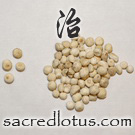 Ban Xia9 gWarm Herbs that Transform Phlegm-Cold
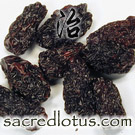 Da Zao4 piecesTonify Qi
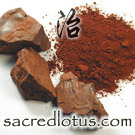 Dai Zhe Shi9-15 gAnchor, Settle, and Calm the Spirit
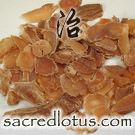 Ren Shen6 gTonify Qi
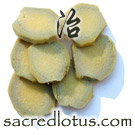 Sheng Jiang6 gWarm, Spicy Herbs that Release the Exterior
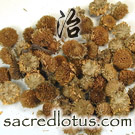 Xuan Fu Hua9 gWarm Herbs that Transform Phlegm-Cold
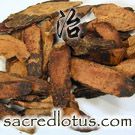 Zhi Gan Cao3 gTonify Qi
Preparation & dosage
How is Xuan Fu Dai Zhe Tang prepared?
Xuan Fu Dai Zhe Tang is prepared as a water decoction (tang) of Xuan Fu Hua, Dai Zhe Shi, Ban Xia, Sheng Jiang, Ren Shen, Zhi Gan Cao and Da Zao, taken warm to descend rebellious qi (belching, hiccups, reflux).
Two preparation points: Xuan Fu Hua (the flower) is wrapped in cloth while cooking because its fine hairs irritate the throat if left loose; and Dai Zhe Shi (haematite, a heavy mineral) is broken up and cooked longer. 2–3 times the dose of Dang Shen is often substituted for Ren Shen. Available as granules.
Source: Sacred Lotus sources & references (composition and preparation note) + Bensky & Barolet, Formulas & Strategies.
Decoction. Reference relative amounts: Xuan Fu Hua 9 g; Dai Zhe Shi 9–15 g; Ban Xia 9 g; Sheng Jiang 6 g; Ren Shen 6 g; Zhi Gan Cao 3 g; Da Zao 4 pieces. Dang Shen (2–3x) is often substituted for Ren Shen. Reference only.
Safety — read before use
What are the cautions for Xuan Fu Dai Zhe Tang?
Xuan Fu Dai Zhe Tang is built around a heavy, strongly descending mineral (Dai Zhe Shi) and a drying, phlegm-transforming herb (Ban Xia), so it calls for caution in pregnancy and is not appropriate for vomiting or belching from pure excess heat or unresolved food stagnation without underlying deficiency. Confirm pregnancy status before prescribing, since Dai Zhe Shi’s heavy, downward-directing action and Ban Xia are both traditionally used with caution in pregnant patients.
- Not for excess-heat or exterior patterns: reserve for the deficient, phlegm-turbid pattern described above rather than acute food stagnation or heat-type vomiting.
- Mineral dosing: Dai Zhe Shi is heavy and mineral in nature; traditional practice favors using it only as long as needed and reducing the dose as belching resolves.
- Digestive fit: Ban Xia and Dai Zhe Shi’s descending, drying action is generally well tolerated at proper doses but should be modified if it produces excessive dryness or discomfort.
Source: Bensky & Barolet, Formulas & Strategies (cautions for heavy descending/phlegm-transforming formulas). Traditional-use framing; not medical advice.
Originally Appeared In:
- On Cold Damage (Shang Han Lun)
Notes:
How is Xuan Fu Dai Zhe Tang different from Ban Xia Xie Xin Tang?
Both formulas come from the same passage of the Shang Han Lun describing focal distension (pi) that follows improper treatment, but they diverge in the dominant symptom. Ban Xia Xie Xin Tang addresses focal distension with a mixed heat-cold pattern — vomiting, intestinal borborygmus, and loose stool from disordered ascending and descending in the middle burner. Xuan Fu Dai Zhe Tang is reserved for the case where focal distension has largely resolved but belching persists and will not stop, reflecting more prominent phlegm and rebellious qi that calls for the heavier, more strongly descending Xuan Fu Hua and Dai Zhe Shi pair.
Source: Bensky & Barolet, Formulas & Strategies (Shang Han Lun formula-family comparison).
Clinical Studies & Research:
Is there modern research on Xuan Fu Dai Zhe Tang?
Yes, but it is largely preclinical — animal and cell-line studies on reflux esophagitis and esophageal cancer. A 2024 rat study found the decoction reduced esophageal mucosal damage and inflammatory markers in reflux esophagitis, acting through the STAT1/TREM-1 signaling pathway and shifting macrophage polarization toward an anti-inflammatory phenotype. Separately, cell and mouse studies suggest it can suppress stemness markers in esophageal cancer cells.
- Reflux esophagitis (preclinical, rat model): reduced esophageal injury and serum inflammatory markers (IL-1β, IL-6, TNF-α, iNOS), inhibited TREM-1/phospho-STAT1 in esophageal mucosa (PMID 38342154).
- Esophageal cancer (preclinical, cell line + mouse model): inhibited tumor growth and reduced stemness markers (NANOG, OCT4, SOX2) via the AKT signaling pathway (PMID 35634672).
Sources: PubMed 38342154; PubMed 35634672. Research context, not a therapeutic claim; direct clinical-trial evidence remains limited.
Sources & References
Compiled and edited by Thomas Dehli, Founder & Editor, Sacred Lotus Updated
The information here is referenced from numerous sources — teachers, practitioners, class notes from Five Branches University, the books below, and the published research literature, with citations given as resolvable PubMed identifiers. Where sources disagree, I have flagged the discrepancies directly. If facts couldn't be verified, I have left them out. How we source our content.
Reference information for students and practitioners — not medical advice. Consult a qualified practitioner. Terms of use.
Chinese Formulas Books & References
 https://amzn.to/4fYI3f8
 https://amzn.to/4j55NRA
 https://amzn.to/4gMROyv
 https://amzn.to/4h7msSK