

Sheng Hua Tang (Generation and Transformation Decoction)
Sheng Hua Tang
Generation and Transformation Decoction
- Category
- Formulas that Invigorate the Blood
- Ingredients
- 5 herbs
Actions
What does Sheng Hua Tang do?
Sheng Hua Tang warms the uterus, dispels stagnant cold, and invigorates Blood to expel stasis while gently nourishing new Blood — the classic combination for the immediate postpartum period. Its name literally means “generation and transformation”: it clears out (transforms) retained lochia and stagnant Blood so that new Blood can be generated in its place, addressing the common postpartum state of Blood deficiency compounded by cold and stasis in the uterus.
- Dang Gui (chief, large dose): both nourishes and invigorates Blood — tonifying what childbirth has depleted while helping move what remains stagnant.
- Chuan Xiong (deputy): invigorates Blood and moves qi within the Blood, assisting Dang Gui and relieving the associated abdominal pain.
- Tao Ren (deputy): breaks Blood stasis directly, helping expel retained lochia and clots.
- Pao Jiang, blast-fried ginger (assistant): warms the uterus and lower jiao, expelling the cold that has congealed the Blood into stasis.
- Zhi Gan Cao (envoy): harmonizes the formula and moderates the other herbs’ strength.
Source: Sacred Lotus sources & references (composition) + Bensky & Barolet, Formulas & Strategies; Chen & Chen, Chinese Medical Herbology and Pharmacology.
Indications
What is Sheng Hua Tang used for?
Sheng Hua Tang treats retained lochia with lower-abdominal pain in the days immediately following childbirth, when cold has congealed the Blood into stasis and normal uterine discharge is scanty, blocked, or dark and clotted rather than flowing freely.
- Scanty or absent lochia in the early postpartum period.
- Lower-abdominal pain that is cramping or cold in character, often eased by warmth.
- Dark purple, clotted vaginal discharge.
- A cold sensation in the lower abdomen.
- Traditionally used to support normal uterine involution (the uterus’s return to its pre-pregnancy size) after delivery.
Source: Sacred Lotus sources & references (tongue/pulse) + Bensky & Barolet, Formulas & Strategies.
Ingredients
5 substances in Sheng Hua Tang — each links to its full herb monograph.
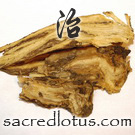 Dang Gui24 gTonify Blood
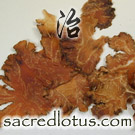 Chuan Xiong9 gInvigorate Blood and Remove StagnationNo specimen photographPao Jiang1.5 gWarm the Interior and Expel Cold
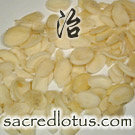 Tao Ren6-9 g14 piecesInvigorate Blood and Remove Stagnation
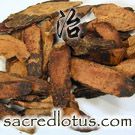 Zhi Gan Cao1.5 gTonify Qi
Preparation & dosage
How is Sheng Hua Tang prepared?
Sheng Hua Tang is a water decoction, and classical instruction for this formula specifically calls for adding rice wine (yellow wine, huang jiu) to strengthen its warming, Blood-invigorating action. Ginger is used in its blast-fried (pao jiang) form rather than fresh, giving a more warming and less dispersing effect appropriate to cold-stasis lochia.
The formula’s original gynecological source text additionally directs the decoction to be taken together with child’s urine (tong bian) alongside the wine — a traditional postpartum adjuvant historically believed to guide stagnant Blood downward and moderate the formula’s warmth. This is a documented historical practice rather than a modern recommendation; contemporary preparation is a standard water decoction, generally with or without a small addition of wine, and without the child’s-urine component.
Source: Bensky & Barolet, Formulas & Strategies; Fu Qing-zhu, Fu Qing Zhu Nu Ke (Fu Qingzhu’s Gynecology), classical preparation instruction. Historical/traditional description, not a modern preparation instruction.
Safety — read before use
What are the cautions for Sheng Hua Tang?
Sheng Hua Tang is intended for the acute postpartum period and for cold-type Blood stasis specifically — it is not appropriate for lochia associated with heat or infection, or for use beyond the immediate weeks after delivery. Signs pointing away from this formula include foul-smelling or yellow-tinged discharge, or fever and other signs of postpartum infection, which need proper medical evaluation rather than a warming Blood-invigorating formula.
- Heavy or prolonged postpartum hemorrhage should be medically assessed; Blood-invigorating herbs are not a substitute for care of significant bleeding.
- Not for use during pregnancy — it is a postpartum formula built around Blood-invigorating herbs (Tao Ren, Chuan Xiong) inappropriate for an ongoing pregnancy.
- Not intended for prolonged use once lochia has resolved and normal uterine involution is complete.
Source: Bensky & Barolet, Formulas & Strategies (cautions for postpartum Blood-invigorating formulas).
Originally Appeared In:
- Women's Diseases According to Fu Qing Zhu (Fu Qing Zhu Nu Ke)
Notes:
How does Sheng Hua Tang differ from Tao Hong Si Wu Tang and Shi Xiao San?
Sheng Hua Tang is specifically a postpartum formula for cold-type stasis, distinguishing it from other Blood-invigorating formulas used for stasis in general.
- vs Tao Hong Si Wu Tang: that formula invigorates Blood within a Blood-nourishing base for stasis with heat signs, without Sheng Hua Tang’s specific warming, cold-dispelling action.
- vs Shi Xiao San: that formula (Pu Huang and Wu Ling Zhi) purely and sharply expels stasis for stabbing pain, without Blood-nourishing herbs — suited to more acute, excess-type stasis pain rather than the postpartum deficiency-plus-stasis picture.
Classical source: Sheng Hua Tang is one of the best-known formulas of the Qing-dynasty physician Fu Qing-zhu, recorded in his gynecological text Fu Qing Zhu Nu Ke (Fu Qingzhu’s Gynecology), and remains the most widely referenced postpartum formula in the Chinese formulary tradition. Common modifications: add Yi Mu Cao to strengthen the Blood-invigorating, uterine-contracting effect; increase Pao Jiang for more pronounced cold; add San Qi where bleeding accompanies stasis.
Source: Bensky & Barolet, Formulas & Strategies (classical source, differentiation, modifications).
Clinical Studies & Research:
Is there modern research on Sheng Hua Tang?
Modern research on Sheng Hua Tang is mostly preclinical, and largely from veterinary and animal-model studies rather than human clinical trials, though it consistently supports the traditional claim of faster uterine recovery after delivery. In postpartum Holstein dairy cows, a course of the formula significantly reduced retained placenta (4.0% vs 17.0% in untreated controls) and improved subsequent conception rates (PMID 24444716); a related trial in dairy cattle found faster uterine involution and reduced intrauterine fluid accumulation (PMID 25049906).
- Animal/veterinary evidence: reduced retained placenta and improved reproductive outcomes in dairy cattle (PMID 24444716); faster uterine involution in dairy cattle (PMID 25049906).
- Derived-formula evidence (rat model): a Sheng-Hua-Tang-derived capsule (Wujia Shenghua) shortened the duration and reduced the volume of uterine bleeding after induced incomplete abortion in rats (PMID 26622367).
- Formulary data-mining: a review of Chinese herbal formulas used for uterine subinvolution identified Blood-activating, stasis-eliminating, Liver-and-Spleen-directed herb selection as the dominant modern pattern — consistent with this formula’s classical logic (PMID 35399626).
Sources: PMID 24444716; PMID 25049906; PMID 26622367; PMID 35399626. Evidence is chiefly animal/veterinary and formulary-analytic rather than human clinical-trial data; research context only, not a therapeutic claim.
Sources & References
Compiled and edited by Thomas Dehli, Founder & Editor, Sacred Lotus Updated
The information here is referenced from numerous sources — teachers, practitioners, class notes from Five Branches University, the books below, and the published research literature, with citations given as resolvable PubMed identifiers. Where sources disagree, I have flagged the discrepancies directly. If facts couldn't be verified, I have left them out. How we source our content.
Reference information for students and practitioners — not medical advice. Consult a qualified practitioner. Terms of use.
Chinese Formulas Books & References
 https://amzn.to/4fYI3f8
 https://amzn.to/4j55NRA
 https://amzn.to/4gMROyv
 https://amzn.to/4h7msSK