

Ling Gui Zhu Gan Tang
Poria, Cinnamon Twig, Atractylodis Macrocephalae, and Licorice Decoction
- Category
- Formulas that Treat Phlegm
- Subcategory
- Formulas that Warm and Transform Cold-Phlegm
- Ingredients
- 4 herbs
Actions
What does Ling Gui Zhu Gan Tang do?
Ling Gui Zhu Gan Tang warms and transforms phlegm-fluid (tan yin), strengthens the Spleen, and resolves dampness. It targets water and fluid that has stagnated because Spleen-yang is too weak to move and transform it — the classic pattern from the “Phlegm-Rheum” chapter of the Jin Gui Yao Lue (Essentials from the Golden Cabinet).
The four ingredients divide by role:
- Chief: Fu Ling strengthens the Spleen and leaches out dampness, guiding the accumulated fluid downward and out through the urine.
- Deputy: Gui Zhi warms and transforms yang qi in the middle and upper burner, opening the movement that lets stagnant fluid disperse, and calms the palpitations and dizziness that trapped fluid can provoke.
- Assistant: Bai Zhu strengthens the Spleen and dries dampness, reinforcing Fu Ling’s fluid-transforming action at its source.
- Envoy: Zhi Gan Cao harmonizes the formula and aids Spleen qi; paired with Gui Zhi it forms the classic pungent-sweet combination said to generate yang.
Source: Sacred Lotus sources & references + Bensky & Barolet, Formulas & Strategies (chief/deputy/assistant/envoy analysis); Jin Gui Yao Lue, “Phlegm-Rheum” chapter (formula origin). Traditional-use framing; not medical advice.
Indications
What is Ling Gui Zhu Gan Tang used for?
Ling Gui Zhu Gan Tang treats phlegm-fluid retention (tan yin) arising from Spleen-yang deficiency — water and dampness pooling in the chest and epigastrium because the Spleen is too weak to move fluids normally. The Jin Gui Yao Lue describes this pattern directly: phlegm-fluid below the heart, with fullness in the chest and hypochondria, and dizziness.
Its classic clinical presentation:
- Fluid-retention signs: fullness or distention in the chest and hypochondriac region, a sensation of fluid moving (sometimes an audible splashing sound below the epigastrium), and scanty urination.
- Disturbed clear yang: dizziness or vertigo, often worse on standing or moving the head; palpitations.
- Cold-fluid affecting the Lung: cough with copious, clear, thin (watery) sputum; shortness of breath.
Tongue and pulse: the tongue is pale and swollen with a white, slippery or greasy coat; the pulse is slippery and wiry, or described in some sources as deep and soggy.
Source: Sacred Lotus sources & references on pattern/tongue/pulse + Bensky & Barolet, Formulas & Strategies; Jin Gui Yao Lue, “Phlegm-Rheum” chapter. Traditional-use framing; not medical advice.
Western Uses:
What is Ling Gui Zhu Gan Tang used for in modern practice?
In modern practice Ling Gui Zhu Gan Tang is referenced for conditions Western medicine associates with fluid or motion disturbance — peripheral vertigo (including Menière’s disease), chronic bronchitis or airway conditions with copious thin sputum, functional dyspepsia with an epigastric splashing sound, and as an adjunct alongside standard care for chronic heart failure with palpitations, reduced gastric motility, or premature contractions.
These biomedical correlates are offered as a reference to the formula’s traditional use, not as a claim that it treats any disease. Clinical evidence is strongest for the cardiovascular-adjunct indications (see research); trials for vertigo remain at the registered-protocol stage with no pooled results yet. Any use for a diagnosed condition belongs with a qualified practitioner and appropriate medical care.
Source: traditional-use correlates summarized from Bensky & Barolet, Formulas & Strategies, cross-checked against PubMed clinical literature (see research); reference only, not a treatment claim.
Ingredients
4 substances in Ling Gui Zhu Gan Tang — each links to its full herb monograph.
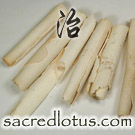 Fu Ling12 gRegulate Water and Drain Dampness
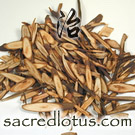 Gui Zhi9 gWarm, Spicy Herbs that Release the Exterior
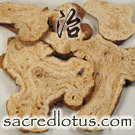 Bai Zhu6 gTonify Qi
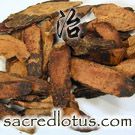 Zhi Gan Cao6 gTonify Qi
Preparation & dosage
How is Ling Gui Zhu Gan Tang prepared?
Ling Gui Zhu Gan Tang is taken as a decoction. The four herbs are simmered together in water and the strained liquid is drunk warm, traditionally in divided doses through the day.
Source: Jin Gui Yao Lue formula instructions, as summarized in Bensky & Barolet, Formulas & Strategies.
Decoction. Reference relative amounts: Fu Ling 12 g; Gui Zhi 9 g; Bai Zhu 6 g; Zhi Gan Cao (honey-fried) 6 g — approximating the classical Jin Gui Yao Lue ratio of 4:3:2:2. Reference only.
Safety — read before use
What are the cautions for Ling Gui Zhu Gan Tang?
Ling Gui Zhu Gan Tang is a warming formula for a cold, deficient, fluid-retaining pattern, so it is inappropriate where there is yin deficiency or heat. Signs such as thirst, a dry mouth, a red tongue, or a rapid pulse indicate the pattern has transformed toward heat or dryness, and the formula’s warm, drying herbs would aggravate that.
- Avoid or modify in yin-deficient or heat patterns, and where dampness has already transformed into damp-heat.
- Pregnancy: contains Gui Zhi, which moves blood and qi — use only under professional guidance.
- Not a long-term standalone strategy: once fluid retention resolves, the formula is typically stopped or modified, since continued warming and draining can deplete fluids and Spleen qi if overused.
Source: Bensky & Barolet, Formulas & Strategies (cautions for warming phlegm-fluid formulas). Traditional-use framing; not medical advice.
Originally Appeared In:
- On Cold Damage (Shang Han Lun)
Notes:
How is Ling Gui Zhu Gan Tang different from Wu Ling San, Zhen Wu Tang, and Xiao Qing Long Tang?
All four formulas warm and move water, but they target fluid retention at different depths and locations. Ling Gui Zhu Gan Tang addresses fluid pooled in the chest and epigastrium from Spleen-yang deficiency, without a severe cold collapse or an unresolved exterior pattern.
- vs Wu Ling San: Wu Ling San adds stronger diuretics (Ze Xie, Zhu Ling) and Rou Gui to transform Bladder qi; choose it when an unresolved exterior pattern accompanies scanty urination and thirst with an inability to transform fluids.
- vs Zhen Wu Tang: Zhen Wu Tang treats deeper Kidney-yang deficiency with more pronounced edema and cold limbs, using Fu Zi to warm at a stronger, more foundational level.
- vs Xiao Qing Long Tang: Xiao Qing Long Tang addresses external cold combined with internal cold-fluid in the Lung (wheezing and copious thin sputum with an unresolved exterior), adding Ma Huang and Xi Xin to release the exterior and warm the Lung.
Common modification: Ze Xie is often added when dizziness from fluid retention is especially prominent.
Source: Bensky & Barolet, Formulas & Strategies (comparison of water/fluid-regulating formulas).
Clinical Studies & Research:
Is there modern research on Ling Gui Zhu Gan Tang?
Yes — the strongest clinical evidence is as an adjunct in cardiovascular care, alongside a growing body of preclinical mechanism studies. A systematic review and meta-analysis of 14 randomized controlled trials (1,236 patients) found Linggui Zhugan decoction added to standard antiarrhythmic therapy improved clinical effectiveness and reduced 24-hour premature beats in coronary heart disease, though the included trials carried a high overall risk of bias. A separate clinical study reported efficacy for decreased gastric motility caused by chronic heart failure.
- Coronary heart disease / arrhythmia (clinical synthesis): meta-analysis of 14 RCTs, 1,236 patients, found higher clinical effectiveness and fewer premature beats vs. antiarrhythmic drugs alone, with no significant increase in adverse events (PMID 36407468).
- Chronic heart failure, gastric motility (clinical): reported clinical efficacy for decreased gastric motility caused by chronic heart failure (PMID 34269552).
- Chronic heart failure, mechanism (preclinical, rat): activation of the SIRT1/AMPK/PGC-1α pathway improved myocardial antioxidant capacity and mitochondrial function after induced infarction (PMID 37089931).
- Nonalcoholic fatty liver disease (preclinical, mouse): improved hepatic function and reshaped gut-microbiota/bile-acid metabolism in a high-fat-diet model (PMID 38647315).
Registered systematic-review protocols also exist for peripheral vertigo and for chronic heart failure with Yang deficiency, but as of this writing report no pooled results yet.
Sources: PubMed 36407468; PubMed 34269552; PubMed 37089931; PubMed 38647315. Research context, not a therapeutic claim; direct clinical trial evidence remains limited and concentrated in cardiovascular indications.
Sources & References
Compiled and edited by Thomas Dehli, Founder & Editor, Sacred Lotus Updated
The information here is referenced from numerous sources — teachers, practitioners, class notes from Five Branches University, the books below, and the published research literature, with citations given as resolvable PubMed identifiers. Where sources disagree, I have flagged the discrepancies directly. If facts couldn't be verified, I have left them out. How we source our content.
Reference information for students and practitioners — not medical advice. Consult a qualified practitioner. Terms of use.
Chinese Formulas Books & References
 https://amzn.to/4fYI3f8
 https://amzn.to/4j55NRA
 https://amzn.to/4gMROyv
 https://amzn.to/4h7msSK