
San Zi Yang Qin Tang
Three Seed Decoction to Nourish One's Parents
- Category
- Formulas that Treat Phlegm
- Subcategory
- Formulas that Warm and Transform Cold-Phlegm
- Ingredients
- 3 herbs
Actions
What does San Zi Yang Qin Tang do?
San Zi Yang Qin Tang descends rebellious qi, transforms phlegm, and reduces food stagnation — a gentle, three-herb formula built for elderly patients whose Lung qi has turned rebellious (cough, wheezing) on top of accumulated cold-phlegm and a weak, food-stagnant digestion. Each of the three seeds addresses one link in that chain.
- Zi Su Zi (Perilla Seed) directs Lung qi back downward, stopping cough and calming wheeze; it also moistens the intestines, easing the constipation common in the frail elderly.
- Bai Jie Zi (White Mustard Seed) is warm and acrid, dissolving cold-phlegm lodged deep in the chest and “membranes” that milder herbs cannot reach.
- Lai Fu Zi (Radish Seed) reduces food stagnation and descends qi from the Stomach side, so the digestion stops generating new phlegm while the other two herbs clear what has already accumulated.
The three seeds are combined in roughly equal parts rather than a fixed chief-deputy-assistant hierarchy. Several sources note the formula's original design lets the practitioner increase whichever seed matches the most prominent symptom — more Zi Su Zi when wheezing dominates, more Bai Jie Zi when phlegm and chest fullness dominate, more Lai Fu Zi when food stagnation and bloating dominate — a flexible, symptom-led emphasis rather than a fixed hierarchy.
Source: Sacred Lotus sources & references + Bensky & Barolet, Formulas & Strategies (herb-role synthesis). Traditional-use framing; not medical advice.
Indications
What is San Zi Yang Qin Tang used for?
San Zi Yang Qin Tang treats cold-phlegm with qi stagnation and food retention, classically in the elderly — a pattern where a weak Spleen/Stomach fails to transform food and fluids properly, generating phlegm that obstructs the Lungs and makes qi rebel upward as cough and wheeze.
Its classic clinical presentation:
- Respiratory: cough and wheezing/shortness of breath with copious, easily expectorated white or thin phlegm; a stifling sensation or fullness in the chest.
- Digestive: reduced appetite, difficult digestion, epigastric or abdominal fullness, and sometimes nausea or hiccup from the same food-stagnation root.
- Constitution: classically the frail elderly, whose weak digestion keeps regenerating the phlegm that a stronger patient would clear on its own.
Tongue and pulse: Sacred Lotus records a white, greasy tongue coating and a slippery pulse — the standard signs of phlegm accumulation.
Source: Sacred Lotus sources & references on pattern/tongue/pulse + Bensky & Barolet, Formulas & Strategies. Traditional-use framing; not medical advice.
Western Uses:
What is San Zi Yang Qin Tang used for in modern practice?
In modern practice San Zi Yang Qin Tang is referenced for chronic productive cough in older adults — practitioners have traditionally applied its phlegm-cough-and-digestion pattern to presentations such as chronic bronchitis, bronchial asthma, and COPD with copious sputum, contexts where Western medicine recognizes airway mucus hypersecretion and reduced lung function.
These biomedical correlates are offered as a reference to the formula’s traditional use, not as a claim that it treats any disease. Contemporary study is still limited, mixing a modest amount of clinical meta-analysis with mostly preclinical network-pharmacology and animal work (see research). Persistent productive cough in an older adult, especially a smoker, warrants evaluation by a qualified practitioner to rule out serious underlying disease before any herbal treatment.
Source: traditional-use correlates summarized from Bensky & Barolet, Formulas & Strategies; reference only, not a treatment claim.
Ingredients
3 substances in San Zi Yang Qin Tang — each links to its full herb monograph.
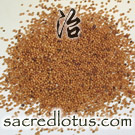 Bai Jie Zi6-9 gWarm Herbs that Transform Phlegm-Cold
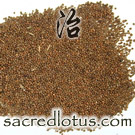 Zi Su Zi6-9 gRelieve Coughing and Wheezing
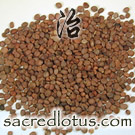 Lai Fu Zi6-9 gRelieve Food Stagnation
Preparation & dosage
How is San Zi Yang Qin Tang prepared?
Classically the three seeds are lightly dry-fried and lightly crushed, then wrapped loosely in cloth and briefly decocted so their volatile, acrid qualities are not driven off by a long boil — the resulting light decoction is strained and sipped like a tea throughout the day rather than taken as one or two large doses.
- Form: traditionally a light decoction from lightly toasted, cracked seeds wrapped in a cloth bag (a “bao jian” packet) to keep the small seeds from clouding the liquid; also available as granules or pills in modern practice.
- Adjustment: the amount of each seed can be shifted toward whichever symptom (phlegm, cough/wheeze, or food stagnation) is most prominent in the individual patient.
- Duration: intended for short courses while acute symptoms are present, not indefinite daily use.
Source: Sacred Lotus sources & references on dosage + Bensky & Barolet, Formulas & Strategies (preparation conventions for seed/fruit decoctions). Reference only, not medical advice.
Decoction: Bai Jie Zi, Zi Su Zi, Lai Fu Zi 6–9 g each, roughly equal parts (per Sacred Lotus sources & references). Seeds are traditionally lightly dry-fried and cracked, wrapped in cloth, and briefly decocted; strained liquid is sipped like tea through the day rather than taken in one dose. The proportion of each seed may be increased toward whichever symptom (phlegm, cough/wheeze, or food stagnation) predominates. Reference only, not a prescription.
Safety — read before use
What are the cautions for San Zi Yang Qin Tang?
San Zi Yang Qin Tang is warm, acrid, and dispersing, so it is unsuitable for dry or heat-pattern cough and is meant for short-term, branch-level treatment rather than ongoing use. All three seeds are pungent and drying, which clears cold-phlegm well but can aggravate a dry throat or deplete fluids if misapplied.
- Avoid in yin-deficient dry cough with scanty phlegm, and in phlegm-heat or Lung-heat patterns (yellow/green sputum, fever) — the warm, drying herbs will worsen heat and dryness.
- Not for prolonged, unsupervised use in the elderly or in qi-deficient patients: the formula treats the branch (acute phlegm/cough/food stagnation), and classical guidance is to shift to a Spleen-tonifying formula once symptoms ease, so the underlying weakness that keeps generating phlegm is addressed.
- Pregnancy: the dispersing, qi-moving action warrants professional guidance before use.
- Medical evaluation: chronic productive cough or wheezing in an older adult should be assessed by a qualified practitioner to exclude serious respiratory disease.
Source: Bensky & Barolet, Formulas & Strategies (cautions for warm phlegm-transforming formulas). Traditional-use framing; not medical advice.
Originally Appeared In:
- Comprehensive Medicine According to Master Han (Han Shi Yi Tong)
Notes:
How is San Zi Yang Qin Tang related to other phlegm and qi-descending formulas?
San Zi Yang Qin Tang is a small, symptom-adjustable formula meant for short-term branch treatment — it is frequently combined with, or exchanged for, other phlegm formulas depending on how much digestive weakness or root deficiency is present.
- vs Er Chen Tang: Er Chen Tang (Ban Xia, Chen Pi, Fu Ling, Zhi Gan Cao) dries damp-phlegm by strengthening the Spleen and shares no herbs with San Zi Yang Qin Tang; the two are commonly combined when Spleen dampness and phlegm are both prominent (a combination sold commercially as Er Chen He San Zi Yang Qin Pian).
- vs Su Zi Jiang Qi Tang: a larger formula that also uses Zi Su Zi to descend qi, but adds herbs to warm and tonify a weak Kidney root; choose it over San Zi Yang Qin Tang when lower-back weakness or cold limbs accompany the wheezing, pointing to root Kidney deficiency rather than a purely branch pattern.
- vs Liu Jun Zi Tang: a Spleen-qi tonic with phlegm-drying herbs, classically used after San Zi Yang Qin Tang has cleared the acute phlegm and cough, to strengthen the digestion that was generating the phlegm in the first place.
Origin: the formula is traditionally attributed to the Ming-dynasty physician Han Mao in Han Shi Yi Tong (“Comprehensive Medicine According to Master Han”), circa 1522 CE, said to have been devised as a mild, tea-like decoction for elderly parents with cough and phlegm rather than a harsher prescription.
Source: Bensky & Barolet, Formulas & Strategies (formula comparisons) + cross-checked formula references (origin/attribution). Traditional-use framing.
Clinical Studies & Research:
Is there modern research on San Zi Yang Qin Tang?
Yes, but it remains limited — a modest amount of clinical meta-analysis alongside mostly preclinical network-pharmacology and animal work. A meta-analysis and network-pharmacology study evaluating the decoction added to standard care for chronic obstructive pulmonary disease (COPD) found improved total effective rate and lung-function measures (FEV1%, FEV1%/FVC) across the pooled trials it reviewed, with mechanistic modeling pointing to targets including EGFR and MMP9.
- COPD (clinical meta-analysis + network pharmacology): pooled trials of the decoction combined with conventional treatment reported a higher total effective rate and improved FEV1%/FEV1%/FVC versus conventional treatment alone; network-pharmacology modeling implicated luteolin and targets such as EGFR and MMP9 (PMID 34221077).
- Asthma (preclinical, mechanism): network-pharmacology and experimental verification work proposed an anti-asthmatic mechanism via inhibition of airway inflammation and mucus hypersecretion, involving NF-κB and AKT signaling (PMID 38093206).
- Non-alcoholic fatty liver disease (preclinical, exploratory): a network-pharmacology and animal study outside the formula's traditional indication reported improved hepatosteatosis and metabolic markers in a high-fat-diet mouse model (PMID 33505505) — an investigational extension, not a traditional use.
Sources: PubMed 34221077; PubMed 38093206; PubMed 33505505. Research context, not a therapeutic claim; direct high-quality clinical trial evidence remains limited.
Sources & References
Compiled and edited by Thomas Dehli, Founder & Editor, Sacred Lotus Updated
The information here is referenced from numerous sources — teachers, practitioners, class notes from Five Branches University, the books below, and the published research literature, with citations given as resolvable PubMed identifiers. Where sources disagree, I have flagged the discrepancies directly. If facts couldn't be verified, I have left them out. How we source our content.
Reference information for students and practitioners — not medical advice. Consult a qualified practitioner. Terms of use.
Chinese Formulas Books & References
 https://amzn.to/4fYI3f8
 https://amzn.to/4j55NRA
 https://amzn.to/4gMROyv
 https://amzn.to/4h7msSK