
Xiang Su San
Cyperus and Perilla Leaf Powder
- Category
- Formulas that Release the Exterior
- Subcategory
- Formulas that Release Exterior Cold
- Ingredients
- 4 herbs
Actions
What does Xiang Su San do?
Xiang Su San releases the exterior to disperse wind-cold while simultaneously regulating qi to relieve internal stagnation. It is a deliberately gentle formula: rather than forcing a strong sweat with acrid, hot herbs, it pairs a mild exterior-releasing herb with qi movers, making it suitable when an external cold catches someone who is already qi-constrained, run-down, or otherwise unsuited to a more aggressive diaphoretic.
The four ingredients divide by role:
- Co-chiefs: Zi Su Ye (Perilla Leaf) and Xiang Fu (Cyperus Rhizome) give the formula its name (Xiang + Su). Zi Su Ye is acrid and warm, entering the Lung and Spleen to release the exterior and disperse wind-cold, while its aromatic quality also moves qi in the chest and epigastrium. Xiang Fu is the classic Liver/Triple-Burner qi-regulator, relieving the stagnation-driven fullness and stifling sensation that accompanies the exterior complaint.
- Deputy: Chen Pi (aged tangerine peel) regulates qi and harmonizes the middle burner, reinforcing Xiang Fu's action on epigastric fullness and helping settle belching and poor appetite.
- Envoy: Zhi Gan Cao harmonizes the other three herbs and protects Stomach qi; Sheng Jiang and Cong Bai (scallion white) are traditionally added when the powder is decocted, to lend a bit more exterior-releasing strength.
Source: Sacred Lotus sources & references + Bensky & Barolet, Formulas & Strategies; Chen & Chen, Chinese Herbal Formulas and Applications (chief/deputy/envoy analysis). Traditional-use framing; not medical advice.
Indications
What is Xiang Su San used for?
Xiang Su San treats exterior wind-cold occurring together with qi stagnation — a combination pattern where an external cold invasion coincides with (or is worsened by) constrained qi in the chest and middle burner, often in someone who is emotionally tense, fatigued, or otherwise not robust enough for a forceful release.
Its classic clinical presentation:
- Exterior wind-cold signs: chills and fever, headache, and notably no sweating.
- Qi-stagnation signs: fullness or distention in the epigastrium and abdomen, a stifling (glomus-like) sensation in the chest, reduced appetite, and belching (eructation).
Tongue and pulse: the tongue typically shows a thin, white coating; the pulse is floating (reflecting the exterior invasion), often with a wiry or tight quality from the accompanying qi constraint.
Source: Sacred Lotus sources & references on pattern + Bensky & Barolet, Formulas & Strategies; Chen & Chen, Chinese Herbal Formulas and Applications. Traditional-use framing; not medical advice.
Western Uses:
What is Xiang Su San used for in modern practice?
In modern practice, Xiang Su San is best known through its Japanese Kampo counterpart, Koso-san (identical formula, read in Japanese pronunciation), which clinicians in East Asia have used for globus pharyngeus (the sensation of a lump in the throat, close to the classical "plum-pit qi" pattern), low mood or irritability accompanying the start of a common cold, and functional digestive complaints such as poor appetite and belching tied to qi constraint.
These biomedical correlates are offered as a reference to the formula's traditional use, not as a claim that it treats any disease. The clinical evidence is modest: one open, uncontrolled Japanese case series in patients with globus pharyngeus, plus animal research on a related antidepressant-like mechanism (see research). Any use for a diagnosed condition belongs with a qualified practitioner and appropriate medical care.
Source: traditional-use correlates summarized from Bensky & Barolet, Formulas & Strategies, and from Motoo et al., Am J Chin Med 1999 (PMID 10467462); reference only, not a treatment claim.
Ingredients
4 substances in Xiang Su San — each links to its full herb monograph.
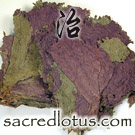 Zi Su Ye6-9 gWarm, Spicy Herbs that Release the Exterior
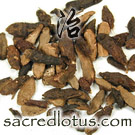 Xiang Fu6-9 gRegulate the Qi
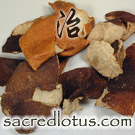 Chen Pi3-6 gRegulate the Qi
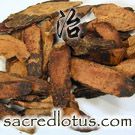 Zhi Gan Cao6-9 gTonify Qi
Preparation & dosage
How is Xiang Su San prepared?
Xiang Su San (“san” = powder) was classically ground to a coarse powder and briefly decocted, rather than simmered at length like a typical tang (decoction). A few slices of Sheng Jiang and, traditionally, a length of Cong Bai (scallion white) were often added at the time of decoction to reinforce the exterior-releasing action; the prepared liquid is taken warm.
In contemporary practice the same four herbs are more often prepared as a standard raw-herb decoction or taken as granule/powder extracts, with the formula generally used for a short course around the acute complaint rather than on an ongoing basis.
Source: Bensky & Barolet, Formulas & Strategies (traditional preparation of "san" powders and common modifications).
Traditionally a coarse powder, briefly decocted (with Sheng Jiang and Cong Bai commonly added); prepared today as a standard decoction or granule extract. Reference relative amounts (per Sacred Lotus sources & references): Zi Su Ye 6-9 g; Xiang Fu 6-9 g; Zhi Gan Cao 6-9 g; Chen Pi 3-6 g. Reference only; not a prescription.
Safety — read before use
What are the cautions for Xiang Su San?
Xiang Su San is one of the gentlest exterior-releasing formulas, which is both its strength and its limit. Its mild diaphoretic action makes it a reasonable choice for constitutionally weaker, qi-constrained, elderly, or postpartum patients, and it has traditionally been favored during pregnancy specifically because it avoids the stronger, more aggressive diaphoretics (such as Ma Huang) that are typically avoided in that context — but that traditional use is not a substitute for a qualified practitioner's guidance, especially in pregnancy.
- Not for severe exterior cold: where body aches and absent sweating are pronounced, a stronger releasing formula (e.g., Ma Huang Tang) or an added-herbs variant (see notes) is generally chosen instead.
- Avoid where heat signs predominate — the formula's warm, acrid herbs are meant for cold, not heat, presentations.
- Xiang Fu is somewhat drying; use cautiously with pronounced yin or blood deficiency.
- Short-course use: like other exterior-releasing formulas, it is meant to be discontinued once sweating occurs and symptoms resolve, not taken long-term.
Source: Bensky & Barolet, Formulas & Strategies; Chen & Chen, Chinese Herbal Formulas and Applications (cautions for mild exterior-releasing formulas). Traditional-use framing; not medical advice.
Originally Appeared In:
- Imperial Grace Formulary of the Tai Ping Era (Tai Ping Hui Min He Ji Ju Fang)
Notes:
How is Xiang Su San different from Jia Wei Xiang Su San, Shen Su Yin, and Huo Xiang Zheng Qi San?
Xiang Su San is the mild, base-level pairing of an exterior release with qi regulation; its relatives add strength for a more pronounced cold, more depletion, or a different accompanying pattern.
- vs Jia Wei Xiang Su San (Added-Flavors Xiang Su San): adds wind-dispelling herbs such as Qin Jiao, Fang Feng, Chuan Xiong, and Man Jing Zi — used when wind-cold is more pronounced, with more severe headache and body aches, rather than qi stagnation alone.
- vs Shen Su Yin (Ginseng and Perilla Leaf Decoction): a larger, more tonifying formula built around the same Su Ye/Chen Pi core but adding Ren Shen and phlegm-transforming herbs (Ban Xia, Fu Ling, Qian Hu) — chosen for an elderly or qi-deficient patient whose exterior wind-cold is complicated by phlegm-damp and cough, not just qi constraint.
- vs Huo Xiang Zheng Qi San: also releases the exterior while addressing an internal problem, but the internal problem is damp obstruction with vomiting and diarrhea (summerheat-damp pattern), not qi stagnation — choose by what the internal complaint actually is.
Key modification: when the powder is prepared as a decoction, Sheng Jiang and Cong Bai (scallion white) are commonly added to strengthen the exterior-releasing action.
Source: Bensky & Barolet, Formulas & Strategies; Chen & Chen, Chinese Herbal Formulas and Applications (comparison formulas and modifications).
Clinical Studies & Research:
Is there modern research on Xiang Su San?
Modern research on this exact formula is limited, but it has been studied under its Japanese Kampo name, Koso-san (the same herbs, read in Japanese) — one small open clinical series and one animal mechanism study.
- Globus pharyngeus (clinical, open/uncontrolled): in 23 patients with globus pharyngeus (a "lump in the throat" sensation corresponding to the classical qi-stagnation pattern "plum-pit qi"), Koso-san given for at least 14 days resolved symptoms completely in 18 patients and improved 3 more (91.3% overall response), with a mean time to improvement of about 13.5 days and a significant drop in a qi-stagnation symptom score (Motoo Y, Taga H, Su SB, Sawabu N. Am J Chin Med. 1999; PMID 10467462).
- Antidepressant-like activity (preclinical, mice): oral Koso-san shortened immobility time in a forced-swim/chronic-mild-stress depression model and normalized hypothalamic-pituitary-adrenal (HPA) axis markers (corticotropin-releasing hormone and proopiomelanocortin gene expression) that were dysregulated in the stressed animals (Ito N, Nagai T, Yabe T, Nunome S, Hanawa T, Yamada H. Phytomedicine. 2006;13(9-10):658-67; PMID 16516452).
Both findings track the formula's traditional qi-regulating, mood-and-throat-related indications, but the evidence base is small, mostly uncontrolled or preclinical, and should not be read as disease-treatment evidence.
Sources: PubMed 10467462; PubMed 16516452. Research context, not a therapeutic claim; direct high-quality clinical trial evidence for Xiang Su San/Koso-san remains very limited.
Sources & References
Compiled and edited by Thomas Dehli, Founder & Editor, Sacred Lotus Updated
The information here is referenced from numerous sources — teachers, practitioners, class notes from Five Branches University, the books below, and the published research literature, with citations given as resolvable PubMed identifiers. Where sources disagree, I have flagged the discrepancies directly. If facts couldn't be verified, I have left them out. How we source our content.
Reference information for students and practitioners — not medical advice. Consult a qualified practitioner. Terms of use.
Chinese Formulas Books & References
 https://amzn.to/4fYI3f8
 https://amzn.to/4j55NRA
 https://amzn.to/4gMROyv
 https://amzn.to/4h7msSK