
Zhou Che Wan
Vessel and Vehicle Pill
- Category
- Formulas that Drain Downward
- Subcategory
- Formulas that Drive Out Excess Water
- Ingredients
- 10 herbs
Actions
What does Zhou Che Wan do?
Zhou Che Wan (Vessel and Vehicle Pill) is one of the most drastic formulas in Chinese medicine, forcefully expelling excess water and breaking severe qi stagnation in a strong, excess-type constitution. Its name — “boat and cart” — describes its strategy of driving fluid out by every route at once, through the stool and the urine together (“front and back”).
Its ten ingredients divide by role:
- Chiefs (the “three kings” of water expulsion): Gan Sui, Yuan Hua, and Da Ji together forcibly purge fluid lodged in the chest and abdomen — among the harshest, most toxic herbs in the pharmacopoeia.
- Deputies: Qian Niu Zi (the single largest dose in the formula) drains water through both stool and urine; wine-processed Da Huang purges heat accumulation and unblocks the bowels.
- Assistants: Qing Pi and Chen Pi regulate qi in the middle and lower body; Mu Xiang and Bing Lang move qi through the triple burner and direct the formula’s action downward, easing the fullness that both the fluid and the purgation cause.
- Envoy: Qing Fen (calomel, a mercury compound) appears in the classical formula in a very small amount as an intensely penetrating agent traditionally said to drive the other herbs into stubborn, deep-seated fluid accumulation.
Name-collision note: The chief-tier "Da Ji" in Zhou Che Wan is Jing Da Ji (Radix Euphorbiae Pekinensis, Peking spurge root) — a bitter, cold, toxic drastic purgative (one of the three "kings"). It must not be confused with the sweet, cool, non-toxic hemostatic thistle Da Ji (Herba Cirsii Japonici), a different plant that only shares the pinyin name.
Source: this site’s own composition record + Bensky & Barolet, Formulas & Strategies (chief/deputy/assistant/envoy analysis for water-expelling formulas). Encyclopedia reference; not administration or dosing guidance.
Indications
What is Zhou Che Wan used for?
Zhou Che Wan is reserved, in the traditional literature, for severe, excess-type water-heat accumulation in an otherwise robust patient — marked abdominal or generalized edema/ascites, a hard and distended abdomen, labored breathing from fluid pressing on the diaphragm, thirst, constipation, and scanty, dark urine. Classical sources restrict it strictly to patients strong enough to tolerate a harsh purge; it is not indicated for chronic or deficiency-type edema.
- Presentation: tense, distended abdomen; dyspnea or difficulty lying flat; thirst without much desire to drink; scanty urination; constipation.
- Constitution: strong/excess only — classical sources explicitly withhold it from weak, elderly, or deficient patients.
Pulse: deep and forceful (excess), often rapid where heat predominates.
Source: Bensky & Barolet, Formulas & Strategies (water-heat accumulation pattern, pulse). Encyclopedia reference; not administration or dosing guidance.
Western Uses:
What is Zhou Che Wan used for in modern practice?
In modern practice Zhou Che Wan is referenced in the traditional-use literature for severe fluid accumulation — such as ascites from cirrhosis, or fluid overload associated with heart or kidney disease — in patients judged robust enough for a drastic purge. Because of its toxicity, it functions today mainly as a historically and academically referenced formula rather than a routinely prescribed one; contemporary practice more often uses its component herbs (e.g., Gan Sui) in smaller, more controlled combinations, or turns to gentler water-expelling strategies.
These biomedical correlates describe the formula’s traditional use only, not a treatment claim for any diagnosed condition. This class of formula is explicitly a last-resort, short-course, professionally supervised intervention in the traditional literature — never a self-administered remedy — and any use for ascites, edema, or organ disease belongs with a qualified practitioner and appropriate medical care.
Source: traditional-use correlates summarized from Bensky & Barolet, Formulas & Strategies; reference only, not a treatment claim.
Ingredients
10 substances in Zhou Che Wan — each links to its full herb monograph.
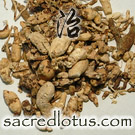 Gan Sui30 gHarsh Expellants
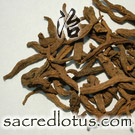 Jing Da Ji30 gHarsh Expellants
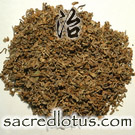 Yuan Hua30 gHarsh Expellants
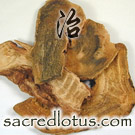 Da Huang60 gPurgativesNo specimen photographQian Niu Zi120 gHarsh Expellants
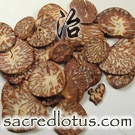 Bing Lang15 gExpel Parasites
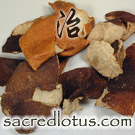 Chen Pi15 gRegulate the Qi
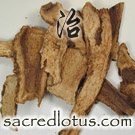 Mu Xiang15 gRegulate the Qi
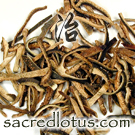 Qing Pi15 gRegulate the QiNo specimen photographQing Fen3 gSubstances for External Application
Preparation & dosage
How is Zhou Che Wan prepared?
Classically, Zhou Che Wan is prepared as small pills (wan), not a decoction — the powdered herbs are formed into pills, a pharmaceutical form traditionally chosen for potent, toxic formulas so that a small, precisely measured amount can be given rather than a full decocted dose.
This describes the formula’s traditional pharmaceutical form only; it is not instructions for preparing or administering it. As a professional-only, drastic-purgative formula containing toxic and, in its classical form, mercury-containing ingredients, any use requires a qualified practitioner.
Source: Bensky & Barolet, Formulas & Strategies (pill form for drastic/toxic formulas). Encyclopedia reference; not administration guidance.
Historical reference composition (classical pill formula, per this site’s own record): Gan Sui, Yuan Hua, Da Ji 30 g each; Da Huang 60 g; Qian Niu Zi 120 g; Qing Pi, Chen Pi, Mu Xiang, Bing Lang 15 g each; Qing Fen 3 g — ground and formed into pills. Zhou Che Wan is a professional-only, drastic-purgative formula with toxic and, in its classical form, mercury-containing ingredients; it is not a self-administered remedy. No administration or dosing guidance is given here — reference composition only.
Safety — read before use
What are the cautions for Zhou Che Wan?
Zhou Che Wan is one of the most toxic formulas in the Chinese materia medica and is treated in the traditional literature as a professional-only, emergency/short-course formula — never a self-administered or long-term remedy. Several of its ingredients (Gan Sui, Yuan Hua, classically Jing Da Ji, and Qian Niu Zi) are drastic purgatives recognized in the traditional literature as toxic, and its classical form additionally includes Qing Fen (calomel, a mercury compound), whose mercury content carries well-documented toxicity risk.
- Contraindicated in pregnancy — the formula’s toxic, drastically purgative herbs, and the mercury-containing Qing Fen where present, are considered unsafe in pregnancy in the traditional literature.
- Contraindicated in weak, elderly, or deficient patients — reserved strictly for strong, excess-type constitutions able to tolerate a severe purge.
- Not for prolonged use — classical sources describe it as a short-course formula, discontinued once the acute excess resolves, with gentler Spleen- and Kidney-supporting formulas following to aid recovery.
- Mercury content (classical Qing Fen component): calomel (mercurous chloride) is a recognized toxicant; a modern pharmacology review of mercury-containing traditional Chinese medicines concludes their safety depends entirely on strict traditional purification/detoxification processing and tightly controlled, minimal dosing (PMID 35308204).
- Traditionally incompatible with Gan Cao (licorice) under the “Eighteen Incompatibilities.”
This section is public-safety reference information, not administration or dosing guidance. Zhou Che Wan is for professional, supervised, typically inpatient or emergency use only.
Source: Bensky & Barolet, Formulas & Strategies (contraindications for drastic purgative/water-expelling formulas); Frontiers in Pharmacology mercury-in-TCM review (PMID 35308204 / PMC 8924441). Encyclopedia reference; not medical advice.
Originally Appeared In:
- Collected Treatises of Jing Yue (Jing Yue Quan Shu)
Notes:
What is the origin of Zhou Che Wan, and how does it compare to other water-expelling formulas?
Zhou Che Wan’s textual origin is attributed inconsistently across sources. Some formula references cite the Jin-Yuan physician Liu Wansu (Liu Hejian, 12th century) via the later compilation Yi Fang Ji Jie; others cite Zhu Danxi’s Dan Xi Xin Fa (Yuan dynasty); still others cite the Ming-dynasty Jing Yue Quan Shu by Zhang Jiebin. This likely reflects a long history of the formula being recorded, modified, and re-transmitted across multiple classical texts rather than one fixed origin; we could not verify a single attribution as definitive, so the range is noted here rather than asserting one date.
Compared to related water-expelling formulas: Zhou Che Wan is considerably harsher than gentler qi-moving diuretic formulas, and than Shi Zao Tang, which uses only the three toxic purgatives (Gan Sui, Yuan Hua, Da Ji) without Zhou Che Wan’s added qi-movers, Da Huang, Qian Niu Zi, and Qing Fen. Zhou Che Wan is reserved for more severe, generalized water-heat accumulation with pronounced qi stagnation.
Source: multiple online sources checked against this site’s prior content; Bensky & Barolet, Formulas & Strategies (comparison to Shi Zao Tang). Encyclopedia reference.
Clinical Studies & Research:
Is there modern research on Zhou Che Wan?
There is essentially no direct clinical-trial research on the complete Zhou Che Wan formula — as a rarely used, drastic, professional/inpatient-only formula, it falls outside the scope of most modern trials. Available modern evidence instead comes from pharmacology research on its key water-expelling herbs, and from toxicology reviews of mercury-containing components like Qing Fen (calomel) in traditional formulas generally.
- Gan Sui pharmacology (preclinical): Euphorbia kansui’s diterpene/triterpene constituents show diuretic and purgative activity in animal models, acting partly through intestinal-mucosa stimulation; combining kansui with liquorice (a pairing traditionally avoided) altered water-expelling activity via natriuretic-peptide signaling and T-cell immune pathways in rats with malignant ascites (PMID 40356964).
- Mercury/calomel toxicology (review): a pharmacology review of mercury-containing traditional Chinese medicines concludes their safety depends entirely on strict traditional purification/detoxification processing and tightly controlled dosing — underscoring why a classical Qing Fen-containing formula like this one is professional-only (PMID 35308204).
Sources: PubMed 40356964 (Frontiers in Pharmacology, 2025); PubMed 35308204 / PMC 8924441 (Frontiers in Pharmacology, 2022). Research context on component herbs, not evidence for the complete formula; not a therapeutic claim.
Sources & References
Compiled and edited by Thomas Dehli, Founder & Editor, Sacred Lotus Updated
The information here is referenced from numerous sources — teachers, practitioners, class notes from Five Branches University, the books below, and the published research literature, with citations given as resolvable PubMed identifiers. Where sources disagree, I have flagged the discrepancies directly. If facts couldn't be verified, I have left them out. How we source our content.
Reference information for students and practitioners — not medical advice. Consult a qualified practitioner. Terms of use.
Chinese Formulas Books & References
 https://amzn.to/4fYI3f8
 https://amzn.to/4j55NRA
 https://amzn.to/4gMROyv
 https://amzn.to/4h7msSK