
Zan Yu Dan
Special Pill to Aid Fertility
- Category
- Formulas that Tonify
- Subcategory
- Formulas that Warm and Tonify the Yang
- Ingredients
- 14 herbs
Actions
What does Zan Yu Dan do?
Zan Yu Dan (Special Pill to Aid Fertility) strongly warms and tonifies Kidney yang and nourishes essence, blood, and qi — a formula devised by the Ming-dynasty physician Zhang Jing-yue specifically to rebuild the Kidney-yang “fire of the gate of life” that he held to be the root of infertility due to yang deficiency.
The fourteen ingredients divide by role, per Bensky & Barolet and Chen & Chen:
- Chief: Fu Zi (prepared aconite) and Rou Gui — the two classic “fire of the gate of life” herbs, directly rekindling Kidney-yang fire.
- Deputies: a large cluster of Kidney-yang tonics — Rou Cong Rong, Ba Ji Tian, Yin Yang Huo, Xian Mao, Jiu Cai Zi, and Du Zhong — reinforce the chiefs' warming action and specifically target reproductive function.
- Assistants: Shu Di Huang, Dang Gui, and Gou Qi Zi nourish yin, blood, and essence so the formula tonifies yang “rooted in yin” rather than warming alone; Bai Zhu tonifies Spleen qi to support the transformation of food into blood and essence; She Chuang Zi warms Kidney yang and dries dampness, traditionally applied to reproductive-function complaints; Shan Zhu Yu astringes and stabilizes the Kidney, helping retain the essence the rest of the formula builds.
Source: Sacred Lotus sources & references (composition) + Bensky & Barolet, Formulas & Strategies; Chen & Chen, Chinese Medical Herbology and Pharmacology (chief/deputy/assistant analysis, attributed to these formularies). Traditional-use framing; not medical advice.
Indications
What is Zan Yu Dan used for?
Zan Yu Dan treats infertility arising from Kidney yang deficiency, traditionally used in both men and women whose difficulty conceiving presents alongside clear cold-deficiency signs rather than heat or stagnation.
- Infertility or difficulty conceiving, traditionally attributed to Kidney yang and essence deficiency.
- Reduced libido and, in men, weak or absent erections (impotence).
- Sore, weak, or cold-feeling lower back and knees.
- General lethargy, listlessness, and a pale complexion.
- Clear, copious urination and a general cold-deficiency pattern.
Pulse: submerged and thin, reflecting deep, depleted Kidney yang.
Source: Sacred Lotus sources & references (indications and pulse fields) + Bensky & Barolet, Formulas & Strategies; Chen & Chen, Chinese Medical Herbology and Pharmacology. Traditional-use framing; not medical advice.
Ingredients
14 substances in Zan Yu Dan — each links to its full herb monograph.
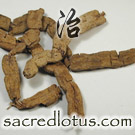 Ba Ji Tian120 gTonify Yang
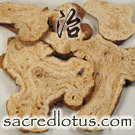 Bai Zhu240 gTonify Qi
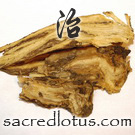 Dang Gui180 gTonify Blood
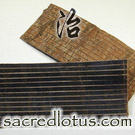 Du Zhong120 gTonify Yang
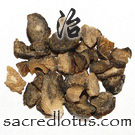 Fu Zi60 gWarm the Interior and Expel Cold
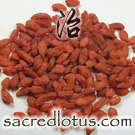 Gou Qi Zi180 gTonify Blood
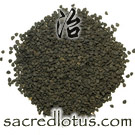 Jiu Cai Zi120 gTonify Yang
 Rou Cong Rong120 gTonify Yang
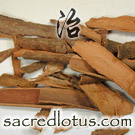 Rou Gui60 gWarm the Interior and Expel Cold
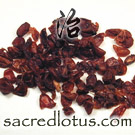 Shan Zhu Yu120 gAstringe, Stabilize, Bind
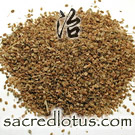 She Chuang Zi60 gSubstances for External Application
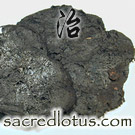 Shu Di Huang240 gTonify Blood
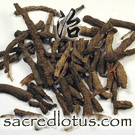 Xian Mao120 gTonify Yang
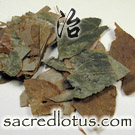 Yin Yang Huo120 gTonify Yang
Preparation & dosage
How is Zan Yu Dan prepared?
Traditionally the fourteen ingredients are ground to a fine powder and formed into pills with honey, matching “Dan” (pill) in the name.
- Fu Zi processing: only prepared (processed/detoxified) aconite is used, never raw aconite root — processing reduces the toxic aconitine alkaloids to a level considered safe for internal use under professional preparation.
- Modern practice: also prepared as a decoction, with amounts reduced proportionally, when a faster or stronger effect is wanted; pill form remains traditional for sustained tonification.
Source: Sacred Lotus sources & references (preparation) + Bensky & Barolet, Formulas & Strategies (traditional aconite processing).
Safety — read before use
What are the cautions for Zan Yu Dan?
Zan Yu Dan is a strongly warming, heavily tonifying formula reserved for genuine Kidney-yang-deficiency infertility, and it contains an ingredient that requires careful, professional handling.
- Fu Zi (prepared aconite, Aconitum carmichaelii): raw aconite root is toxic and can cause cardiac and neurological effects; only properly processed (prepared, detoxified) Fu Zi, decocted according to traditional method, is used in Chinese medicine, and this ingredient is documented here as a general public-safety reference, not as guidance for self-preparation or self-administration.
- Not for infertility with yin-deficiency-heat signs (night sweats, malar flush, a red tongue with little coating) or for Liver-qi-stagnation patterns — this formula's heavy warming action would aggravate heat or stagnation rather than help.
- Discontinue once pregnancy is confirmed: as with other strongly warming fertility-oriented formulas, this is a pre-conception formula, not one continued into pregnancy; any use around conception or during pregnancy belongs with a qualified practitioner.
- Caution in Spleen/Stomach deficiency or dampness given the formula's cloying, heavy tonics, and professional guidance is advised for any prolonged use.
Source: Bensky & Barolet, Formulas & Strategies (cautions for Fu Zi-containing yang-tonic formulas and fertility formulas generally). Traditional-use framing; not medical advice; not a preparation guide.
Originally Appeared In:
- Collected Treatises of Jing Yue (Jing Yue Quan Shu)
Notes:
How is Zan Yu Dan different from You Gui Wan?
Zan Yu Dan is a fertility-specific expansion of the same Kidney-yang-tonic strategy Zhang Jing-yue used in his more general formula, You Gui Wan. Per Sacred Lotus sources & references, You Gui Wan is built on Fu Zi, Rou Gui, Lu Jiao Jiao, Shu Di Huang, Shan Zhu Yu, Shan Yao, Gou Qi Zi, Tu Si Zi, Du Zhong, and Dang Gui — a broader Kidney-yang/mingmen-fire tonic for general yang deficiency (cold limbs, edema, impotence, frequent clear urination, and infertility among other presentations), built around deer-antler gelatin (Lu Jiao Jiao) as an additional chief-level yang/essence tonic.
- Zan Yu Dan replaces Lu Jiao Jiao with a much larger set of yang tonics aimed specifically at reproductive function — Rou Cong Rong, Ba Ji Tian, Yin Yang Huo, Xian Mao, Jiu Cai Zi — plus She Chuang Zi, making it more concentrated and more fertility-specific than You Gui Wan.
- You Gui Wan is the broader-spectrum choice for general Kidney-yang deficiency (with or without infertility), while Zan Yu Dan is reserved for infertility as the primary presenting complaint.
Classical source: attributed to Zhang Jing-yue (Zhang Jie-bin, 1563–1640), recorded in his Jing Yue Quan Shu (Complete Works of [Zhang] Jing-yue), the same Ming-dynasty text that records You Gui Wan.
Source: Sacred Lotus sources & references (You Gui Wan composition) + Bensky & Barolet, Formulas & Strategies (formula comparison and classical attribution).
Clinical Studies & Research:
Is there modern research on Zan Yu Dan?
No dedicated clinical or pharmacological studies on this specific classical compound formula were found in available searches — it remains documented mainly through classical and clinical case literature. Several of its component yang-tonic herbs, however, have been studied for reproductive effects.
- Ba Ji Tian (component-level, preclinical): bajijiasu, a compound isolated from Morinda officinalis, improved sexual function in male mice and showed antioxidant protection of human sperm in vitro (PMID 25686781).
- Yin Yang Huo (component-level, preclinical): icariin, the main active compound of Epimedium, improved age-related testicular dysfunction by protecting Sertoli cells via the ERα/Nrf2 signaling pathway in aging mouse models (PMID 32528279), and protected against diabetes-related testicular dysfunction in another mouse model (PMID 37992492).
- Formula-specific: no PubMed-indexed clinical or pharmacological studies on Zan Yu Dan itself were identified as of this review (2026-07).
Sources: PubMed 25686781; PubMed 32528279; PubMed 37992492; PubMed searches conducted 2026-07 for “Zan Yu Dan” / “Zanyu Dan” returned no formula-specific studies. Research context on component herbs, not a therapeutic claim for the formula.
Sources & References
Compiled and edited by Thomas Dehli, Founder & Editor, Sacred Lotus Updated
The information here is referenced from numerous sources — teachers, practitioners, class notes from Five Branches University, the books below, and the published research literature, with citations given as resolvable PubMed identifiers. Where sources disagree, I have flagged the discrepancies directly. If facts couldn't be verified, I have left them out. How we source our content.
Reference information for students and practitioners — not medical advice. Consult a qualified practitioner. Terms of use.
Chinese Formulas Books & References
 https://amzn.to/4fYI3f8
 https://amzn.to/4j55NRA
 https://amzn.to/4gMROyv
 https://amzn.to/4h7msSK