
You Gui Wan
Restore the Right (Kidney) Pill
- Category
- Formulas that Tonify
- Subcategory
- Formulas that Warm and Tonify the Yang
- Ingredients
- 10 herbs
Actions
What does You Gui Wan do?
You Gui Wan warms and tonifies Kidney yang, replenishes essence (jing), and supplements blood — for a decline of the fire at the gate of vitality (mingmen). Its design is pure supplementation without draining: warming yang herbs sit on a rich base of yin- and essence-nourishing tonics, so yang is generated from a substantial foundation (the principle of “seeking yang within yin”).
How the ingredients work together:
- Chief — warm the yang: Fu Zi and Rou Gui warm Kidney yang and the mingmen fire; Lu Jiao Jiao (deer antler glue) warms yang while tonifying essence and blood.
- Deputy — anchor in yin and essence: Shu Di Huang, Shan Zhu Yu, Shan Yao, and Gou Qi Zi enrich Kidney and Liver yin and essence, giving the warming herbs a foundation.
- Assistant: Du Zhong and Tu Si Zi tonify the Kidneys and strengthen the lower back and knees; Dang Gui nourishes and moves the blood.
Source: owner’s Five Branches notes; Bensky & Barolet, Chinese Herbal Medicine: Formulas & Strategies. Traditional-use framing; not medical advice.
Indications
What is You Gui Wan used for?
You Gui Wan is used for Kidney yang deficiency with a waning mingmen (gate of vitality) fire — the pattern in which the body’s root warmth and function have declined. It also addresses the essence and blood insufficiency that accompany long-standing Kidney depletion.
Typical presentation:
- Symptoms: exhaustion and aversion to cold, cold limbs, sore and weak lower back and knees, impotence, spermatorrhea or infertility, clear copious urination or incontinence, and loose stools or daybreak (“cockcrow”) diarrhea; sometimes emaciation.
- Tongue: pale and swollen (puffy), with a thin white coat.
- Pulse: deep, thin or weak, and slow (especially at the proximal / chi position).
Source: owner’s Five Branches notes (pattern, tongue & pulse); Bensky & Barolet, Formulas & Strategies. Traditional-use framing.
Western Uses:
What is You Gui Wan used for in modern practice?
In modern integrative practice, You Gui Wan is applied to presentations that map onto the Kidney-yang-deficiency pattern rather than to any single disease. Reported correlates include osteoporosis, reproductive and ovarian or endometrial concerns, chronic fatigue, cold and hypofunction (e.g. hypothyroid-type) pictures, chronic low-back conditions, and chronic nephritis.
These biomedical correlates are offered for pattern-matching and reference only. They describe the contexts in which the formula has been studied or traditionally selected — they are not claims that You Gui Wan treats, cures, or prevents these conditions. Diagnosis and prescribing belong with a qualified practitioner.
Source: research cited below (PubMed); Bensky & Barolet, Formulas & Strategies (comment on modern applications). No medical claims.
Ingredients
10 substances in You Gui Wan — each links to its full herb monograph.
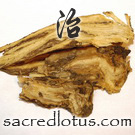 Dang Gui90 gTonify Blood
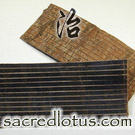 Du Zhong120 gTonify Yang
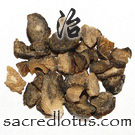 Fu Zi60-180 gWarm the Interior and Expel Cold
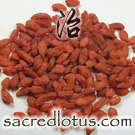 Gou Qi Zi120 gTonify Blood
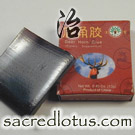 Lu Jiao Jiao120 gTonify Yang
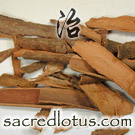 Rou Gui60-120 gWarm the Interior and Expel Cold
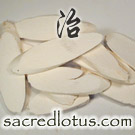 Shan Yao120 gTonify Qi
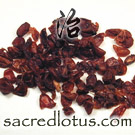 Shan Zhu Yu90 gAstringe, Stabilize, Bind
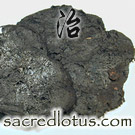 Shu Di Huang240 gTonify Blood
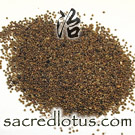 Tu Si Zi120 gTonify Yang
Preparation & dosage
How is You Gui Wan prepared, and what caution applies?
You Gui Wan ("Restore the Right [Kidney] Pill") is prepared as honey pills: the herbs are ground to a fine powder and bound with honey, taken at about 9–15 g, two to three times a day with warm water. It can also be made as a decoction with the quantities reduced appropriately.
Preparation caution. The formula contains Fu Zi (prepared aconite), which is toxic and must be the properly processed (zhi) form — and if made as a decoction it is cooked long first (30–60+ minutes) to reduce its toxicity. Lu Jiao Jiao (deer-antler gelatin) is dissolved into the mix rather than ground raw. A practitioner-directed Kidney-yang tonic. Available as ready-made pills.
Source: Sacred Lotus sources & references (composition and preparation note) + Bensky & Barolet, Formulas & Strategies; the aconite processing caution from standard herb-safety references.
Honey pills; 9-15 g taken 2-3 times daily with warm water. May also be given as a decoction with proportionally reduced quantities.
Safety — read before use
What are the cautions for You Gui Wan?
You Gui Wan is warming and rich, so it is not for yin-deficient heat, damp-heat, or excess (full) heat patterns. The warming Fu Zi and Rou Gui and the cloying Shu Di Huang are inappropriate where there is heat, thirst, a red tongue, or clear signs of deficiency fire.
- Weak, damp Spleen: the rich, cloying yin tonics can burden digestion — watch for reduced appetite or loose stools, and modify accordingly.
- Contains Fu Zi (prepared aconite): it must be properly processed; use only under professional guidance.
- Pregnancy: use with caution given the strongly warming, blood-moving ingredients.
Source: Bensky & Barolet, Formulas & Strategies; owner’s Five Branches notes. Reference only — not a prescription.
Originally Appeared In:
- Collected Treatises of Jing Yue (Jing Yue Quan Shu)
Notes:
How does You Gui Wan compare with similar formulas, and how is it modified?
You Gui Wan is the pure yang-warming member of a family of Kidney tonics — it supplements without draining, which distinguishes it from its closest relatives.
- vs Zuo Gui Wan (Zhang Jing-Yue’s paired “Restore the Left” formula) — Zuo Gui Wan purely enriches Kidney yin and essence with no warming yang herbs, while You Gui Wan warms Kidney yang. “Left/right” mirror yin/yang.
- vs Jin Gui Shen Qi Wan — Shen Qi Wan gently warms yang with small amounts of warming herbs on a yin-nourishing base that includes draining herbs (Ze Xie, Fu Ling, Mu Dan Pi), making it better where there is fluid accumulation or urinary difficulty. You Gui Wan is richer, purely supplementing (no drainers), for more pronounced yang and essence depletion without dampness.
Common modifications: add Ren Shen for marked concurrent qi deficiency; for persistent daybreak diarrhea, combine with warming astringents (e.g. add Wu Wei Zi and Rou Dou Kou).
Source: Bensky & Barolet, Formulas & Strategies (comparisons & modifications); owner’s Five Branches notes.
Clinical Studies & Research:
Is there modern research on You Gui Wan?
Yes, but it is largely preclinical. Network-pharmacology and animal studies explore You Gui Wan in osteoporosis (kidney-yang-deficiency models), premature ovarian failure (compared with Zuo Gui Wan), and allergic airway inflammation. Human clinical evidence is limited.
Sources: PubMed 36893746; 35657051; 26075017. Research context, not a therapeutic claim.
Sources & References
Compiled and edited by Thomas Dehli, Founder & Editor, Sacred Lotus Updated
The information here is referenced from numerous sources — teachers, practitioners, class notes from Five Branches University, the books below, and the published research literature, with citations given as resolvable PubMed identifiers. Where sources disagree, I have flagged the discrepancies directly. If facts couldn't be verified, I have left them out. How we source our content.
Reference information for students and practitioners — not medical advice. Consult a qualified practitioner. Terms of use.
Chinese Formulas Books & References
 https://amzn.to/4fYI3f8
 https://amzn.to/4j55NRA
 https://amzn.to/4gMROyv
 https://amzn.to/4h7msSK