

Er Xian Tang (Two Immortal Decoction)
Er Xian Tang
Two Immortal Decoction
- Category
- Formulas that Tonify
- Subcategory
- Formulas that Warm and Tonify the Yang
- Ingredients
- 6 herbs
Actions
What does Er Xian Tang do?
Er Xian Tang simultaneously warms and tonifies Kidney yang, nourishes Kidney yin, and drains deficient Kidney fire, while regulating the Chong and Ren vessels. It is an unusual pairing of warming and cooling herbs, built for a pattern in which Kidney yin and yang are both declining together.
How the ingredients work together:
- Chief — the “two immortals”: Xian Mao and Yin Yang Huo (Xian Ling Pi), whose shared name-character “xian” (immortal) gives the formula its name, warm and tonify Kidney yang and dispel cold-damp.
- Deputy: Ba Ji Tian assists in warming and tonifying Kidney yang.
- Cooling counterweight: Huang Bai and Zhi Mu drain Kidney fire and clear deficiency heat — addressing the flushing and irritability.
- Assistant: Dang Gui nourishes and regulates the blood, harmonizing the Chong and Ren vessels.
Source: owner’s Five Branches notes; Bensky & Barolet, Chinese Herbal Medicine: Formulas & Strategies. Traditional-use framing; not medical advice.
Indications
What is Er Xian Tang used for?
Er Xian Tang is used for simultaneous Kidney yin and yang deficiency with disharmony of the Chong and Ren vessels — classically the menopausal (climacteric) transition, when both aspects of the Kidneys decline at once and deficient fire flares upward.
Typical presentation:
- Symptoms: hot flashes and sweating, irritability, hypertension, menstrual irregularity or amenorrhea, insomnia, dizziness, and palpitations — arising alongside underlying cold-deficiency signs such as fatigue, a sore lower back, and frequent clear urination.
- Tongue & pulse: because yin and yang are both deficient, these vary with whichever predominates rather than showing one fixed picture; the formula is chosen from the overall mixed pattern.
Source: owner’s Five Branches notes; Bensky & Barolet, Formulas & Strategies. Traditional-use framing.
Western Uses:
What is Er Xian Tang used for in modern practice?
Er Xian Tang is best known in modern practice as a formula for menopausal syndrome and perimenopausal hypertension, and it is actively studied for postmenopausal osteoporosis. Chinese clinical sources also apply it to amenorrhea and to certain endocrine and renal presentations.
These biomedical correlates are offered for pattern-matching and reference only. They describe where the formula has been studied or traditionally selected — not claims that Er Xian Tang treats, cures, or prevents these conditions. Diagnosis and prescribing belong with a qualified practitioner.
Source: research cited below (PubMed); Bensky & Barolet, Formulas & Strategies (modern applications). No medical claims.
Ingredients
6 substances in Er Xian Tang — each links to its full herb monograph.
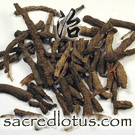 Xian Mao6-15 gTonify Yang
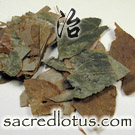 Yin Yang Huo9-15 gTonify Yang
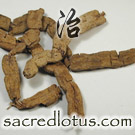 Ba Ji Tian9 gTonify Yang
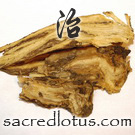 Dang Gui9 gTonify Blood
 Huang Bai4.5-9 gClear Heat and Dry Dampness
 Zhi Mu4.5-9 gDrain Fire
Preparation & dosage
How is Er Xian Tang prepared?
Er Xian Tang ("Two Immortal Decoction") is prepared as a water decoction (tang) of its six herbs — the warming Kidney-yang tonics Xian Mao (the "immortal" of the name), Yin Yang Huo and Ba Ji Tian balanced against the cooling Huang Bai and Zhi Mu, with Dang Gui — taken warm.
This deliberate warm-and-cool pairing is the formula's signature, used for menopausal patterns with both yang and yin depletion. It is also produced as concentrated granules for sustained use. Note Xian Mao is used within recommended doses under practitioner guidance.
Source: Sacred Lotus sources & references (composition and preparation note) + Bensky & Barolet, Formulas & Strategies.
Prepared as a daily decoction. Typical ranges: Xian Mao 6-15 g and Yin Yang Huo 9-15 g; Ba Ji Tian and Dang Gui 9 g each; Huang Bai and Zhi Mu 4.5-9 g each.
Safety — read before use
What are the cautions for Er Xian Tang?
Er Xian Tang is built for a mixed deficiency pattern, so it is not appropriate for pure excess heat or for pronounced yin-deficient heat without an underlying yang deficiency — in those settings the warming yang tonics could aggravate the heat.
- Xian Mao is regarded as slightly toxic and is warming and drying — avoid high doses or prolonged use, and adjust the dose to the individual.
- Balance to the pattern: weight the warming versus cooling herbs to each person’s yin–yang picture.
- Pregnancy: use with caution.
Source: Bensky & Barolet, Formulas & Strategies; owner’s Five Branches notes. Reference only — not a prescription.
Originally Appeared In:
- Traditional Chinese Medical Formulas (Fang Ji Xue)
Notes:
How does Er Xian Tang compare with similar formulas, and how is it modified?
Er Xian Tang is distinctive for combining yang warming, yin nourishing, and fire draining in one formula — the feature that sets it apart from other Kidney tonics.
- vs You Gui Wan and Jin Gui Shen Qi Wan — those warm Kidney yang (with essence support) but do not clear fire. Er Xian Tang adds yin nourishing and fire draining, for the menopausal picture where yin and yang decline together.
- vs Zhi Bai Di Huang Wan — that formula enriches yin and drains deficient fire only (yin-deficiency heat, e.g. hot flashes), with no yang warming; choose Er Xian Tang when Kidney yang deficiency coexists.
Common modifications: when deficient heat / yin deficiency predominates, emphasize Zhi Mu and Huang Bai; when yang deficiency and cold predominate, emphasize Xian Mao and Yin Yang Huo.
Source: Bensky & Barolet, Formulas & Strategies (comparisons & modifications); owner’s Five Branches notes.
Clinical Studies & Research:
Is there modern research on Er Xian Tang?
Yes, mostly for postmenopausal conditions. A 2026 systematic review and meta-analysis (13 RCTs, 1,269 women) reported that Erxian Decoction added to conventional care improved bone mineral density and pain in postmenopausal osteoporosis, though the trials were small. Mechanistic work remains preclinical.
Sources: PubMed 42155162; 42184498 (review). Research context, not a therapeutic claim.
Sources & References
Compiled and edited by Thomas Dehli, Founder & Editor, Sacred Lotus Updated
The information here is referenced from numerous sources — teachers, practitioners, class notes from Five Branches University, the books below, and the published research literature, with citations given as resolvable PubMed identifiers. Where sources disagree, I have flagged the discrepancies directly. If facts couldn't be verified, I have left them out. How we source our content.
Reference information for students and practitioners — not medical advice. Consult a qualified practitioner. Terms of use.
Chinese Formulas Books & References
 https://amzn.to/4fYI3f8
 https://amzn.to/4j55NRA
 https://amzn.to/4gMROyv
 https://amzn.to/4h7msSK