

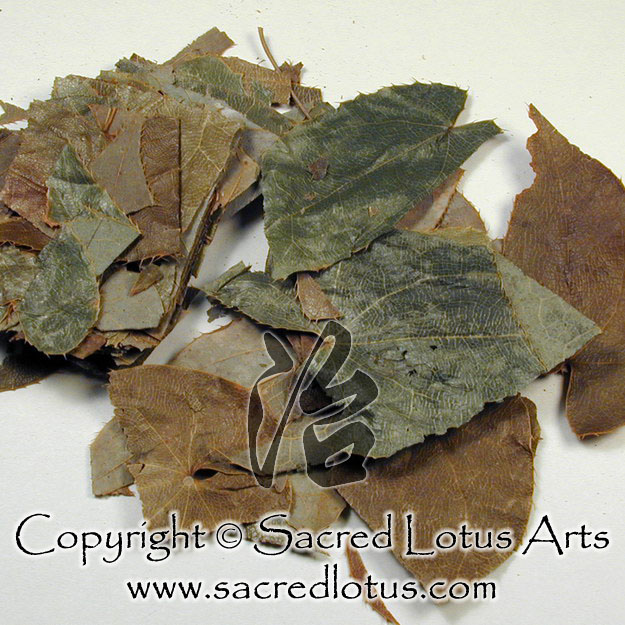
Yin Yang Huo (Aerial Parts of Epimedium)
Herba Epimedii Aerial Parts of Epimedium
Also known as Xian Ling Pi
Materia Medica Data
- Category
- Herbs that Tonify Yang
- Temperature
- Warm
- Nature & Flavour
- Spicy, Sweet, Warm
- Channels Entered
- KI, LIV
- Latin (pharmaceutical)
- Herba Epimedii
- Chinese
- 淫羊藿
- Tone Marks
- yīn yáng huò
- Also Known As
- Xian Ling Pi
- Translation
- Licentious Goat Wort
Chinese Herb Actions
What is Yin Yang Huo (Epimedium / “horny goat weed”) used for in Chinese medicine?
Yin Yang Huo (Herba Epimedii) is traditionally used to tonify Kidney yang and expel wind-damp — for Kidney-yang deficiency showing impotence, low libido, spermatorrhea, frequent urination, and a weak, cold lower back and knees, and for wind-damp painful obstruction (bi) with joint pain and tingling of the limbs. It is warm, acrid and sweet, entering the Kidney and Liver channels.
Its main traditional actions:
- Tonifies Kidney yang — impotence, low sex drive, spermatorrhea, frequent urination, forgetfulness and withdrawal.
- Strengthens the sinews and bones — a weak, sore lower back and knees from Kidney deficiency.
- Expels wind-damp-cold — wind-damp-cold painful obstruction, joint pain, and numbness or tingling of the arms and fingers.
Source: owner’s Five Branches notes; confirmed against Sacred Lotus Sacred Lotus sources & references (Herba Epimedii; Kidney & Liver channels; Tonify Yang). Traditional-use framing; not medical advice.
Chinese Herb Dosage
What is the typical dosage of Yin Yang Huo?
9–15 g in decoction (owner’s notes: 3–5 qian). Because the herb is warming and notably drying, it is used with care and is generally not taken long-term at high doses.
Source: owner’s Five Branches notes; standard materia medica ranges. Reference only — not a prescription.
Chinese Herb Contraindications & Cautions
Are there cautions or contraindications for Yin Yang Huo?
Yin Yang Huo is warming and drying and easily injures the yin. It is traditionally not used in yin-deficiency with heat (fire from yin xu) or in rising yang (yang kang), and its drying nature makes prolonged high-dose use inadvisable.
Source: owner’s Five Branches notes; classical caution (easily injures the yin).
Chinese Herb Toxicity & Overdose
Low. No significant toxicity is reported for the herb at normal therapeutic doses. Because it is warming and drying, overuse can injure yin and fluids; robust human toxicity data at typical doses are limited.
Source: materia medica consensus; owner’s Five Branches notes. No toxicity signal in the reviewed research.
Herb-Drug Interactions
No well-established clinical herb–drug interactions are documented for Yin Yang Huo itself. The material concern is adulteration: over-the-counter “horny goat weed” supplements have repeatedly been found spiked with undeclared sildenafil, tadalafil, or their analogs — for example, a U.S. FDA recall of an epimedium-containing product for undeclared propoxyphenylsildenafil and sildenafil — which can cause dangerous hypotension if combined with nitrate drugs. Preclinical work shows the constituent icariin inhibits PDE5 (below), so caution alongside prescription PDE5 inhibitors or nitrates is reasonable. (Absence of documented interactions is not proof of safety; this is a product-adulteration hazard, not a property of the herb.)
Source: U.S. FDA recall notice (undeclared propoxyphenylsildenafil/sildenafil in a horny-goat-weed product); PubMed 12646997 (icariin PDE5 inhibition, in vitro).
Western / Biomedical Research
Chinese Herb Clinical Studies & Research
Provided as research context — a summary of published biomedical study, not a therapeutic or medical claim.
Is there modern research on Epimedium (Yin Yang Huo / icariin)?
Yes, but the human evidence is limited and most findings are preclinical. The most-studied constituent is the flavonoid icariin. In vitro, icariin is a selective PDE5 inhibitor (IC50 ≈ 0.43 µmol/L, about 168× more selective for PDE5 than PDE4) — the same enzyme sildenafil targets — which is often cited behind the herb’s reputation for erectile function, though a narrative review stresses this remains largely mechanistic and animal-level rather than proven in trials. Icariin and related bioactives also show anti-osteoporotic activity in cell and animal models. Human clinical evidence is limited, and the herb should not be treated as equivalent to prescription PDE5 inhibitors.
Sources: PubMed 12646997 (icariin on cGMP-specific PDE5 / cAMP-specific PDE4 in vitro, Asian J Androl 2003); PMC 9360520 (icariin & erectile function, narrative review); PMC 11206986 (Epimedium bioactives in osteoporosis, network pharmacology + experimental validation). Research context, not therapeutic claims.
Chinese Herb Notes
How does Yin Yang Huo compare with Ba Ji Tian and Xian Mao?
All three fortify Kidney yang, strengthen the sinews and bones, and expel wind-damp — but they differ in strength and dryness. Ba Ji Tian is the mildest and least drying and additionally augments the essence; Yin Yang Huo is extremely drying and easily injures the yin, and is favored for painful obstruction in patients with waning fire at the gate of vitality; Xian Mao is stronger and harsher still and should not be taken long-term.
Common combinations:
- In Zan Yu Dan (Special Pill to Aid Fertility) — a warm-and-tonify-yang formula for yang-deficiency infertility and impotence.
Source: owner’s Five Branches notes (Bensky comparative set); combination confirmed against Sacred Lotus formula membership.
Sources & References
Compiled and edited by Thomas Dehli, Founder & Editor, Sacred Lotus Updated
The information here is referenced from numerous sources — teachers, practitioners, class notes from Five Branches University, the books below, and the published research literature, with citations given as resolvable PubMed identifiers. Where sources disagree, I have flagged the discrepancies directly. If facts couldn't be verified, I have left them out. How we source our content.
Reference information for students and practitioners — not medical advice. Consult a qualified practitioner. Terms of use.
Chinese Herbs Books & References
 https://amzn.to/3WfB3DK
 https://amzn.to/3DR1VUh
 https://amzn.to/42aMz73
 https://amzn.to/3PuD4bt