

Dang Gui Sheng Jiang Yang Rou Tang (Mutton Stew with Tangkuei and Fresh Ginger)
Dang Gui Sheng Jiang Yang Rou Tang
Mutton Stew with Tangkuei and Fresh Ginger
- Category
- Formulas that Tonify
- Subcategory
- Formulas that Tonify the Blood
- Ingredients
- 2 herbs
Actions
What does Dang Gui Sheng Jiang Yang Rou Tang do?
Dang Gui Sheng Jiang Yang Rou Tang warms the interior, dispels cold, and nourishes the blood. It is one of the earliest recorded “food-as-medicine” formulas — a mutton stew from the Jin Gui Yao Lue (Essentials from the Golden Cabinet, Zhang Zhongjing, c. 220 CE) built from just three ingredients, used where cold has settled into a deficient, blood-poor body and is causing pain.
By dose weight and classical function the three ingredients divide as follows:
- Yang Rou (mutton), 250–500 g: the heaviest-dosed ingredient and the formula’s namesake — a warm, sweet food-medicine that tonifies qi and blood and directly rebuilds a body depleted by blood loss or chronic cold. It is not catalogued as a stocked herb in this database, so it does not appear in the ingredient list below even though it is the chief component.
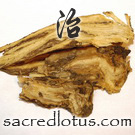
- Dang Gui, 9 g: nourishes and invigorates the blood and alleviates pain — the deputy that targets the underlying blood deficiency.
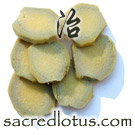
- Sheng Jiang, 15 g: warms the middle and disperses cold — the assistant that scatters the cold pathogen and helps digest the rich mutton.
Discrepancy: this database's composition list (Dang Gui + Sheng Jiang only) is incomplete relative to the classical formula, which is built around mutton as its principal ingredient. Mutton/lamb is not present anywhere in this database's herb catalog (it is a food substance, not a materia medica entry), so it cannot be linked as a formula ingredient row here even though it is the chief herb by both dose and function.
Source: Sacred Lotus sources & referencesJin Gui Yao Lue classical formula text (original ratio Dang Gui 3 liang : Sheng Jiang 5 liang : Yang Rou 1 jin) + Bensky & Barolet-style chief/deputy/assistant convention applied to that composition. Traditional-use framing; not medical advice.
Indications
What is Dang Gui Sheng Jiang Yang Rou Tang used for?
Dang Gui Sheng Jiang Yang Rou Tang is the classical treatment for abdominal pain from blood deficiency with cold, most famously postpartum abdominal pain. The Jin Gui Yao Lue records two indications for it: postpartum abdominal pain (which it notes also covers abdominal-type cold hernia and general deficiency-taxation), and cold-type hernial disorder (han shan) with abdominal pain and an urgent, pulling sensation into the flank.
Classic presentation:
- Dull, cramping lower-abdominal pain that eases with warmth and gentle pressure — the hallmark of a deficiency-cold (rather than excess/stagnation) pain pattern.
- Blood-deficiency signs: pale complexion, cold limbs, general depletion, often following childbirth or significant blood loss.
- Cold-type hernial pain (in men): lower-abdominal and inguinal/flank pain aggravated by cold.
Tongue and pulse are not recorded in this database for this formula; general sources describing blood-deficiency-with-cold patterns note a pale tongue and a thin, weak, or slow pulse, but that is a pattern-level inference rather than a fact drawn from this formula's own classical text, so it is flagged here rather than stated as a formula-specific fact.
Source: Jin Gui Yao Lue, chapters on postpartum disease and hernial disorder (han shan); Bensky & Barolet, Formulas & Strategies, general blood-deficiency-with-cold pattern description. Traditional-use framing; not medical advice.
Western Uses:
What is Dang Gui Sheng Jiang Yang Rou Tang used for in modern practice?
In modern practice this formula is most often referenced as a warming postpartum-recovery and cold-stagnation dysmenorrhea food-therapy, and remains a well-known winter tonic dish in Chinese food culture. Practitioners have traditionally applied its blood-nourishing, cold-dispelling pattern to postpartum weakness and cramping, to menstrual pain that is clearly worse with cold and better with warmth, and to general cold-intolerance/fatigue in a depleted, blood-deficient constitution.
These are traditional-use correlates, not claims that the formula treats any diagnosed disease. Because it is built around mutton as a food ingredient rather than a standardized herbal decoction, it is more often encountered today as a therapeutic recipe (in TCM dietary-therapy practice) than as a prescribed herbal formula. See research for what could and could not be verified in the indexed literature.
Source: traditional-use correlates summarized from Bensky & Barolet, Formulas & Strategies, and the formula's classical postpartum/hernia indications above; reference only, not a treatment claim.
Ingredients
2 substances in Dang Gui Sheng Jiang Yang Rou Tang — each links to its full herb monograph.
Preparation & dosage
How is Dang Gui Sheng Jiang Yang Rou Tang prepared?
Classically it is simmered as a stew, not a typical herbal decoction: the mutton is blanched and cut into pieces, then combined with Dang Gui and sliced Sheng Jiang and simmered down. The Jin Gui Yao Lue specifies cooking 8 sheng of water down to 3 sheng, taken warm in three divided doses of about 7 ge each over the course of a day.
In contemporary practice the same proportions are generally kept (mutton simmered with Dang Gui and Sheng Jiang until tender), served warm as a therapeutic soup rather than strained and taken as a concentrated decoction.
Source: Jin Gui Yao Lue classical preparation instructions. Reference only, not medical advice.
Prepared as a stew, not a decoction. Reference amounts from Sacred Lotus + classical text: Dang Gui 9 g; Sheng Jiang 15 g (increase toward 30 g if cold is pronounced, per the classical modification); Yang Rou (mutton) 250–500 g — not catalogued in this database's herb list but the formula's principal ingredient by dose and function. Classical ratio (Jin Gui Yao Lue): Dang Gui 3 liang : Sheng Jiang 5 liang : Yang Rou 1 jin. Reference only, not a prescription.
Safety — read before use
What are the cautions for Dang Gui Sheng Jiang Yang Rou Tang?
As a warming, tonifying formula built on mutton and Sheng Jiang, it is inappropriate for heat, yin-deficiency, or damp-heat patterns — using it where there is fever, thirst, a red tongue, or other heat signs would aggravate rather than relieve the condition. It is also unsuitable for abdominal pain from excess causes (food stagnation, blood stasis with heat) rather than deficiency-cold.
- Avoid with heat or yin-deficiency signs: red tongue, thirst, fever, or a rapid pulse contraindicate a warming mutton-and-ginger formula.
- Food-safety note: as an actual food preparation (not a standardized granule or pill), anyone with a mutton/lamb allergy or intolerance, or who keeps kosher/halal-restricted or vegetarian/vegan diets, cannot take it in its classical form.
- Rich and warming: like other tonifying decoctions, it can be heavy on digestion in someone with a weak, damp Spleen; the classical modification (below) already addresses this for pain with vomiting.
Source: Bensky & Barolet, Formulas & Strategies (cautions for warming interior-cold formulas); general dietary-therapy practice notes. Traditional-use framing; not medical advice.
Originally Appeared In:
- Essentials from the Golden Cabinet (Jin Gui Yao Lue)
Notes:
What are the classical modifications for Dang Gui Sheng Jiang Yang Rou Tang, and how does it compare to related formulas?
The Jin Gui Yao Lue itself gives two modifications: if cold is more pronounced, increase Sheng Jiang to 1 jin (roughly double the base amount); if pain is more severe and accompanied by vomiting, add Chen Pi (tangerine peel, 2 liang) and Bai Zhu (white atractylodes, 1 liang) to strengthen the Spleen/Stomach and settle counterflow.
- vs Dang Gui Jian Zhong Tang: both treat deficiency-cold abdominal pain with Dang Gui and Sheng Jiang, but Dang Gui Jian Zhong Tang builds on Xiao Jian Zhong Tang's Gui Zhi-and-Yi Tang base (warming the middle and directly tonifying with malt sugar) rather than mutton, and is the more commonly prescribed herbal decoction today.
- vs Dang Gui Si Ni Tang: that formula (also from the Shang Han Lun/Jin Gui Yao Lue tradition) treats cold obstructing the channels with cold extremities and a faint pulse, using Gui Zhi Tang’s warming/harmonizing structure rather than a mutton food-base, and does not target abdominal pain as its primary indication.
Source: Jin Gui Yao Lue classical modification text (Sheng Jiang increase; Chen Pi + Bai Zhu addition); Bensky & Barolet, Formulas & Strategies, for the comparison formulas.
Clinical Studies & Research:
Is there modern research on Dang Gui Sheng Jiang Yang Rou Tang?
No PubMed/PMC-indexed clinical or preclinical study specific to this formula could be verified. An NCBI eutils search for the formula's Pinyin and common English name returned no matching records; the only PubMed-indexed studies found under related search terms (e.g. PMID 32185995, PMID 9166999) turned out to test a different, related classical formula — Dang Gui Si Ni Jia Wu Zhu Yu Sheng Jiang Tang — not this one, and are not cited here to avoid misattributing findings.
Chinese-language sources (clinical case reports and food-therapy reviews in journals such as Chinese Folk Medicine and university-hospital dietary-therapy write-ups) describe using the stew for cold-stagnation-type primary dysmenorrhea and postpartum recovery, but these are not indexed in PubMed/PMC with a resolvable PMID, so per this site's sourcing standard they are described here as traditional/clinical-report context only and not cited as verified research.
Sources: NCBI PubMed eutils search (Danggui Shengjiang Yangrou; Dang Gui Sheng Jiang Yang Rou Tang), performed directly — no formula-specific indexed study found. Absence of indexed research is stated as such, not as evidence of ineffectiveness.
Sources & References
Compiled and edited by Thomas Dehli, Founder & Editor, Sacred Lotus Updated
The information here is referenced from numerous sources — teachers, practitioners, class notes from Five Branches University, the books below, and the published research literature, with citations given as resolvable PubMed identifiers. Where sources disagree, I have flagged the discrepancies directly. If facts couldn't be verified, I have left them out. How we source our content.
Reference information for students and practitioners — not medical advice. Consult a qualified practitioner. Terms of use.
Chinese Formulas Books & References
 https://amzn.to/4fYI3f8
 https://amzn.to/4j55NRA
 https://amzn.to/4gMROyv
 https://amzn.to/4h7msSK