

Si Wu Tang
Four Substance Decoction
- Category
- Formulas that Tonify
- Subcategory
- Formulas that Tonify the Blood
- Ingredients
- 4 herbs
Actions
What does Si Wu Tang do?
Si Wu Tang (Four Substance Decoction) tonifies and regulates the Blood, restoring healthy menstruation and relieving Blood-deficiency signs such as pallor, dizziness, and a dry, tight quality to the tissues. Its four herbs pair rich, nourishing tonics with acrid, moving herbs, so the formula builds Blood without letting it stagnate — the template later copied by an entire family of Blood-related formulas.
- Tonifies Blood and nourishes Yin — Shu Di Huang and Bai Shao replenish depleted Blood and calm a Blood-deficient Liver.
- Invigorates and moves Blood — Dang Gui and Chuan Xiong keep the Blood circulating and disperse mild stagnation, preventing the rich tonics from becoming cloying.
- Regulates menstruation — the combined tonify-and-move action is the classical basis for treating irregular, painful, or scanty periods rooted in Blood deficiency.
- Softens the Liver and eases tension — nourished Blood calms Liver-related tightness, headache, and dizziness.
Source: Sacred Lotus sources & references + Bensky & Barolet, Formulas & Strategies (2nd ed.); Chen & Chen, Chinese Herbal Formulas and Applications.
Indications
What is Si Wu Tang used for?
Si Wu Tang is the foundational formula for Blood deficiency, used above all for menstrual irregularity and the pale, dizzy, palpitation-prone presentation that accompanies depleted Blood. It is one of the most widely applied base formulas in TCM gynecology, frequently modified rather than used alone.
- Irregular menstrual cycles (early, late, or unpredictable) from Blood deficiency
- Scanty menstrual flow or dysmenorrhea with a dull, dragging quality
- Amenorrhea rooted in Blood deficiency rather than stagnation alone
- Dizziness, blurred vision, or tinnitus from Blood failing to nourish the head and eyes
- Palpitations, insomnia, and a pale or sallow complexion
- Pale lips, nails, and dry skin or hair from insufficient Blood
- Threatened miscarriage and postpartum weakness (traditional supportive use, typically combined with additional tonics)
Source: Sacred Lotus sources & references on indications/pattern + Bensky & Barolet, Formulas & Strategies (2nd ed.).
Western Uses:
What conditions is Si Wu Tang used for in modern practice?
Si Wu Tang is the foundational blood tonic (Liver blood deficiency — pallor, dizziness, scanty or irregular periods, dry skin), so it is referenced chiefly for gynaecological and blood-deficiency conditions: painful periods (dysmenorrhoea), irregular menstruation, premenstrual syndrome, anaemia, threatened miscarriage, postpartum weakness, insufficient lactation, hives (urticaria), and blood-deficiency ("neurogenic") headache.
The thread is the Liver-blood-deficiency pattern, not any one diagnosis. Threatened miscarriage is an obstetric emergency requiring immediate medical care; anaemia needs diagnosis (its causes range from diet to internal bleeding); and abnormal bleeding must be assessed. This base tonic is a traditional adjunct, not a substitute. Traditional-use correlates only, not a treatment claim.
Source: Sacred Lotus sources & references (pattern) + Bensky & Barolet, Formulas & Strategies; biomedical correlates as reference only. Not medical advice.
Ingredients
4 substances in Si Wu Tang — each links to its full herb monograph.
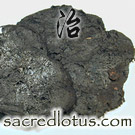 Shu Di Huang9-21 gTonify Blood
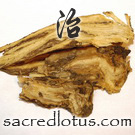 Dang Gui9-12 gTonify Blood
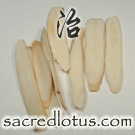 Bai Shao9-15 gTonify Blood
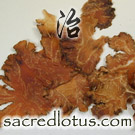 Chuan Xiong3-6 gInvigorate Blood and Remove Stagnation
Preparation & dosage
How is Si Wu Tang prepared?
Si Wu Tang is prepared as a water decoction of its four herbs; this site’s reference dosage range is Shu Di Huang 9–21 g, Bai Shao 9–15 g, Dang Gui 9–12 g, and Chuan Xiong 3–6 g.
- Shu Di Huang is used in its wine-steamed, “cooked” (shu) form, which is less cloying and more warming than the raw (sheng) root.
- Bai Shao is sometimes stir-fried (chao Bai Shao) in modified versions to soften its sour, astringent quality.
- Chuan Xiong is used at the smallest relative dose of the four, since its acrid, moving action is meant to assist the tonics rather than dominate them.
- The formula’s earliest recorded form (Tang dynasty) was a fine powder taken with wine; the Song-dynasty compilation that popularized it presents it as a standard water decoction, the form generally used today.
Source: Sacred Lotus dosage ranges + Bensky & Barolet, Formulas & Strategies (2nd ed.), on classical preparation and herb processing.
Safety — read before use
What are the cautions for Si Wu Tang?
Si Wu Tang’s rich, Yin-nourishing herbs are heavy and cloying, so it is traditionally cautioned against in Spleen Qi/Yang deficiency with dampness — loose stools, poor appetite, abdominal fullness, or a greasy tongue coat.
- Spleen deficiency/dampness: Shu Di Huang and Bai Shao together are difficult for a weak Spleen to transform; unmodified use here can worsen digestion, bloating, or loose stools.
- Acute or heavy bleeding: not intended for acute, severe blood loss — the moving action of Dang Gui and Chuan Xiong is not appropriate where bleeding needs to be stopped rather than the Blood rebuilt.
- Pregnancy: because Dang Gui and Chuan Xiong invigorate Blood, this formula is a public-safety reference point for pregnancy caution and is used, if at all, only under professional guidance and typically in modified form.
- Excess or heat patterns: not appropriate for Blood-heat or purely excess presentations without an underlying deficiency.
Source: Bensky & Barolet, Formulas & Strategies (2nd ed.); Chen & Chen, Chinese Herbal Formulas and Applications (cautions for rich Blood tonics). Framed as public-safety reference, not administration guidance.
Originally Appeared In:
- Imperial Grace Formulary of the Tai Ping Era (Tai Ping Hui Min He Ji Ju Fang)
Notes:
How does Si Wu Tang relate to Ba Zhen Tang, Tao Hong Si Wu Tang, and other formulas?
Si Wu Tang is the parent formula of an entire family of Blood-related prescriptions built by adding Qi tonics, stronger Blood-movers, or hemostatic herbs to its four-herb base.
- Ba Zhen Tang (Eight Treasure Decoction): Si Wu Tang + Si Jun Zi Tang (Ren Shen, Bai Zhu, Fu Ling, Zhi Gan Cao) — adds Qi tonification for combined Qi-and-Blood deficiency.
- Shi Quan Da Bu Tang: Ba Zhen Tang + Huang Qi + Rou Gui — a stronger, warming Qi-Blood-Yang tonic for chronic deficiency with cold.
- Tao Hong Si Wu Tang: Si Wu Tang + Tao Ren + Hong Hua — shifts the balance from tonify-with-movement toward stronger Blood-invigoration, for dysmenorrhea or amenorrhea with dark clots and fixed, stabbing pain — more pronounced Blood stasis than Si Wu Tang alone addresses.
- Sheng Yu Tang: Si Wu Tang + Ren Shen + Huang Qi — adds Qi tonics to help generate and hold Blood, used for Qi-and-Blood deficiency with excessive uterine bleeding or profuse flow.
- Jiao Ai Tang and the Wen Jing Tang family: built on a Si Wu Tang base with E Jiao, Ai Ye, and warming herbs added, for uterine bleeding or menstrual disorders with an underlying cold or deficiency component.
Classical source and lineage: Si Wu Tang is recorded in the Song-dynasty imperial formulary Tai Ping Hui Min He Ji Ju Fang (“Formulas of the Peaceful Benevolent Dispensary”), with its composition traced to the earlier Tang-dynasty text Xian Shou Li Shang Xu Duan Mi Fang, where it originated as a trauma/Blood-stasis formula before its gynecological role became dominant.
Source: Bensky & Barolet, Formulas & Strategies (2nd ed.) — formula family and classical-source lineage.
Clinical Studies & Research:
Is there modern research on Si Wu Tang?
Yes — Si Wu Tang has been studied in randomized human trials as well as animal models, mostly around menstrual pain, antioxidant/skin markers, and Blood-building (hematopoietic) effects.
- Primary dysmenorrhea (clinical, RCT): a placebo-controlled pilot trial in 78 young women found no significant difference in period pain by the end of the treatment cycle itself, but a delayed reduction in pain emerged in the following cycle among women who completed a full course (PMID 17710126).
- Antioxidant, liver, and skin markers (clinical, RCT): a 6-month randomized, double-blind, placebo-controlled crossover trial in healthy adults reported increased antioxidant enzyme activity, improved lipid/liver markers, and measurable skin-hydration and texture changes with daily use (PMID 27375769).
- Anemia/hematopoiesis (preclinical): in a chronic-renal-failure rat model, Siwu granules combined with erythropoietin raised hemoglobin levels and reduced oxidative-stress markers more than either treatment alone (PMID 31915448).
Sources: PMID 17710126; PMID 27375769; PMID 31915448. Research context only, not a therapeutic claim.
Sources & References
Compiled and edited by Thomas Dehli, Founder & Editor, Sacred Lotus Updated
The information here is referenced from numerous sources — teachers, practitioners, class notes from Five Branches University, the books below, and the published research literature, with citations given as resolvable PubMed identifiers. Where sources disagree, I have flagged the discrepancies directly. If facts couldn't be verified, I have left them out. How we source our content.
Reference information for students and practitioners — not medical advice. Consult a qualified practitioner. Terms of use.
Chinese Formulas Books & References
 https://amzn.to/4fYI3f8
 https://amzn.to/4j55NRA
 https://amzn.to/4gMROyv
 https://amzn.to/4h7msSK