
Chai Hu Jia Long Gu Mu Li Tang
Bupleurum Plus Dragon Bone and Oyster Shell Decoction
- Category
- Formulas that Calm the Spirit
- Subcategory
- Formulas that Sedate and Calm the Spirit
- Ingredients
- 12 herbs
Actions
What does Chai Hu Jia Long Gu Mu Li Tang do?
Chai Hu Jia Long Gu Mu Li Tang harmonizes Shaoyang, clears a mixed residual exterior and interior heat, and anchors a spirit destabilized by that heat — it is built on the Xiao Chai Hu Tang (Minor Bupleurum Decoction) framework, with anchoring minerals and a mild purgative added for a more complex, three-stage presentation.
- Harmonizes Shaoyang: Chai Hu and Huang Qin (the core Xiao Chai Hu Tang pair) resolve alternating chills/fever and chest-and-flank fullness.
- Clears residual Taiyang and Yangming heat: Gui Zhi addresses lingering surface disturbance while Da Huang drains heat accumulating in the interior.
- Transforms phlegm and harmonizes the Stomach: Ban Xia and Sheng Jiang descend rebellious qi and settle nausea.
- Anchors and calms the spirit: Long Gu and Mu Li are heavy, settling minerals that subdue agitation, palpitations, and anxiety; Fu Ling supports this by calming the spirit while draining dampness.
- Supports righteous qi: Ren Shen and Da Zao tonify qi so the combined harmonizing/purgative/anchoring action does not further weaken the patient.
Source: Sacred Lotus sources & references (composition) + Bensky & Barolet, Formulas & Strategies; Chen & Chen, Chinese Medical Herbology and Pharmacology. Traditional-use framing; not medical advice.
Indications
What is Chai Hu Jia Long Gu Mu Li Tang used for?
Chai Hu Jia Long Gu Mu Li Tang treats a mixed Taiyang-Shaoyang-Yangming presentation with pronounced emotional/spirit disturbance — classically described as arising after improper early purgation of an exterior disorder, leaving heat lodged at several levels at once.
- Chest and epigastric fullness or oppression, often with a sensation of heaviness
- Anxiety, irritability, and a restless, agitated state of mind
- Palpitations, and a tendency to startle or feel unsettled
- Insomnia or unsettled sleep tied to the same underlying agitation
- Constipation or difficult bowel movements (the Yangming component, addressed by Da Huang)
- A red tongue with a slippery coat and a wiry, rapid pulse
Source: Sacred Lotus sources & references (pattern/tongue/pulse fields) + Bensky & Barolet, Formulas & Strategies. Traditional-use framing; not medical advice.
Ingredients
12 substances in Chai Hu Jia Long Gu Mu Li Tang — each links to its full herb monograph.
 Chai Hu12 gCool, Spicy Herbs that Release the Exterior
 Huang Qin4.5 gClear Heat and Dry Dampness
 Long Gu4.5 gAnchor, Settle, and Calm the Spirit
 Mu Li4.5 gAnchor, Settle, and Calm the SpiritNo specimen photographQian Dan4.5 gSubstances for External Application
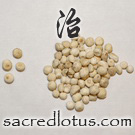 Ban Xia6-9 gWarm Herbs that Transform Phlegm-Cold
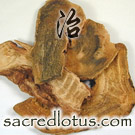 Da Huang6 gadd close to endPurgatives
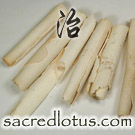 Fu Ling4.5 gRegulate Water and Drain Dampness
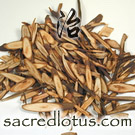 Gui Zhi4.5 gWarm, Spicy Herbs that Release the Exterior
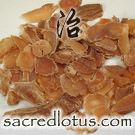 Ren Shen4.5 gTonify Qi
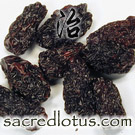 Da Zao6 piecesTonify Qi
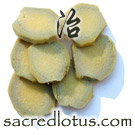 Sheng Jiang4.5 gWarm, Spicy Herbs that Release the Exterior
Preparation & dosage
How is Chai Hu Jia Long Gu Mu Li Tang prepared?
Chai Hu Jia Long Gu Mu Li Tang is a decoction: the herbs are simmered together in water, with Da Huang classically added close to the end of cooking — a standard technique for purgative rhubarb, since a brief simmer preserves its laxative anthraquinone compounds while a long boil weakens that effect.
- Mineral ingredients: Long Gu (Os Draconis, fossilized bone) and Mu Li (Concha Ostreae, oyster shell) are dense minerals traditionally decocted first, ahead of the other herbs, to extract their settling properties fully.
- Sheng Jiang: used uncooked (fresh ginger), consistent with its role harmonizing the Stomach and assisting Ban Xia.
- Clinical modification: Da Huang's dose and inclusion are commonly adjusted according to whether constipation/Yangming heat is actually present — a routine modern modification, not a departure from the classical formula.
Source: Bensky & Barolet, Formulas & Strategies (decoction method, Da Huang late-addition convention, mineral pre-decoction convention).
Safety — read before use
What are the cautions for Chai Hu Jia Long Gu Mu Li Tang?
Sacred Lotus's composition record for this formula includes Qian Dan (Minium, lead tetroxide/red lead, Pb3O4) — the ingredient's presence in the original Shang Han Lun formula is well documented, but virtually all modern clinical formularies (Bensky & Barolet; Chen & Chen) note that contemporary practice customarily omits Qian Dan entirely because of lead toxicity, sometimes substituting additional Long Gu/Mu Li or another non-toxic anchoring mineral (such as Ci Shi, Magnetite) for the same settling effect. This is presented as neutral public-safety reference, not administration guidance, and the underlying data has not been altered.
- Qian Dan (lead-based mineral): lead exposure is associated with well-established neurological, renal, and hematologic toxicity; modern regulatory bodies restrict lead-containing preparations.
- Da Huang (purgative): traditionally contraindicated or used cautiously in pregnancy and during menstruation, and not for prolonged unsupervised use.
- Pattern-matching: not intended for pure deficiency or flaccid-collapse presentations without the mixed Taiyang-Shaoyang-Yangming heat pattern described above; the heavy anchoring minerals and purgative component are not appropriate outside that context.
- Idiosyncratic reaction awareness: a modern case report described a drug-induced lung injury with systemic features resembling DRESS syndrome attributed to the related Kampo/Sino-Korean preparations Saiko-ka-ryukotsu-borei-to (this formula's Japanese name) and Goreisan taken together — noted here as a documented adverse-event report, not a statement about typical risk.
Source: Bensky & Barolet, Formulas & Strategies (Qian Dan omission in modern practice; Da Huang cautions); PMID 41132891 (case report, drug-induced lung injury). Neutral public-safety reference; not administration guidance.
Originally Appeared In:
- On Cold Damage (Shang Han Lun)
Notes:
How does Chai Hu Jia Long Gu Mu Li Tang differ from Chai Hu Gui Zhi Tang and Gui Zhi Gan Cao Long Gu Mu Li Tang?
Chai Hu Jia Long Gu Mu Li Tang is distinguished by combining Shaoyang harmonization with heavy anchoring minerals and a purgative — a broader, more complex formula than either of its close relatives.
- vs Chai Hu Gui Zhi Tang (Bupleurum and Cinnamon Twig Decoction): combines Shaoyang harmonization with a residual Taiyang exterior pattern, but is milder overall and contains no anchoring minerals or purgative — used for a simpler, less agitated presentation.
- vs Gui Zhi Gan Cao Long Gu Mu Li Tang (Cinnamon Twig, Licorice, Dragon Bone and Oyster Shell Decoction): anchors and calms palpitations following excessive sweating, but without Chai Hu's Shaoyang-harmonizing action — used when the palpitation arises from over-treatment (over-sweating) rather than a mixed three-stage heat pattern.
Classical source: Chai Hu Jia Long Gu Mu Li Tang comes from Zhang Zhongjing's Shang Han Lun (Treatise on Cold Damage, circa 200 CE), described for a case of improper early purgation of a Taiyang disorder that left the pathogen lodged across Taiyang, Shaoyang, and Yangming simultaneously, producing chest fullness, agitation, and delirium-like disturbance.
Cross-tradition note: the same formula is known in Japanese Kampo medicine as Saiko-ka-ryukotsu-borei-to and in Korean medicine as Sihogayonggolmoryeo-tang, where it has continued to be studied for anxiety, insomnia, and stress-related presentations (see research).
Source: Bensky & Barolet, Formulas & Strategies (classical source, formula comparisons, cross-tradition naming).
Clinical Studies & Research:
Is there modern research on Chai Hu Jia Long Gu Mu Li Tang?
Yes — mostly from Kampo (Japan) and Sasang/traditional Korean medicine research under this formula's cross-tradition names, focused on anxiety, sleep, and stress-related outcomes. These are summarized as research context, not as evidence of efficacy for any diagnosed condition.
- Anxiety (preclinical, animal model): a 2025 study examined the formula's potential role in mitigating anxiety induced by social defeat stress (PMID 40836928).
- Insomnia with elevated blood pressure (human study): a study of Sihogayonggolmoryeo-tang for insomnia disorder with prehypertension or stage-1 hypertension (PMID 32702837).
- Post-stroke depression (systematic review/meta-analysis): a review of the formula's efficacy and safety for post-stroke depression (PMID 31601868).
- Adverse-event report: a case report of drug-induced lung injury with DRESS-like features attributed to combined use with another Kampo formula (PMID 41132891) — documented here as a safety signal, not a typical outcome.
Sources: PMID 40836928; PMID 32702837; PMID 31601868; PMID 41132891. Research context, mixed preclinical and clinical; not a therapeutic claim.
Sources & References
Compiled and edited by Thomas Dehli, Founder & Editor, Sacred Lotus Updated
The information here is referenced from numerous sources — teachers, practitioners, class notes from Five Branches University, the books below, and the published research literature, with citations given as resolvable PubMed identifiers. Where sources disagree, I have flagged the discrepancies directly. If facts couldn't be verified, I have left them out. How we source our content.
Reference information for students and practitioners — not medical advice. Consult a qualified practitioner. Terms of use.
Chinese Formulas Books & References
 https://amzn.to/4fYI3f8
 https://amzn.to/4j55NRA
 https://amzn.to/4gMROyv
 https://amzn.to/4h7msSK