
Yu Ping Feng San
Jade Windscreen Powder
- Category
- Formulas that Stabilize and Bind
- Ingredients
- 3 herbs
Actions
What does Yu Ping Feng San do?
Yu Ping Feng San tonifies Wei (protective) Qi to consolidate an unstable exterior, checking spontaneous sweating and reducing susceptibility to recurrent colds, while a small dose of wind-dispersing Fang Feng keeps the tonification from "locking in" any lingering pathogen. Only three herbs form the entire strategy.
- Tonifies Qi and consolidates the exterior: Huang Qi (large dose) builds Lung and Wei qi and is the classic herb for stopping abnormal, spontaneous sweating.
- Strengthens the Spleen as the source of Wei qi: Bai Zhu tonifies Spleen qi and dries dampness, supporting the "post-heaven" production that continually replenishes Wei qi.
- Disperses residual Wind without opening the exterior to further invasion: Fang Feng, in a comparatively small role against the two tonics, escorts out lingering pathogenic wind while its own dispersing tendency is held in check by riding along with Huang Qi and Bai Zhu.
- Net effect — "tonify while dispersing": the exterior is fortified against future invasion rather than passively sealed shut, which is why the formula is used preventively for people who catch colds repeatedly rather than during an active illness.
Source: Sacred Lotus sources & references + Bensky & Barolet, Formulas & Strategies; Chen & Chen, Chinese Herbal Formulas and Applications (tonify-while-dispersing strategy). Traditional-use framing; not medical advice.
Indications
What is Yu Ping Feng San used for?
Yu Ping Feng San treats Wei (protective) Qi deficiency with an unstable, weak exterior — the pattern behind people who catch colds repeatedly from minor exposure, sweat spontaneously with little exertion, and feel a marked aversion to wind and drafts, in the absence of an active external invasion already under way.
- Recurrent susceptibility to colds and upper-respiratory infections in those who contract them easily and repeatedly, often several times per season.
- Spontaneous sweating (zi han) that occurs with minimal exertion or even at rest, distinct from sweating tied to heat or heavy exercise.
- Pronounced aversion to wind and drafts, with a preference to stay covered or away from moving air.
- Pale complexion and fatigue consistent with an underlying Qi deficiency rather than an acute illness.
- A generally weak, easily-invaded constitution — the classical rationale for using the formula preventively, between illnesses, rather than during one.
Source: Sacred Lotus sources & references on pattern/tongue/pulse + Bensky & Barolet, Formulas & Strategies; Chen & Chen, Chinese Herbal Formulas and Applications. Traditional-use framing; not medical advice.
Western Uses:
What conditions is Yu Ping Feng San used for in modern practice?
Yu Ping Feng San strengthens the defensive (wei) qi to stabilise a weak exterior (frequent colds, spontaneous sweating, and sensitivity to wind/drafts in someone who catches everything going around), so it is referenced for a weak-immune-surface picture: recurrent common colds, influenza, chronic rhinitis, and allergic rhinitis.
It is chosen for the wei-qi-deficiency pattern — it is used more to prevent recurrent infection than to treat an acute one. Persistent or worsening allergic or nasal symptoms warrant assessment. Traditional-use correlates only, not a treatment claim.
Source: Sacred Lotus sources & references (pattern) + Bensky & Barolet, Formulas & Strategies; biomedical correlates as reference only. Not medical advice.
Ingredients
3 substances in Yu Ping Feng San — each links to its full herb monograph.
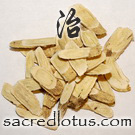 Huang Qi60-180 gTonify Qi
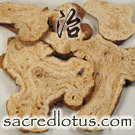 Bai Zhu60 gTonify Qi
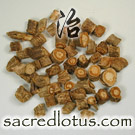 Fang Feng60 gWarm, Spicy Herbs that Release the Exterior
Preparation & dosage
How is Yu Ping Feng San prepared?
Classically a "san" (powder) — the three herbs ground fine and taken as a draft with warm water — though it is very commonly decocted as a tea in modern clinical practice, using our reference amounts of Huang Qi, Bai Zhu, and Fang Feng. All three herbs are simmered together as a single combined brew rather than staggered, since none of them require separate handling.
- Classical powder form: equal or graded amounts of the dried, ground herbs taken by the spoonful in warm water, as described in traditional formulary sources.
- Modern decoction: the same three herbs (per Sacred Lotus sources & references above) simmered together in water and taken warm; also produced as concentrated granules or pills for ongoing preventive use between cold seasons, since the indication is chronic susceptibility rather than an acute illness needing a single strong dose.
- Herb processing: formulary sources commonly describe Huang Qi as either raw or honey-fried (zhi huang qi, to enhance its tonifying action) and Bai Zhu as either raw or stir-fried (chao bai zhu, to strengthen Spleen-drying action); the Sacred Lotus sources & references does not record which processing is used for this listing, so this is general formulary context rather than a Sacred Lotus-sourced detail.
- Dosage ratio: published sources vary somewhat on the exact per-herb ratio across different eras and texts; the amounts in this reference's Sacred Lotus sources & references (Huang Qi 60–180 g, Bai Zhu 60 g, Fang Feng 60 g) should be read as this database's own reference range rather than a single fixed classical proportion.
Source: Sacred Lotus sources & references + Bensky & Barolet, Formulas & Strategies (preparation form and common processing notes).
Safety — read before use
What are the cautions for Yu Ping Feng San?
Yu Ping Feng San is formulated for Wei-qi deficiency between illnesses, not for an active external invasion already in progress — using a consolidating, tonifying formula while a pathogen is still present risks "locking the door on the thief," trapping the invading factor rather than helping the body expel it. Correctly distinguishing chronic deficiency from an acute, active cold is the key safety checkpoint before use.
- Not for an acute external invasion in progress: fresh chills and fever, nasal congestion, or a floating pulse from a pathogen still present at the exterior are traditionally treated with an exterior-releasing formula appropriate to the invading pathogen, not a consolidating tonic like this one.
- Not the first-line formula for night sweats from Yin deficiency: sweating that occurs specifically during sleep and resolves on waking, with heat signs and a red tongue, points to a different mechanism (Yin deficiency with empty heat) that this Qi-tonifying, Wind-dispersing formula is not designed to address.
- Caution with damp-heat or excess-heat patterns: a formula built around warming, tonifying Huang Qi and Bai Zhu is traditionally used cautiously, if at all, where heat or dampness signs (thick yellow tongue coat, marked thirst, fullness with heat) predominate, as tonification could reinforce the excess.
- No toxic or legally restricted ingredients: Huang Qi, Bai Zhu, and Fang Feng are all standard, non-restricted materia medica; this formula carries none of the toxicity/endangered-species concerns associated with substances such as aconite, ephedra, or cinnabar.
- Professional guidance advised in pregnancy, for children, and alongside any diagnosed medical condition, particularly given Huang Qi's immune-modulating action noted in some integrative-medicine references as a theoretical consideration in autoimmune conditions — this is a general herb-safety consideration, not administration guidance.
Source: Bensky & Barolet, Formulas & Strategies; Chen & Chen, Chinese Herbal Formulas and Applications (cautions for exterior-consolidating Qi tonics). Traditional-use framing; not medical advice.
Originally Appeared In:
- Teachings of Dan Xi (Dan Xi Xin Fa)
Notes:
How does Yu Ping Feng San differ from Gui Zhi Tang, Mu Li San, and Bu Zhong Yi Qi Tang?
All four formulas can involve sweating or a Huang Qi/Bai Zhu-type Qi-tonifying core, but they treat different mechanisms and are not interchangeable.
- vs Gui Zhi Tang (Cinnamon Twig Decoction): both are associated with sweating, but Gui Zhi Tang treats an active Wind-Cold invasion of the exterior with sweating, aversion to wind, and a floating-weak pulse from a pathogen currently present — the acute counterpart to Yu Ping Feng San's chronic, deficiency-only presentation with no active invasion. This is the central distinction behind the "not for active exterior invasion" caution above.
- vs Mu Li San (Oyster Shell Powder, with Huang Qi, calcined Mu Li, and Ma Huang Gen): used for more pronounced spontaneous and/or night sweating from more severe Qi/Yang deficiency, relying on astringent Mu Li and sweat-stopping Ma Huang Gen for a stronger direct anti-sweating effect, rather than Yu Ping Feng San's broader Wei-qi consolidation and cold-prevention emphasis (via the wind-dispersing Fang Feng, which Mu Li San does not contain).
- vs Bu Zhong Yi Qi Tang (Tonify the Middle and Augment the Qi Decoction): shares a Huang Qi + Bai Zhu qi-tonifying core, but adds Ren Shen, Dang Gui, Chen Pi, Zhi Gan Cao, and the yang-raising Sheng Ma/Chai Hu pair, targeting broader Middle-Jiao Qi collapse (fatigue, organ prolapse, deficiency fever) rather than Yu Ping Feng San's narrower, exterior-specific focus on Wei qi and cold susceptibility.
What is the classical source of Yu Ping Feng San?
Yu Ping Feng San is attributed to Danxi Xin Fa ("[Zhu] Danxi's Teachings"), a compilation of the Yuan-dynasty physician Zhu Zhenheng's (Zhu Danxi) clinical teachings, and is discussed in later formulary commentary — most notably Wang Ang's Qing-dynasty Yi Fang Ji Jie — which is the source of the widely cited "tonify while dispersing" analysis of the Huang Qi + Fang Feng pairing summarized above.
Well-known modifications described in formulary sources include adding Mu Li (calcined oyster shell) and Ma Huang Gen for more pronounced spontaneous sweating, and combining with blood-nourishing herbs (e.g., Dang Gui) when a concurrent Blood deficiency accompanies the Wei-qi deficiency pattern.
Source: Bensky & Barolet, Formulas & Strategies; Chen & Chen, Chinese Herbal Formulas and Applications (classical attribution, commentary, and modifications).
Clinical Studies & Research:
Is there modern research on Yu Ping Feng San?
Yes — Yu Ping Feng San (YPFS) has a substantial modern research base, concentrated on immune modulation and allergic rhinitis, though clinical results are mixed and mechanistic work remains largely preclinical; this is reported here as research context, not a treatment claim.
- Adult allergic rhinitis (systematic review/meta-analysis, 22 RCTs): found YPFS combined with standard pharmacotherapy appeared more effective than medication alone, but rated the underlying evidence quality as low and found no clear advantage over second-generation antihistamines used alone, calling for more rigorous trials (PMID 29110710).
- Pediatric allergic rhinitis (systematic review/meta-analysis, 10 RCTs, 1,069 children): by contrast, concluded that current evidence does not support routine use of YPFS for this indication, despite a favorable safety profile, again citing methodological limitations in the underlying trials (PMID 33787571) — the two meta-analyses illustrate that the clinical evidence for YPFS in allergic rhinitis is genuinely mixed, not uniformly positive.
- Mechanistic/network pharmacology (2021): identified dozens of active compounds across the three herbs acting on immune- and inflammation-related targets (including MAPK1, NF-κB-related genes, and IL-6), proposing that YPFS may act on allergic rhinitis through combined immune-regulating and anti-inflammatory pathways (PMID 34477124).
- In vitro cytokine study (U937 cells): YPFS extracts significantly inhibited TNF-α, IFN-γ, and IL-1β expression in this cell model, used to help identify which constituents drive the formula's immunomodulatory activity (PMID 28667937).
- Preclinical/animal immune-function review: a 2023 review of Yu-Ping-Feng polysaccharides in animal models describes immune-enhancing and growth-supporting effects in livestock research — relevant as preclinical/veterinary context on the formula's constituents, not human clinical evidence (PMID 37799408).
Sources: PMID 29110710; PMID 33787571; PMID 34477124; PMID 28667937; PMID 37799408. Research context only, not a therapeutic claim; clinical evidence is mixed-quality and concentrated in allergic rhinitis, with mechanistic and preclinical work still preliminary.
Sources & References
Compiled and edited by Thomas Dehli, Founder & Editor, Sacred Lotus Updated
The information here is referenced from numerous sources — teachers, practitioners, class notes from Five Branches University, the books below, and the published research literature, with citations given as resolvable PubMed identifiers. Where sources disagree, I have flagged the discrepancies directly. If facts couldn't be verified, I have left them out. How we source our content.
Reference information for students and practitioners — not medical advice. Consult a qualified practitioner. Terms of use.
Chinese Formulas Books & References
 https://amzn.to/4fYI3f8
 https://amzn.to/4j55NRA
 https://amzn.to/4gMROyv
 https://amzn.to/4h7msSK