
Actions
What does Gua Di San do?
Gua Di San (Melon Pedicle Powder) is a classical emetic formula: it induces vomiting to forcibly expel phlegm, retained food, or toxic substances lodged in the chest and epigastrium. It belongs to the small category of formulas that treat phlegm by inducing vomiting rather than by transforming or draining it — a "guide it out upward" strategy used historically when an obstruction sat high enough in the body that vomiting, not purging, was judged the more direct route of removal.
The formula's roles, as documented in Bensky & Barolet and cross-checked against other standard formula references:
- Chief: Gua Di (Melon Pedicle, Pedicellus Cucumeris) — bitter, cold, and classified slightly toxic; its bitter-cold, emetic action is the formula's core mechanism for expelling what is lodged in the chest and epigastrium.
- Deputy: Chi Xiao Dou (Aduki Bean, Semen Phaseoli Calcarati) — sweet, sour, and neutral; assists Gua Di's emetic action and helps drain accompanying dampness.
- Envoy/vehicle: Dan Dou Chi (Prepared Soybean, Semen Sojae Preparatum) — per Bensky & Barolet and other standard references, decocted separately into a thin liquid that carries the powdered Gua Di and Chi Xiao Dou, disperses constraint in the chest, and helps protect Stomach qi during the emetic process.
Discrepancy: the local Sacred Lotus database records this formula's composition as two herbs only (Gua Di, Chi Xiao Dou). Bensky & Barolet and other standard formula references describe a classical third component, Dan Dou Chi, used as the decoction vehicle rather than powdered with the other two — which may explain why it is absent from a herb-powder ingredient listing. This monograph describes the fuller classical formula; the database composition itself is flagged separately for owner review.
Source: Sacred Lotus sources & references cross-checked against Bensky & Barolet, Formulas & Strategies (2nd ed.), "Formulas that Induce Vomiting to Discharge Phlegm." Encyclopedia reference; not administration guidance.
Indications
What is Gua Di San used for?
Gua Di San treats phlegm, retained food, or a toxic substance obstructing the chest and epigastrium — an excess pattern in which the blockage sits high enough, and the patient's constitution is judged robust enough, that expelling it upward through vomiting was the classical strategy of choice, from its origin in the Shang Han Lun (Treatise on Cold Damage).
Its classic presentation, as described across standard formula references:
- Chest and epigastrium: firm fullness or focal distention below the heart/in the epigastrium, a sensation of qi rushing or blocked in the throat, and difficulty breathing.
- Associated signs: vexation (restlessness/irritability) and an urge to vomit that the patient cannot complete unaided.
Tongue and pulse: the tongue is often normal or shows a spongy/curdy coating; the pulse is floating, classically described at the cun (forward) position — consistent with an excess pathogen lodged high in the chest rather than deep in the interior.
Source: Bensky & Barolet, Formulas & Strategies and other standard formula references (pattern, tongue, pulse for Gua Di San). Encyclopedia reference; not medical advice.
Western Uses:
What is Gua Di San used for in modern practice?
In contemporary practice Gua Di San is largely a historical formula, rarely administered directly, because modern medicine now manages suspected poisoning and gastric obstruction with safer, supervised decontamination methods (e.g., activated charcoal, gastric lavage) rather than induced-vomiting herbal powders. Where it is still referenced, it is as the classical example of the "emetic" therapeutic strategy in Chinese medicine and as a historical antecedent to modern gastric-emptying technique — a reference point, not a recommendation for use.
Modern research has not studied Gua Di San as a whole formula; the available literature examines its chief herb, Gua Di, and its principal constituent, cucurbitacin B, in isolation (see research). Traditional clinical reports describe Gua Di preparations used to induce alcohol aversion, but this is a herb-level, historical clinical report, not a formula-level finding, and is offered as reference only. Any concern about actual poisoning or ingestion of a toxic substance is a medical emergency and belongs with emergency services or a poison control center, not self-treatment.
Source: traditional-use context summarized from Bensky & Barolet, Formulas & Strategies, cross-checked against PubMed literature on the chief herb (see research). Reference only, not a treatment claim.
Ingredients
2 substances in Gua Di San — each links to its full herb monograph.
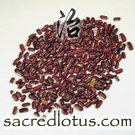 Chi Xiao Dou3 gRegulate Water and Drain Dampness
Preparation & dosage
How was Gua Di San classically prepared?
Historically, Gua Di was dry-fried until yellow, then ground together with Chi Xiao Dou into a fine powder; the powder was taken together with a separately prepared decoction of Dan Dou Chi, which served as the liquid vehicle. Classical texts describe the powder being administered in a single measured dose on an empty stomach, with dosing not simply escalated by the patient but reassessed by the supervising practitioner if vomiting did not occur.
This preparation is documented here as historical/encyclopedic reference only. Because Gua Di is a toxic emetic herb, this record is not a guide for self-administration — classical accounts consistently describe the formula being prepared and given under direct practitioner supervision.
Source: Bensky & Barolet, Formulas & Strategies and other standard formula references (preparation method). Historical reference; not administration guidance.
Reference only — historical/encyclopedic record, not a dosing guide. Per the Sacred Lotus sources & references, Gua Di and Chi Xiao Dou are each recorded at 3 grams; standard formula references additionally describe a Dan Dou Chi decoction (not present as a Sacred Lotus ingredient row, roughly 6-9 g in secondary sources) used as the liquid vehicle for the powder. Because Gua Di is a toxic emetic herb, historical use required direct supervision by an experienced practitioner; contraindicated in pregnancy and the postpartum period, and traditionally avoided in children, the elderly, and weak/deficient patients. This is a historical formula of largely encyclopedic interest in contemporary practice.
Safety — read before use
What are the cautions for Gua Di San?
Gua Di San is built on Gua Di, a chief herb classified toxic (the local database records it as "Slightly Toxic"), and this entry is provided strictly as an encyclopedia safety reference, not as guidance for administration or self-treatment. Historically it was reserved for patients judged constitutionally robust, given under direct, experienced practitioner supervision, and never used casually or repeatedly.
- Contraindicated in pregnancy and the postpartum period, and traditionally considered inappropriate for children, the elderly, or anyone with a weak/deficient constitution, significant blood deficiency, or cardiac/pulmonary insufficiency.
- Pattern-specific: traditionally described as inappropriate once the offending phlegm, food, or toxic substance has already passed beyond the chest and stomach into the intestines — vomiting was no longer considered the correct route of removal at that stage.
- Toxic constituent: Gua Di's emetic action is attributed to cucurbitacin B, a triterpenoid documented in the pharmacological literature as having non-specific toxicity; this underlies why the herb and formula are professional-use, supervised substances historically, not self-administered remedies.
Discrepancy: the local database and Bensky-aligned sources describe Gua Di as "slightly toxic," while some other published materia medica summaries describe it simply as "toxic." Both reflect the same underlying fact — that Gua Di is an emetic herb requiring caution and professional handling — and the difference appears to be one of toxicity-grading convention rather than a substantive disagreement.
Source: Bensky & Barolet, Formulas & Strategies (cautions/contraindications for emetic formulas) + PubMed, "Cucurbitacin B: a review of its pharmacology, toxicity, and pharmacokinetics" (PMID 36460279). Public-safety reference; not medical advice. If a toxic ingestion is suspected, contact emergency medical services or a poison control center.
Originally Appeared In:
- On Cold Damage (Shang Han Lun)
Notes:
Why is Gua Di San rarely used today, and how does it relate to other formulas that treat phlegm?
Gua Di San is the classical representative of the smallest of the phlegm-treating strategies — inducing vomiting — a category that has always been used far more sparingly than formulas that transform, dry, or clear phlegm by other routes. Even in classical practice it was a formula of last resort for a specific presentation (an excess pathogen lodged high in the chest), not a general-purpose treatment for phlegm accumulation elsewhere in the body.
- vs. phlegm-transforming/draining formulas (e.g., Er Chen Tang and its relatives): those formulas resolve phlegm gradually from within by drying dampness, regulating qi, and clearing heat; Gua Di San instead expels an obstruction abruptly and upward, and was reserved for cases where the blockage was judged too high and too acute for a gentler strategy.
- Historical antidote note: classical texts record that if vomiting induced by Gua Di San became excessive or would not stop, clove (Ding Xiang) or musk (She Xiang) were the traditional remedies used to settle it — documented here as a historical record, not as instruction.
Source: Bensky & Barolet, Formulas & Strategies ("Formulas that Induce Vomiting to Discharge Phlegm," category context and historical notes). Encyclopedia reference.
Clinical Studies & Research:
Is there modern research on Gua Di San?
No clinical trials or studies of Gua Di San as a whole formula were located; the available modern research instead examines its chief herb, Gua Di (melon pedicel), and its principal bioactive constituent, cucurbitacin B, in isolation. A 2026 review of the genus Cucumis describes Pedicellus Melo (Gua Di) as traditionally prepared as decoctions or suppositories for febrile and gastrointestinal disorders, notes its content of cucurbitacin B as the basis for its characteristic bitter taste and emetic properties, and cites earlier clinical reports of the herb inducing alcohol aversion; a separate systematic review of cucurbitacin B specifically characterizes it as having broad pharmacological activity alongside non-specific toxicity and low bioavailability.
- Chief herb, traditional use and constituents (review): cucurbitacin-B-rich melon pedicel (Tian Gua Di) described as an emetic used for febrile/GI disorders and, per earlier clinical reports, alcohol aversion (PMID 41971574).
- Cucurbitacin B, pharmacology and toxicity (systematic review): broad pharmacological activity (anti-inflammatory, hepatoprotective, anticancer, among others) alongside documented non-specific toxicity and low bioavailability (PMID 36460279).
- Melon pedicel, a different preparation and route (animal study): an ethanol extract of muskmelon base, given rectally, showed gastrointestinal prokinetic/laxative activity in mice and rats — a distinct traditional application (for abdominal distention and constipation) and route from the classical oral emetic use in Gua Di San, included here for context on the breadth of research on the same herb (PMID 22543170).
Sources: PubMed 41971574; PubMed 36460279; PubMed 22543170. Research context only, at the herb/constituent level, not the formula; none of these findings constitute a treatment claim for Gua Di San.
Sources & References
Compiled and edited by Thomas Dehli, Founder & Editor, Sacred Lotus Updated
The information here is referenced from numerous sources — teachers, practitioners, class notes from Five Branches University, the books below, and the published research literature, with citations given as resolvable PubMed identifiers. Where sources disagree, I have flagged the discrepancies directly. If facts couldn't be verified, I have left them out. How we source our content.
Reference information for students and practitioners — not medical advice. Consult a qualified practitioner. Terms of use.
Chinese Formulas Books & References
 https://amzn.to/4fYI3f8
 https://amzn.to/4j55NRA
 https://amzn.to/4gMROyv
 https://amzn.to/4h7msSK