

Da Jian Zhong Tang (Major Construct the Middle Decoction)
Da Jian Zhong Tang
Major Construct the Middle Decoction
- Category
- Formulas that Warm Interior Cold
- Subcategory
- Formulas that Warm the Middle and Dispel Cold
- Ingredients
- 4 herbs
Actions
What does Da Jian Zhong Tang do?
Da Jian Zhong Tang powerfully warms the Middle Burner (Spleen/Stomach) to expel severe interior cold, directs violently rebellious qi downward, and stops the sharp abdominal pain that comes with visible peristaltic movement or masses under the skin. “Major Construct the Middle” signals both its purpose (rebuilding a Middle Burner that has collapsed into cold) and its strength — it is reserved for cold severe enough to produce this dramatic clinical picture, not ordinary Middle-Burner coldness.
- Warms the Middle Burner, expels severe interior cold: the core action, addressing cold so pronounced that it drives visible abdominal contractions rather than simple discomfort.
- Directs rebellious qi downward: settles qi that is surging upward and outward, seen clinically as visible peristaltic waves or abdominal masses that appear and disappear.
- Alleviates severe pain: stops pain that worsens with any pressure or touch, distinguishing it from a dull, deficiency-type ache that improves with pressure.
- Tonifies qi as it warms: Ren Shen and the malt-sugar finish rebuild depleted Middle-Burner qi alongside the acute warming action, so the underlying deficiency is addressed, not just the acute cold.
Source: Sacred Lotus sources & references (composition and identity; existing action note) + Bensky & Barolet, Formulas & Strategies; Chen & Chen, Chinese Herbal Formulas and Applications (action analysis). Traditional-use framing; not medical advice.
Indications
What is Da Jian Zhong Tang used for?
Da Jian Zhong Tang treats severe cold from Yang deficiency collapsing in the Middle Burner — a dramatic pattern of intense abdominal pain with visible peristalsis or shifting masses, distinguishing it from milder Middle-Burner cold patterns treated by gentler warming formulas.
- Severe, cramping abdominal and epigastric pain that intensifies with any pressure or touch
- Visible or palpable peristaltic waves, or abdominal masses/lumps that appear and subside (classically described as looking like “a head and feet rising and falling” under the skin)
- A pronounced sensation of cold in the abdomen
- Inability to eat, or vomiting brought on by attempting to eat or drink
- Cold limbs, and in severe cases a deep, thready pulse alongside the more common tight or slow, wiry pulse
Source: Sacred Lotus sources & references (pattern/tongue/pulse fields) + Bensky & Barolet, Formulas & Strategies. Traditional-use framing; not medical advice.
Western Uses:
What conditions is Da Jian Zhong Tang used for in modern practice?
Da Jian Zhong Tang warms deep interior cold from yang deficiency (severe cold abdominal pain, spasm, and vomiting), so it is referenced for cold-type abdominal and digestive conditions: chronic gastritis, chronic pancreatitis, chronic cholecystitis, urinary stones (calculi), uncomplicated intestinal obstruction, cramping abdominal pain, biliary ascariasis, duodenal ulcer, and vomiting.
It is selected for the interior-cold / yang-deficiency pattern, not for a diagnosis. Severe or sudden abdominal pain requires medical assessment — obstruction, pancreatitis and biliary disease can be emergencies — and an ulcer needs medical treatment (including H. pylori testing). Traditional-use correlates only, not a treatment claim.
Source: Sacred Lotus sources & references (pattern) + Bensky & Barolet, Formulas & Strategies; biomedical correlates as reference only. Not medical advice.
Ingredients
4 substances in Da Jian Zhong Tang — each links to its full herb monograph.
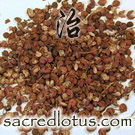 Chuan Jiao3-9 gWarm the Interior and Expel Cold
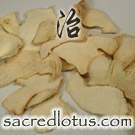 Gan Jiang12 gWarm the Interior and Expel Cold
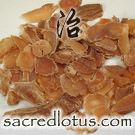 Ren Shen6 gTonify Qi
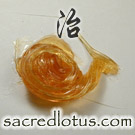 Yi Tang18-30 gTonify Qi
Preparation & dosage
How is Da Jian Zhong Tang prepared?
Da Jian Zhong Tang is a decoction with a distinctive two-stage method: Shu Jiao, Gan Jiang, and Ren Shen are simmered together first, and the malt sugar (Yi Tang) is dissolved into the hot, strained liquid only afterward, not boiled with the other three herbs. Sacred Lotus sources & references record the reference amounts as Chuan Jiao 3–9 g, Gan Jiang 12 g, Ren Shen 6 g, and Yi Tang 18–30 g.
- Classical two-stage method: the three herbs are decocted and strained first; the Yi Tang is then stirred into the hot strained liquid to dissolve, preserving its sweet, harmonizing quality rather than cooking it down with the other herbs.
- Modern substitution (per Sacred Lotus’s existing preparation note): Dang Shen is often substituted for Ren Shen at two to three times the Ren Shen dose in contemporary practice; a lower dose of Chuan Jiao is sometimes used, and Gan Jiang and Yi Tang are sometimes reduced to about half the listed amounts.
- Dose is titrated to the severity of cold and the patient’s tolerance for the acrid, intensely warming taste of Shu Jiao and Gan Jiang; the Yi Tang finish is partly there to make this more tolerable.
Source: Sacred Lotus sources & references (composition and preparation) + Bensky & Barolet, Formulas & Strategies (classical two-stage decoction method).
Decoction, prepared in two stages: Chuan Jiao, Gan Jiang, and Ren Shen are simmered and strained first; Yi Tang is then dissolved into the hot strained liquid. Reference relative amounts (Sacred Lotus sources & references): Chuan Jiao 3–9 g; Gan Jiang 12 g; Ren Shen 6 g; Yi Tang 18–30 g. Modern practice often substitutes Dang Shen for Ren Shen at 2–3 times the dose, with Chuan Jiao, Gan Jiang, and Yi Tang sometimes reduced. Reference only; not a prescription.
Safety — read before use
What are the cautions for Da Jian Zhong Tang?
Da Jian Zhong Tang is one of the strongest warming formulas in the Chinese herbal canon and should not be used for Blood or Yin deficiency, Damp-Heat conditions, or internal clumping/excess-heat patterns, all of which its intensely acrid, hot herbs would aggravate. Its use is reserved for a clearly cold, deficient presentation, not simply any abdominal pain.
- Avoid in Blood/Yin deficiency, Damp-Heat, or internal clumping (per Sacred Lotus’s existing caution) — a red tongue, thirst, or signs of heat indicate this formula is the wrong direction of treatment.
- Not a substitute for medical evaluation of acute abdominal pain: the classical presentation (severe pain, visible peristalsis, inability to eat) overlaps with conditions that require prompt medical/surgical assessment; this content is traditional-use reference, not a diagnostic or treatment recommendation for acute abdominal emergencies.
- Shu Jiao/Chuan Jiao and Gan Jiang are both strongly acrid and hot: excessive or prolonged use outside a cold-deficient pattern can injure Yin fluids or aggravate heat signs.
Source: Sacred Lotus sources & references (existing caution field) + Bensky & Barolet, Formulas & Strategies (pattern-differentiation cautions). Traditional-use framing; not medical advice.
Originally Appeared In:
- Essentials from the Golden Cabinet (Jin Gui Yao Lue)
Notes:
How does Da Jian Zhong Tang differ from Xiao Jian Zhong Tang and Li Zhong Wan?
All three formulas warm and tonify the Middle Burner, but they sit at different points on a severity scale: Xiao Jian Zhong Tang (“Minor”) is a gentle Spleen/Stomach-harmonizing formula for mild, deficiency-type cramping; Li Zhong Wan (“Regulate the Middle”) is a moderate, balanced Middle-Burner Yang tonic for chronic cold-deficiency with diarrhea; Da Jian Zhong Tang (“Major”) is reserved for the most severe, acute cold presentation with visible peristalsis or masses. The shared “Jian Zhong” (“construct the Middle”) and “Zhong” naming across two of these formulas signals the family relationship, but the clinical pictures are quite distinct.
- Xiao Jian Zhong Tang (Minor Construct the Middle Decoction): built on Gui Zhi Tang with a doubled dose of Bai Shao and a large amount of Yi Tang, for mild-to-moderate Spleen/Stomach deficiency with cold — a dull, intermittent abdominal ache that is relieved (not worsened) by warmth and pressure, often with some concurrent exterior weakness. It has no Chuan Jiao or Gan Jiang and is far milder than Da Jian Zhong Tang.
- Li Zhong Wan (Regulate the Middle Pill, also Ren Shen Tang): Ren Shen, Bai Zhu, Gan Jiang, and Zhi Gan Cao, for a steadier, more chronic Spleen/Stomach Yang deficiency with cold — poor appetite, loose stools, and a mild, diffuse cold sensation, without the severe pain or visible peristalsis that define Da Jian Zhong Tang’s presentation.
- Da Jian Zhong Tang (this formula): reserved for the most acute, severe end of this spectrum — sharp pain worsened by pressure, visible or palpable peristaltic movement, and near-total inability to eat, treated with the much stronger, more acrid Shu Jiao and higher-dose Gan Jiang rather than the gentler herbs of the other two formulas.
Classical source: Da Jian Zhong Tang is recorded in the Jin Gui Yao Lue (Essential Prescriptions of the Golden Cabinet), compiled by the Han-dynasty physician Zhang Zhongjing — one of the foundational classical formula texts still taught today. In modern Japanese Kampo medicine the same formula is known as Daikenchuto (also written Dai-kenchu-to, marketed as TJ-100/TU-100) and is one of the most extensively clinically studied Kampo formulas, particularly for postoperative bowel recovery (see research).
Source: Bensky & Barolet, Formulas & Strategies; Chen & Chen, Chinese Herbal Formulas and Applications (formula comparisons, classical source, and Kampo naming). Traditional-use framing.
Clinical Studies & Research:
Is there modern research on Da Jian Zhong Tang (Daikenchuto)?
Yes — as Daikenchuto, this formula is among the most clinically studied Kampo medicines, with the strongest evidence in postoperative bowel recovery after gastrointestinal surgery. A 2017 systematic review and meta-analysis of seven studies (1,134 patients undergoing gastrointestinal cancer surgery) found that perioperative Daikenchuto significantly reduced postoperative ileus (11.4% versus 15.9% in controls, risk ratio 0.58) (PMID 29061775).
- Postoperative ileus after GI cancer surgery (systematic review/meta-analysis, 7 studies, 1,134 patients): perioperative Daikenchuto significantly reduced postoperative ileus incidence, risk ratio 0.58 (PMID 29061775).
- Total gastrectomy for gastric cancer (multicenter randomized, double-blind, placebo-controlled Phase II trial, 245 patients): median time to first bowel movement was faster with Daikenchuto than placebo (94.7 vs 113.9 hours overall, reaching significance in patients with high treatment adherence: 93.8 vs 115.1 hours, p=0.014), supporting a role in early postoperative bowel-function recovery (PMID 26141466).
- Functional constipation in women (randomized, placebo-controlled trial, 45 patients, TU-100): by contrast, this trial found no significant effect on gastrointestinal or colonic transit, rectal compliance, or anal sphincter pressures, and no improvement in stool frequency, consistency, or quality of life versus placebo — a negative result for this particular indication (PMID 23451764).
Taken together, the clinical evidence base is strongest for perioperative bowel-function recovery after gastrointestinal surgery and notably does not support benefit for functional constipation in the one placebo-controlled trial identified; this is a mixed picture, not uniform support, and none of it establishes a treatment for the classical severe-cold abdominal-pain pattern this formula was originally designed for.
Sources: PubMed 29061775 (Anticancer Research, 2017); PubMed 26141466 (Journal of the American College of Surgeons, 2015); PubMed 23451764 (Alimentary Pharmacology & Therapeutics, 2013). Research context, not a therapeutic claim.
Sources & References
Compiled and edited by Thomas Dehli, Founder & Editor, Sacred Lotus Updated
The information here is referenced from numerous sources — teachers, practitioners, class notes from Five Branches University, the books below, and the published research literature, with citations given as resolvable PubMed identifiers. Where sources disagree, I have flagged the discrepancies directly. If facts couldn't be verified, I have left them out. How we source our content.
Reference information for students and practitioners — not medical advice. Consult a qualified practitioner. Terms of use.
Chinese Formulas Books & References
 https://amzn.to/4fYI3f8
 https://amzn.to/4j55NRA
 https://amzn.to/4gMROyv
 https://amzn.to/4h7msSK