

Materia Medica Data
- Temperature
- Neutral
- Nature & Flavour
- Salty, Bitter, Neutral, Slightly Toxic
- Channels Entered
- LIV, BL
- Latin (pharmaceutical)
- Hirudo seu Whitmania
- Chinese
- 水蛭
- Tone Marks
- shuĭ zhì
- Translation
- Leech
Chinese Herb Actions
What is Shui Zhi (leech) used for in Chinese medicine?
Shui Zhi is the dried body of the medicinal leech, and it is traditionally used as one of the strongest blood-breaking medicinals — for fixed abdominal masses, amenorrhoea from severe blood stasis, and traumatic injury. Our record classes it with the herbs that invigorate blood and remove stagnation, gives its properties as salty, bitter, neutral and slightly toxic, and assigns it to the Liver and Bladder channels.
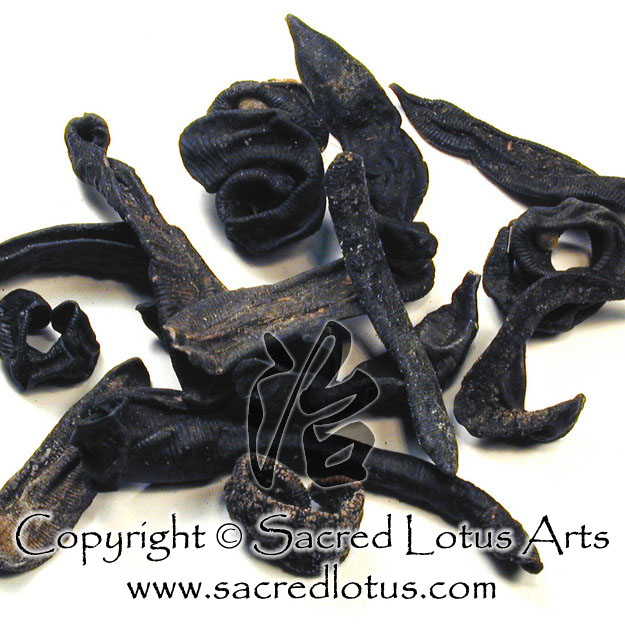
Yes — it really is a leech. This is an animal product, not a plant. The medicinal is the whole leech, killed, dried and then processed (traditionally by frying or roasting) before use; the pharmaceutical name in our record, Hirudo seu Whitmania, reflects that more than one leech genus supplies the trade. Modern reviews record the officially recognised source species as Whitmania pigra, Hirudo nipponia and Whitmania acranulata, of which Whitmania pigra is by far the most abundant.
Its traditional actions, in the terms our record uses:
- Breaks blood stasis — the classical “attacking” grade of blood-moving medicinal, reserved for stubborn, fixed, long-standing stasis rather than ordinary sluggish circulation.
- Reduces fixed masses — palpable, immobile abdominal masses (zheng jia) attributed to congealed blood.
- Amenorrhoea from blood stasis — absent periods where the pattern is obstruction rather than deficiency.
- Traumatic injury — bruising, swelling and pain following injury, where old blood is held to be blocking the channels.
Classically it is paired with Meng Chong (gadfly) — the two insect/animal blood-breakers appear together in Di Dang Tang and in Da Huang Zhe Chong Wan, the “dry blood” formula in our own formula records.
Source: our own herb record (category, properties, channels, Latin); species identity from PMID 38879745 and PMID 27274755 (PMC 4870366); processing history from PMID 36471998. Cross-referenced against published materia medica consensus and multiple online sources. Traditional-use framing; not medical advice.
Chinese Herb Dosage
What is the typical dosage of Shui Zhi?
Our record gives 3–6 g in decoction and 0.3–0.6 g when taken as powder or in pills, and notes that Bensky and Chen agree on that range. The gap between the two figures is the important part: the powdered dose is roughly a tenth of the decocted dose, because the active proteins and peptides are concentrated in the raw material and are not fully extracted into a water decoction.
- Decoction: 3–6 g.
- Powder or pill: 0.3–0.6 g — a deliberately much smaller ceiling.
- Form matters. Because the material is protein-rich, much traditional use is as a fine powder rather than a decoction; the low powder ceiling exists for that reason and should not be scaled up to the decoction figure.
This is reference information about how the medicinal is described in the literature, not a prescription. Shui Zhi is a slightly toxic, blood-breaking substance and belongs in the hands of a qualified practitioner.
Source: our own herb record (Bensky and Chen ranges as recorded); form-dependence of dosing per PMID 36471998. Reference only — not a prescription.
Chinese Herb Contraindications & Cautions
Is Shui Zhi safe? Who should not take it?
Shui Zhi is contraindicated in pregnancy, and that is the firmest caution attached to it. Our own record states plainly: do not use during pregnancy. It is a strong blood-breaking medicinal, and the whole class is traditionally withheld in pregnancy; our record also classifies the herb itself as slightly toxic.
- Pregnancy — contraindicated. Documented in our record and consistent across the materia medica for the blood-breaking category.
- Bleeding tendency, active bleeding, or planned surgery — a blood-breaking medicinal is a poor fit where bleeding is already the problem. Human trial data on a hirudo-containing formula in acute intracerebral haemorrhage (see research) found more treatment-emergent adverse events, which the authors attributed to the blood-stasis-removing herbs.
- Deficiency without stasis — traditionally inappropriate; this is an attacking medicinal, not a tonic.
- Animal-derived (reference note). Shui Zhi is not suitable for vegetarians or vegans, and the animal source should be disclosed to anyone taking it.
- Quality and contamination (reference note). Farmed leeches accumulate metals from their culture water; published work has specifically examined lead uptake in cultured Whitmania pigra, including its effect on the material’s own anticoagulant activity. Sourcing from a tested, reputable supplier is a real quality question for this medicinal, not a theoretical one.
- Professional supervision. Slightly toxic, low powder ceiling, blood-breaking action — not a self-prescribing herb.
Note: our record additionally states that Shui Zhi “has been shown to cause teratogenic (birth defects) effects.” We could not locate a resolvable published study demonstrating teratogenicity for this medicinal, so we have not repeated that specific claim as sourced fact. The pregnancy contraindication itself is well established and stands on its own. The existing wording is left unchanged and flagged for owner review.
Source: our own herb record (pregnancy contraindication, slightly toxic classification); bleeding-risk signal from PMID 31076468 (PMC 6528012); metal accumulation in cultured leeches from PMID 32179862 (PMC 7075881) and PMID 32237346. Neutral reference notes, not a safety guarantee.
Chinese Herb Toxicity & Overdose
Our record classifies Shui Zhi as slightly toxic and describes an overdose picture beginning 1–4 hours after ingestion: nausea, vomiting, abnormal uterine bleeding, gastrointestinal haemorrhage, severe abdominal pain, blood in the urine, and coma in severe cases. The pattern is consistent with the herb’s blood-breaking character — the reported effects are dominated by bleeding.
This is documented as a reference fact about overdose, not as guidance of any kind. The narrow powder dose ceiling recorded above (0.3–0.6 g) exists precisely because of it.
Source: our own herb record (overdose description and toxicity classification); slight-toxicity classification corroborated in PMID 36471998. Reference note only.
-
This herb is considered slightly toxic.
(while some Chinese herbs are toxic, it must be noted that many come prepared, or are combined, to mitigate their toxicity)
Herb-Drug Interactions
Does Shui Zhi interact with blood thinners?
Caution with anticoagulant and antiplatelet drugs is reasonable, but the honest position is that the interaction is inferred rather than demonstrated for the dried herb. Our record states that Shui Zhi may interfere with anticoagulant drugs. The logic is sound — the material contains thrombin-inhibiting peptides, and adding a blood-moving agent to warfarin, a direct oral anticoagulant, heparin, aspirin or clopidogrel could plausibly compound bleeding risk.
- What is actually documented. We found no dedicated human pharmacokinetic or pharmacodynamic interaction study of dried Shui Zhi with any specific anticoagulant. The closest human data is a multicentre randomised placebo-controlled trial in acute intracerebral haemorrhage in which the arm containing hirudo and tabanus showed a significantly higher rate of treatment-emergent adverse events, and all three serious adverse events; the authors concluded the blood-stasis-removing herbs increased bleeding risk.
- Why the hirudin argument alone is not enough. Hirudin’s anticoagulant pharmacology is established for the purified peptide given by injection. Oral dried leech is a different exposure, and the hirudin content of the trade material varies by source species (see notes).
- Practical reading. Anyone on anticoagulant or antiplatelet therapy, or with a bleeding disorder, should have this herb reviewed by their prescriber and a qualified practitioner before use. That is precaution grounded in a real human safety signal — not a proven pharmacokinetic interaction.
Source: our own herb record (anticoagulant caution); human bleeding-risk signal, PMID 31076468 (PMC 6528012); hirudin pharmacology, PMID 35587545 and PMID 22315264 (PMC 3278070). Reference information, not clinical advice.
Western / Biomedical Research
Chinese Herb Clinical Studies & Research
Provided as research context — a summary of published biomedical study, not a therapeutic or medical claim.
Is there modern research on Shui Zhi (Hirudo)?
Yes — substantial chemistry and animal pharmacology, one directly relevant human safety trial, and very little clinical efficacy evidence for the dried herb on its own. Chemical work has identified more than fifty compounds in the medicinal, including pteridines, phosphatidylcholines, glycosphingolipids and sterols alongside bioactive peptides, and the Whitmania pigra genome has been sequenced specifically to map its bioactive components.
- Antithrombotic activity (animal). Aqueous extract of Whitmania pigra reduced thrombus burden in rodent models, reported via a sirtuin 1/NF-κB mechanism, and ameliorated ferric-chloride-induced venous thrombosis in rats with an antioxidant mechanism proposed. Animal models — not clinical proof.
- Hirudins in the source species (molecular). Cloning and functional assay of putative hirudins from the non-blood-feeding Whitmania pigra confirmed that it expresses genuine thrombin inhibitors and hirudin-like factors that inhibit thrombin only weakly or not at all — the first description of hirudins in a non-hematophagous leech. This is why potency cannot be assumed uniform across the trade.
- Human trial (safety signal, not efficacy). A randomised, double-blind, placebo-controlled multicentre trial in 324 patients with acute intracerebral haemorrhage compared a blood-stasis-removing formula containing hirudo and tabanus against the same formula without them and against placebo. The hirudo-containing arm showed no clinical benefit and a significantly higher overall rate of treatment-emergent adverse events; the authors attributed the increased bleeding risk to the blood-stasis-removing herbs.
- Processing. Review work traces the processing history from Han-dynasty boiling through more than ten later methods, and notes the practical purposes: deodorising, modifying taste, and making the material brittle enough to powder.
- Quality and contamination. Metabolomic and in-vitro work on cultured Whitmania pigra has examined lead uptake from the culture environment and its effect on the material’s anticoagulant activity — a documented, material-specific quality issue.
Overall: the mechanistic and chemical case is genuinely interesting, the animal data is consistent, and human efficacy evidence for the dried herb is essentially absent. The one good human trial is a safety finding, and it points toward bleeding risk rather than benefit.
Sources: PMID 27274755 (PMC 4870366) chemistry and pharmacology review; PMID 35073842 (PMC 8787918) genome; PMID 31445496 and PMID 33201380 antithrombotic animal studies; PMID 35587545 hirudins in Whitmania pigra; PMID 31076468 (PMC 6528012) randomised controlled trial; PMID 36471998 processing history; PMID 38879745 constituent and application review; PMID 32179862 (PMC 7075881) and PMID 32237346 lead in cultured leeches; PMID 29296560 (PMC 5741396) medicinal leech therapy perspective; PMID 22315264 (PMC 3278070) and PMID 30482768 (PMC 6258919) for the hirudin-derived drugs. Research context, not a therapeutic claim.
Chinese Herb Notes
Is Shui Zhi the same thing as leech therapy (hirudotherapy)?
No, and this is the single most important distinction on this page. Shui Zhi is a dried, killed, processed animal medicinal taken internally as part of a herbal prescription. Medicinal leech therapy — hirudotherapy — is a live-animal procedure in which living leeches are applied to the skin, most familiarly in reconstructive and microvascular surgery to relieve venous congestion in flaps and replants. They share an animal, and nothing else.
- Different material. One is a dried powder or decoction ingredient; the other is a living organism whose active secretions are delivered directly into tissue while it feeds.
- Different regulation. Live medicinal leeches used in surgery are handled as a regulated medical product in their own right, supplied by controlled breeding facilities under clinical protocols. That regulatory status does not extend to, and says nothing about, dried Shui Zhi as a herbal ingredient.
- Different evidence base. The surgical and hirudotherapy literature is about live leeches; it should not be read across to the dried herb.
Is Shui Zhi the source of the anticoagulant drugs?
Historically, yes — the leech is where hirudin came from, and hirudin is where a whole family of modern anticoagulants came from. Hirudin is a peptide secreted by the salivary glands of blood-feeding leeches and is a direct thrombin inhibitor: it binds thrombin itself rather than working through antithrombin as heparin does. Recombinant and hirudin-derived direct thrombin inhibitors — lepirudin, desirudin and the hirudin-fragment analogue bivalirudin — entered clinical medicine on that basis and appear in mainstream haematology guidance, for example in the management of heparin-induced thrombocytopenia.
That is history and pharmacology, not a claim about the dried herb. Two things break the chain. First, a purified injectable peptide given intravenously at a controlled dose is not the same as a dried animal taken by mouth. Second, the main Chinese source species, Whitmania pigra, is non-blood-feeding — and when its putative hirudins were cloned and functionally tested, some inhibited thrombin while others (“hirudin-like factors”) did so only very weakly or not at all. So even the hirudin content of the material in the herb trade is species-dependent and not uniform.
Note on our identity field: our record gives the Latin as Hirudo seu Whitmania — a genus-level designation covering both groups rather than one species. That is consistent with the trade reality (several species are supplied) but means the pharmacology described above cannot be assumed to apply uniformly to every batch. The field is left unchanged; flagged for owner review.
Source: hirudotherapy scope and leech secretome, PMID 29296560 (PMC 5741396); direct thrombin inhibitors lepirudin, desirudin and bivalirudin, PMID 22315264 (PMC 3278070) and PMID 30482768 (PMC 6258919); hirudins and hirudin-like factors in Whitmania pigra, PMID 35587545; species and constituent overview, PMID 38879745. Historical and pharmacological context only — not a therapeutic claim for the dried herb.
Sources & References
Compiled and edited by Thomas Dehli, Founder & Editor, Sacred Lotus Updated
The information here is referenced from numerous sources — teachers, practitioners, class notes from Five Branches University, the books below, and the published research literature, with citations given as resolvable PubMed identifiers. Where sources disagree, I have flagged the discrepancies directly. If facts couldn't be verified, I have left them out. How we source our content.
Reference information for students and practitioners — not medical advice. Consult a qualified practitioner. Terms of use.
Chinese Herbs Books & References
 https://amzn.to/3WfB3DK
 https://amzn.to/3DR1VUh
 https://amzn.to/42aMz73
 https://amzn.to/3PuD4bt