
Flos Immaturus Sophorae Japonicae Pagoda Tree Flower Bud
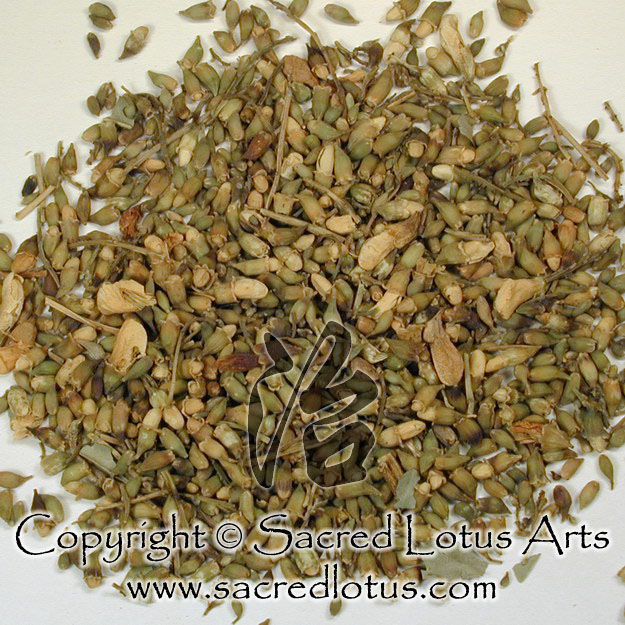
Materia Medica Data
- Category
- Herbs that Stop Bleeding
- Temperature
- Cool
- Nature & Flavour
- Bitter, Cool
- Channels Entered
- LIV, LI.
- Latin (pharmaceutical)
- Flos Immaturus Sophorae Japonicae
- Chinese
- 槐花米
- Tone Marks
- huái huā mĭ
Chinese Herb Actions
What is Huai Hua Mi used for in Chinese medicine?
Huai Hua Mi (Pagoda Tree Flower Bud) cools the blood and stops bleeding, with a particular affinity for the lower body and Large Intestine — it is a classic choice for hemorrhoidal bleeding, blood in the stool, and bloody dysentery from intestinal Heat, and is also used for uterine bleeding (menorrhagia) due to Blood-Heat. Its second major action is clearing Liver Fire.
Its main traditional actions:
- Cools the Blood and stops bleeding (Large Intestine emphasis) — hemorrhoidal bleeding, hematochezia (blood in the stool), and bloody dysentery due to Heat in the Large Intestine; classically formulated as Huai Hua San.
- Cools the Blood and stops bleeding (uterine) — uterine bleeding/menorrhagia attributed to Heat forcing the Blood to move recklessly.
- Clears Liver Fire — red, painful, or swollen eyes; headache; dizziness/vertigo from Liver Fire rising, sometimes framed in modern practice alongside Liver-Yang-type headache and dizziness.
Category: herbs that regulate the Blood → herbs that stop bleeding → herbs that cool the Blood and stop bleeding, alongside Ce Bai Ye, Da Ji, and Xiao Ji. Being a cold, descending herb, it is best suited to Heat-type (excess) bleeding rather than bleeding from Qi/Yang deficiency (see Cautions).
Source: consensus of published TCM materia medica references (Bensky & Barolet/Chen & Chen tradition) cross-checked across multiple reputable TCM references; Sacred Lotus Sacred Lotus sources & references (Bitter, Cool; Liver, Large Intestine). Traditional-use framing; not medical advice.
Chinese Herb Dosage
What is the typical dosage of Huai Hua Mi?
Roughly 5–10 g in decoction, occasionally extended to about 15 g for acute bleeding under practitioner supervision. Dosage is generally similar whether the herb is used raw or charred (see below); the choice between the two forms is about which action is needed, not how much to use.
- Raw (unprocessed) Huai Hua Mi — favored when the Heat-clearing / Liver-Fire-clearing action is the priority (e.g., red eyes, headache).
- Huai Hua Tan (楋花炉, charred/carbonized Huai Hua) — favored when stopping active bleeding is the priority; the “charcoal medicinals stop bleeding” (炉药止血) processing principle is applied specifically because carbonization measurably shifts the herb’s chemistry toward a stronger hemostatic effect (see Research).
Source: consensus of published TCM materia medica references, cross-checked across multiple reputable TCM references. Reference only — not a prescription.
Chinese Herb Contraindications & Cautions
Are there cautions for Huai Hua Mi?
Huai Hua Mi is a cold, descending herb and is best avoided in Spleen/Stomach deficiency-cold patterns — its cooling nature can aggravate loose stools, poor appetite, or cold abdominal pain in patients with a deficient, cold digestion. As a Blood-cooling herb, it is also not appropriate for bleeding that stems from Qi or Yang deficiency (the Qi failing to hold the Blood) rather than from Heat, since a cooling herb would not address — and could worsen — a cold/deficiency-type bleed.
- Pregnancy — use with caution and under professional supervision; dedicated pregnancy-safety data specific to the flower/bud is limited.
- Do not confuse with Huai Jiao (the pod/fruit) — the pod is a chemically distinct plant part and the caution profile for the flower/bud described here should not be assumed to apply to the pod, or vice versa.
- Blood pressure — given documented blood-pressure-lowering effects of the herb’s major constituents in research settings (see Research), caution is reasonable in patients already on antihypertensive medication or with low blood pressure.
Source: consensus of published TCM materia medica references, cross-checked across multiple reputable TCM references.
Chinese Herb Toxicity & Overdose
Low, at standard traditional doses. Huai Hua/Huai Hua Mi is officially recognized in China as a “medicine-food homologous” substance (one of the first officially designated in 2002), with a long history of dietary use as a tea and food ingredient, consistent with a favorable safety profile for the flower/bud specifically. A 2022 comprehensive USP safety review of Styphnolobium japonicum flower and flower bud reported no serious adverse events identified in the animal and clinical literature reviewed, while explicitly noting that dedicated pregnancy-safety data is lacking.
Isolated rutin (the herb’s major constituent) has been tested separately: an intraperitoneal LD50 study in mice found rutin “practically nontoxic” at the doses tested (≈1.5 g/kg) — this is isolated-compound, injected-route data, not oral whole-herb dosing, and is included only as supporting context.
Note: Toxicological concern in the wider Sophora japonica literature (quinolizidine alkaloids such as cytisine) attaches to the seeds/pod (Huai Jiao), not to the flower or bud. We could not verify any credible source placing these alkaloids in the flower/bud itself, so no alkaloid-toxicity claim is made for Huai Hua Mi here.
Source: consensus of published TCM materia medica references; DOI 10.1002/ptr.7438 (USP comprehensive safety review, Phytotherapy Research, 2022, abstract-level); DOI 10.31351/vol30iss2pp231-240 (rutin acute toxicity, isolated compound). Reference note, not a safety guarantee.
Herb-Drug Interactions
No well-established clinical herb–drug interactions are documented for Huai Hua Mi itself. Because research on its major constituent rutin has repeatedly shown blood-pressure-lowering effects (see Research), practitioner awareness is reasonable for patients on antihypertensive medication — this is precautionary, based on constituent-level pharmacology, not a demonstrated clinical drug interaction for the whole herb. (Flagged for practitioner confirmation.)
Western / Biomedical Research
Chinese Herb Clinical Studies & Research
Provided as research context — a summary of published biomedical study, not a therapeutic or medical claim.
Is there modern research on Huai Hua Mi (Sophora japonica flower/bud) and its rutin content?
Yes — Huai Hua Mi is well studied as a natural source of rutin, with preclinical evidence for its traditional hemostatic, Blood-cooling, and eye/Liver-related uses; human clinical trials mostly test rutin or flavonoid mixtures rather than the whole herb. Rutin (quercetin-3-rutinoside) is the dominant flavonoid, giving the herb its long-standing pharmacological interest as a natural “vitamin P”/capillary-protective agent.
- Bud vs. open flower (phytochemistry) — a 2022 Molecules study directly comparing Sophora japonica flower buds and open flowers found total phenolic and flavonoid content significantly higher in the bud, supporting the traditional preference for Huai Hua Mi (the bud) over the fully opened flower.
- Carbonization and hemostasis (mechanistic support for Huai Hua Tan) — a 2019 Pharmaceutical Biology review on charred Chinese herbs specifically describes Flos Sophorae: on carbonizing, its rutin is converted into tannins, and both tannin and rutin were found to lower capillary permeability, bleeding time, and coagulation time, and to decrease prothrombin time, in mouse studies — a mechanistic rationale for why charring strengthens the traditional stop-bleeding action.
- Vascular effects (rutin) — isolated rutin produced dose-dependent, endothelium-dependent relaxation of rat aortic rings via nitric-oxide/guanylyl-cyclase, prostaglandin, and ATP-sensitive potassium-channel pathways; separate animal work found rutin and quercetin more effective than the drug nifedipine at reversing blood-pressure elevation and oxidative stress in salt-induced hypertensive rats.
- Blood pressure (human) — a double-blind, placebo-controlled trial in adults with type 2 diabetes found 1 g/day of rutin for 3 months improved blood-pressure markers, antioxidant-enzyme levels, and quality of life versus placebo.
- Anti-inflammatory (colitis model) — Sophora japonica flower extract and rutin reduced inflammation and oxidative stress and improved gut-barrier and microbiota measures in a mouse colitis model, acting partly via inhibition of the NF-κB signaling pathway.
- Hemorrhoidal bleeding (related flavonoid mixture, not the whole herb) — a multicenter double-blind human trial of a flavonoid mixture containing rutin (with diosmin, troxerutin, hesperidin, and quercetin) reported meaningful improvement in bleeding from grade I–III hemorrhoidal disease; this tested a flavonoid blend rather than Huai Hua itself, so it is included as related constituent-level context, not direct herb evidence.
Overall: strong preclinical/constituent-level support for the traditional hemostatic and Blood-cooling uses, with human trial evidence concentrated on isolated rutin or flavonoid mixtures rather than the whole herb or classical formula.
Sources: PMID 36558062 (bud vs. flower phytochemistry, Molecules, 2022); PMID 31401925, PMC 6713113 (carbonized Chinese herbs review, Pharmaceutical Biology, 2019); PMID 17281524 (rutin vasorelaxation, rat aortic rings); PMID 24064906 (rutin/quercetin vs. nifedipine, hypertensive rats); PMID 37599700, PMC 10435270 (rutin RCT, blood pressure, type 2 diabetes, Frontiers in Nutrition, 2023); PMID 35691061 (Sophora japonica flower/rutin, colitis model, Food Chemistry, 2022); PMID 29934701 (flavonoid mixture RCT, hemorrhoidal bleeding, International Journal of Colorectal Disease, 2018). Research context, not a therapeutic claim.
Chinese Herb Notes
How is Huai Hua Mi different from Huai Hua, Huai Hua Tan, and Huai Jiao?
All four names trace to the same tree (Sophora japonica), but refer to different plant parts or processing states, each with a distinct emphasis. Getting these right matters for both accuracy and dosing.
- Huai Hua Mi (楋花米, “pagoda tree flower rice/bud”) — the flower bud, harvested before it opens. Materia medica sources describe the bud as richer in active flavonoid content than the fully opened flower, and modern phytochemical analysis confirms the bud has significantly higher total flavonoid content than the open flower (see Research).
- Huai Hua (楋花) — the open flower; sometimes used as an umbrella term covering both bud and open-flower material across different texts and suppliers, so labeling is not always consistent.
- Huai Hua Tan (楋花炉) — Huai Hua or Huai Hua Mi carbonized (charred) by processing. Charring is used specifically to strengthen the astringent, hemostatic effect for active bleeding, at some cost to the raw herb’s Heat-clearing strength.
- Huai Jiao (楋角, Fructus Sophorae, the fruit/seed pod) — a related but distinct herb from the same tree, in the same cool-the-Blood/stop-bleeding category, but additionally described as moistening the Intestines and unblocking the bowels — useful for hemorrhoids with concurrent constipation, which the flower/bud does not specifically address. Huai Jiao is not the same substance as Huai Hua Mi and is not interchangeable with it.
Key combination — Huai Hua San (楋花散): Huai Hua, Ce Bai Ye, Jing Jie Sui (the spike of Schizonepeta), and Zhi Ke, classically in equal proportions, for bleeding hemorrhoids and blood in the stool from Wind-Heat and/or Damp-Heat in the Large Intestine. (Traditional formula context, not treatment advice.)
Source: consensus of published TCM materia medica references, cross-checked across multiple reputable TCM references; Sacred Lotus formula (Huai Hua San).
Sources & References
Compiled and edited by Thomas Dehli, Founder & Editor, Sacred Lotus Updated
The information here is referenced from numerous sources — teachers, practitioners, class notes from Five Branches University, the books below, and the published research literature, with citations given as resolvable PubMed identifiers. Where sources disagree, I have flagged the discrepancies directly. If facts couldn't be verified, I have left them out. How we source our content.
Reference information for students and practitioners — not medical advice. Consult a qualified practitioner. Terms of use.
Chinese Herbs Books & References
 https://amzn.to/3WfB3DK
 https://amzn.to/3DR1VUh
 https://amzn.to/42aMz73
 https://amzn.to/3PuD4bt