
Folium Sennae Senna Leaf
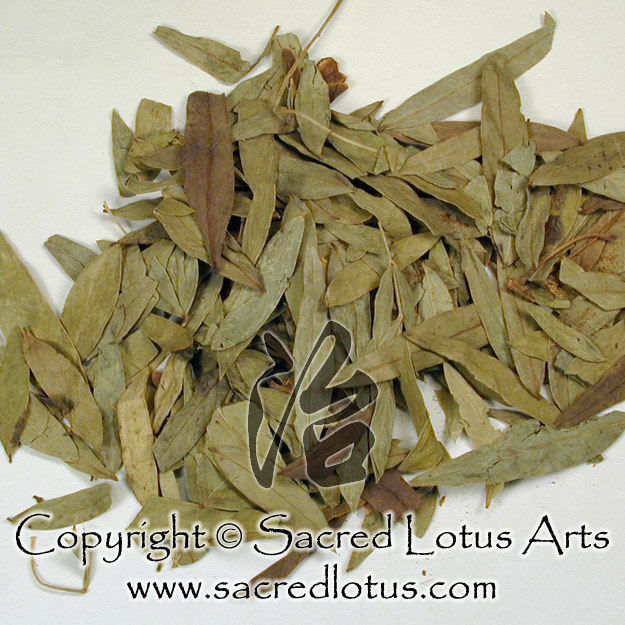
Materia Medica Data
- Category
- Purgatives
- Temperature
- Cold
- Nature & Flavour
- Sweet, Bitter, Cold
- Channels Entered
- LI.
- Latin (pharmaceutical)
- Folium Sennae
- Chinese
- 番泻叶
- Tone Marks
- fān xiè yè
- Translation
- Purgative Leaf of the Foreigners
Chinese Herb Actions
What is Fan Xie Ye used for in Chinese medicine?
Fan Xie Ye is a sweet, bitter, cold purgative that drains heat and accumulation downward through the Large Intestine. It sits in the purgatives category alongside Da Huang and Lu Hui, and our record gives it a single channel — the Large Intestine — which is unusually narrow and tells you almost everything about how it is used: it acts on the bowel and essentially nowhere else.
Its traditional action:
- Eliminates heat and stagnation by draining downward — for constipation arising from heat accumulating in the intestines with abdominal fullness and distension. Our record notes it is regarded as particularly suited to habitual constipation.
- Enters the Large Intestine channel only — a focused, single-target herb rather than a systemic heat-clearer. Compare Da Huang, which our records give four channels (Heart, Large Intestine, Liver, Stomach) and which is used for far more than the bowel.
- Part used — the dried leaflet. Our record specifies leaf; the pods of the same plants are used in some Western products but are a different article of commerce.
What makes it different from the other purgatives: Da Huang is bitter and cold and also invigorates blood, drains fire and is used topically; Lu Hui additionally clears Liver fire and is used for childhood nutritional impairment. Fan Xie Ye does one job. That narrowness is why it became the dominant over-the-counter laxative herb in the West while the others did not.
Source: our own herb record (category, nature and flavour, channel, indication, part used), cross-referenced against multiple online sources and published materia medica consensus; comparison drawn from our own Da Huang and Lu Hui records. Traditional-use framing; not medical advice.
Chinese Herb Dosage
What is the typical dosage of Fan Xie Ye?
Our record gives 3–9 g, or 1.5–3 g when steeped alone as a tea, with the instruction not to cook it for more than 15 minutes. The dose range is narrow by materia medica standards and the low ceiling reflects potency, not scarcity — this is a strong stimulant laxative and the traditional literature has always treated the dose as the safety margin.
- Decoction, in a formula — 3–9 g of the dried leaf.
- Steeped alone as a tea — 1.5–3 g, a markedly lower figure than the in-formula range. When the herb is taken by itself there is nothing in the prescription to moderate it.
- Preparation — not cooked for more than 15 minutes. Like other aromatic and volatile-acting herbs it is added late or simply infused; prolonged boiling is traditionally held to change its effect.
- Part used — the leaf.
Why the dose figures matter here more than usual: our record's own caution section states that large doses may produce nausea, vomiting and abdominal pain. These are dose-dependent effects of the herb working too hard, not idiosyncratic reactions. The figures above are recorded for reference; they are not instructions, and self-directed use of a stimulant laxative is a matter for a physician or pharmacist rather than a reference page.
Source: our own herb record dosage, preparation note, part used and caution entries, cross-referenced against multiple online sources. Reference only — not a prescription and not dosing advice.
Chinese Herb Contraindications & Cautions
Are there cautions for Fan Xie Ye?
Our record contraindicates it during menstruation, pregnancy and lactation, and in patients of weak constitution; it directs extreme caution and very small doses in chronic constipation, and warns that large doses may cause nausea, vomiting and abdominal pain. To that traditional list the modern reference literature adds one absolute contraindication that belongs on any senna page: known or suspected intestinal obstruction.
- Intestinal obstruction, ileus or an acute undiagnosed abdomen — a stimulant laxative drives propulsive contraction against the blockage. This is the standard contraindication carried by every senna product and is not a traditional-versus-modern question.
- Pregnancy, lactation and menstruation — contraindicated per our record.
- Weak constitution, deficiency-cold, elderly or debilitated patients — contraindicated or used with great care per our record; a strong cold purgative is poorly tolerated where digestion is already weak.
- Chronic constipation — our record specifically flags this as the setting requiring extreme caution and very small doses, which is the traditional expression of the same worry the gastroenterology literature has about long-term stimulant-laxative use (see research).
- Children — senna preparations are used paediatrically in conventional practice, but that is a prescribing decision made by a clinician, not a self-treatment scenario.
- Dose-dependent effects — cramping abdominal pain, nausea and vomiting mark a dose that is too high, per our own record.
The honest framing: Fan Xie Ye is effective, which is exactly why it is easy to over-use. Its cautions are about frequency and duration as much as about single doses. Anyone with persistent constipation, blood in the stool, unexplained weight loss or a change in bowel habit needs a diagnosis, not a laxative.
Source: our own herb record caution entry; obstruction contraindication and chronic-use concerns per the anthraquinone laxative literature, PMID 37214441, PMC 10193150, and PMID 3280173. Reference information, not medical advice.
Chinese Herb Toxicity & Overdose
Is Fan Xie Ye toxic, and what is melanosis coli?
Senna is not classed as a toxic herb and is not acutely poisonous at ordinary doses; the documented problems are those of prolonged or excessive use. The best-known of these is melanosis coli — a brownish-black pigmentation of the colonic lining, easily seen at colonoscopy, caused by pigment-laden immune cells accumulating in the mucosa after long-term use of anthraquinone-containing laxatives. It is a marker of chronic anthranoid exposure rather than a disease in itself, and it is generally reported to fade over months to a year or so after the laxative is stopped.
- Which herbs cause it — a 2023 review identified 20 anthraquinone-containing herbs across seven plant families implicated in melanosis coli, senna among them, alongside Da Huang, Lu Hui, He Shou Wu, Hu Zhang, Jue Ming Zi and Qian Cao. The authors’ own conclusion is that long-term high-dose use of these herbs should be avoided and that patients using them should be under medical supervision.
- Does it cause colorectal cancer? This has been debated for decades and the evidence does not support it. A controlled study using aberrant crypt foci — microscopic pre-neoplastic lesions — as an additional endpoint found no cause-and-effect relationship between colorectal cancer and constipation, anthranoid laxative use or melanosis coli.
- Other chronic-use findings — the older laxative-abuse literature describes melanosis coli together with “cathartic colon” and, in surreptitious abuse, diarrhoea, hypokalaemia, abdominal pain and thirst. These are the consequences of sustained misuse at high doses, not of ordinary short-term use.
- Liver — the NIH drug-induced liver injury reference summarises senna as generally safe and well tolerated, but records that clinically apparent liver injury has occurred with high doses taken for longer than recommended periods. Isolated case reports exist; this is a rare event, not a typical one.
- Allergy — anaphylaxis to senna has been reported in the allergy literature. Rare, but documented.
Discrepancy note: sources agree that melanosis coli is benign and reversible, but differ on how strongly to caution against long-term stimulant-laxative use in general. Gastroenterology guidance now treats stimulant laxatives as reasonable second-line agents for chronic constipation, while the traditional Chinese literature — and our own record — is more restrictive about repeated use. Both positions are reported here rather than reconciled.
Sources: PMID 37214441, PMC 10193150, DOI 10.3389/fphar.2023.1160480 (melanosis coli and anthraquinone-containing herbs); PMID 12163329 (aberrant crypt foci risk assessment, no cause-effect link with colorectal cancer); PMID 3280173, DOI 10.1159/000171181 (laxative abuse, cathartic colon, hypokalaemia); PMID 31643257 (NIH LiverTox senna chapter); PMID 32490818, DOI 10.18176/jiaci.0608 (anaphylaxis case). Neutral reference facts, not a safety guarantee and not usage guidance.
Herb-Drug Interactions
Does Fan Xie Ye interact with medications?
The interactions that matter with senna follow from what it does — it speeds intestinal transit and, with sustained use, can deplete potassium. Both effects are mechanical and predictable rather than mysterious, and both are documented in the general laxative literature rather than in senna-specific trials.
- Potassium loss — sustained or excessive stimulant-laxative use is a recognised cause of hypokalaemia. Low potassium is the classical concern in patients taking cardiac glycosides such as digoxin, and it compounds the effect of potassium-depleting diuretics and corticosteroids.
- Other oral medications — anything that shortens the time a drug spends in the gut can in principle reduce how much of it is absorbed. This is a general property of laxatives and applies to co-administered oral medicines taken close together.
- Other laxatives, including herbal ones — senna, Da Huang, Lu Hui and He Shou Wu all contain anthraquinones. Taking more than one, or taking a prescribed formula alongside an over-the-counter senna product, stacks the same drug class without the patient necessarily knowing it. This is the most common real-world overlap.
- Anthraquinone pharmacokinetics — reviews of anthraquinone absorption and metabolism note enterohepatic recirculation and interconversion between related anthraquinones, both of which can alter blood levels; the authors specifically call for more work on drug–drug interactions in this class.
Anyone taking prescription medication — particularly heart, diuretic or corticosteroid therapy — should raise any laxative, herbal or otherwise, with their doctor or pharmacist.
Sources: PMID 3280173, DOI 10.1159/000171181 (hypokalaemia in laxative abuse); PMID 33935728, PMC 8082241, DOI 10.3389/fphar.2021.638993 (pharmacokinetics of anthraquinones, enterohepatic recirculation, interaction gap); PMID 37214441, PMC 10193150 (overlap across anthraquinone-containing herbs). Reference information, not medical advice.
Western / Biomedical Research
Chinese Herb Clinical Studies & Research
Provided as research context — a summary of published biomedical study, not a therapeutic or medical claim.
Is there modern research on Fan Xie Ye (Senna alexandrina)?
Yes, and unusually for a Chinese herb, the mechanism is well established rather than speculative. The active constituents are the sennosides — dianthrone glycosides, chiefly sennosides A and B. They are essentially prodrugs: they pass through the small intestine largely unabsorbed, and it is the colonic bacteria that hydrolyse and reduce them to rhein anthrone, the metabolite that actually stimulates colonic motility and shifts water and electrolyte handling in the bowel. The laxative effect is therefore a joint product of the herb and the gut microbiome, which is why it takes hours rather than minutes to appear.
- Microbial activation, now mapped — a 2025 study in Gut Microbes used enzymatic-activity visualisation to identify in situ which bacterial guilds in human gut microbiota carry out sennoside A reduction, putting names to a step that had long been described only in general terms.
- Pharmacokinetics — profiling of sennoside B by UPLC-MS/MS and UPLC-Q-TOF-MS has characterised its metabolic fate, and broader reviews of anthraquinone pharmacokinetics place sennosides among the most-studied compounds of the class, noting enterohepatic recirculation and interconversion between related anthraquinones.
- Clinical standing — senna is one of the few herbs on this site with a place in conventional treatment guidance. The 2023 joint American Gastroenterological Association and American College of Gastroenterology guideline on pharmacological management of chronic idiopathic constipation addresses stimulant laxatives among its recommended agents, and an updated systematic review of over-the-counter therapies for chronic constipation likewise evaluates senna directly. A Cochrane review has examined osmotic and stimulant laxatives in childhood constipation.
- The long-term-use question — this is the live debate. Older writing warned of dependence and a “cathartic colon”; current gastroenterology takes a more permissive view of stimulant laxatives as second-line therapy, and a paediatric surgical review has specifically asked whether senna-based laxatives are safe as long-term treatment in children. The traditional Chinese position, reflected in our own record, remains the more cautious one. The disagreement is genuine and is reported here rather than resolved.
- Authentication — because Indian senna is a large-volume export crop, DNA-based fingerprinting methods have been developed to authenticate Senna alexandrina material.
Honest summary: senna works, and how it works is understood. Nothing here is a recommendation to use it. The mechanism is presented as context for a herb that most readers will already have encountered on a pharmacy shelf, and the open question — how long is too long — is genuinely unsettled.
Sources: PMID 40996225, PMC 12477872, DOI 10.1080/19490976.2025.2560598 (sennoside A-reducing gut bacterial guilds); PMID 31816471, DOI 10.1016/j.jpba.2019.112938 (sennoside B pharmacokinetics and metabolism); PMID 33935728, PMC 8082241 (anthraquinone pharmacokinetics review); PMID 37211380, PMC 10542656, DOI 10.1053/j.gastro.2023.03.214 (AGA–ACG chronic idiopathic constipation guideline); PMID 33767108, PMC 8191753, DOI 10.14309/ajg.0000000000001222 (systematic review of over-the-counter constipation therapies); PMID 27531591, PMC 6513425, DOI 10.1002/14651858.CD009118.pub3 (Cochrane review, childhood constipation); PMID 29429768, DOI 10.1016/j.jpedsurg.2018.01.002 (long-term senna in children); PMID 39027666, PMC 11255980 (authentication of Indian senna). Research context, not a therapeutic claim.
Chinese Herb Notes
Why is Fan Xie Ye called the “foreign” herb, and where does senna come from?
The first syllable, fān (番), is the Chinese prefix historically attached to plants that arrived from abroad — the same marker found in the everyday words for tomato and sweet potato. Our own record translates the name as “Purgative Leaf of the Foreigners.” The name is therefore a small piece of documentary history: it records, in the herb’s own title, that senna is not native to China and did not come down from the early classics. It entered the Chinese materia medica comparatively late, through trade with the Arab and Indian world, and it remains one of the clearest examples of an imported medicinal being absorbed into an established tradition.
- Botanical source — the leaflets of Senna alexandrina Mill., the accepted name for the plants long catalogued as Cassia angustifolia Vahl (Tinnevelly or Indian senna) and Cassia acutifolia Delile (Alexandrian senna). Both names still appear widely in older literature and on product labels; they refer to the same medicinal plant complex.
- Where it grows — the commercial supply comes chiefly from India, the Arabian peninsula and northeastern Africa. India is the dominant exporter, and authentication work on Indian senna has been published precisely because the trade is large enough for substitution to matter.
- A genuinely global herb — senna is simultaneously a Chinese materia medica entry, an Ayurvedic and Unani drug, a European pharmacopoeial laxative and an American over-the-counter product. Very few herbs on this site occupy all four categories at once.
Is Fan Xie Ye the same as the senna in over-the-counter laxatives?
Yes — it is the same plant material. The standardised sennoside tablets and teas sold without prescription in Western pharmacies are made from the leaf or pod of the same Senna alexandrina complex. This is worth stating plainly, because it means someone taking a prescribed Chinese formula containing Fan Xie Ye and also using a supermarket laxative may be taking the same drug twice without realising it. The traditional and the over-the-counter product are not different substances.
Source: our own herb record name translation and part used; botanical nomenclature and Indian trade authentication per PMID 39027666, PMC 11255980, DOI 10.3389/fpls.2024.1424665; product identity cross-referenced against multiple online sources and published materia medica consensus.
Sources & References
Compiled and edited by Thomas Dehli, Founder & Editor, Sacred Lotus Updated
The information here is referenced from numerous sources — teachers, practitioners, class notes from Five Branches University, the books below, and the published research literature, with citations given as resolvable PubMed identifiers. Where sources disagree, I have flagged the discrepancies directly. If facts couldn't be verified, I have left them out. How we source our content.
Reference information for students and practitioners — not medical advice. Consult a qualified practitioner. Terms of use.
Chinese Herbs Books & References
 https://amzn.to/3WfB3DK
 https://amzn.to/3DR1VUh
 https://amzn.to/42aMz73
 https://amzn.to/3PuD4bt