

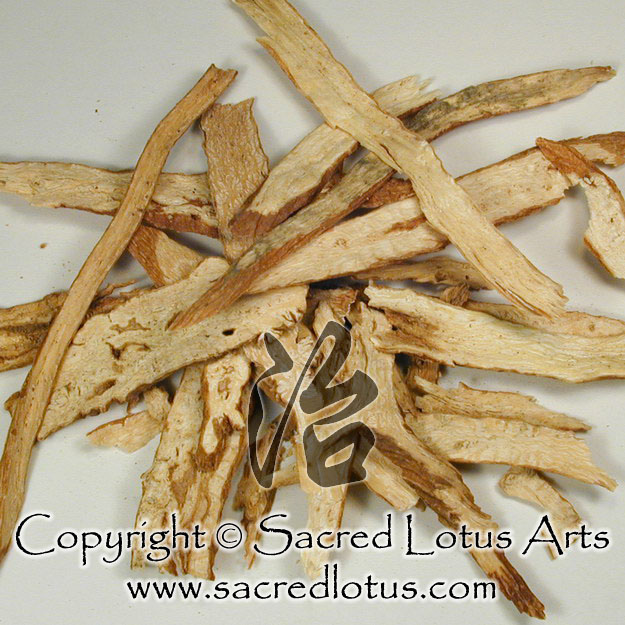
Materia Medica Data
- Category
- Herbs that Cool the Blood
- Temperature
- Cool
- Nature & Flavour
- Sweet, Cool
- Channels Entered
- LIV, ST
- Latin (pharmaceutical)
- Radix Stellariae Dichotomae
- Chinese
- 阴柴胡
- Tone Marks
- yīn chái hú
- Translation
- Silver Barbarian Kindling
Chinese Herb Actions
What is Yin Chai Hu used for in Chinese medicine?
Yin Chai Hu (Stellaria Root) is traditionally used to clear heat that arises from yin deficiency — tidal or afternoon fever, “steaming bone” sensations, night sweats, and lingering low-grade fever after a febrile illness — and to clear the heat of childhood nutritional impairment. It is sweet and cool, entering the Liver and Stomach channels, and is described as cooling without being harsh or drying.
Its traditional actions:
- Clears heat from yin deficiency — afternoon or tidal fever, steaming-bone disorder, low-grade fever, night sweats; also for residual heat remaining in the aftermath of a high fever.
- Clears heat of childhood nutritional impairment (gan ji) — fever, irritability, thirst, and emaciation in the classical “childhood malnutrition with heat” picture.
- Cools the blood — the site record also lists bleeding from reckless movement of hot blood (nosebleed, coughing of blood, uterine bleeding, blood in the urine).
Note on the third action: the two actions most consistently given across published materia medica and multiple online sources are clearing deficiency heat and clearing childhood-nutritional-impairment heat; the cool-the-blood / stop-bleeding function is given by some Chinese-language sources but is not universal. It is retained here as recorded on the site, flagged as a source variation rather than a settled consensus.
Source: the site’s own record for this herb, reviewed against published materia medica consensus and cross-referenced against multiple online sources. Traditional-use framing; not medical advice.
Chinese Herb Dosage
What is the typical dosage of Yin Chai Hu?
Roughly 3–9 g in decoction is the range recorded on this site, and it sits within the ranges given by standard materia medica references. The part used is the root.
- Part used — dried root of Stellaria dichotoma L. var. lanceolata Bge., the source plant recognised in the Chinese Pharmacopoeia.
- Harvest/quality context — cultivated material is now the main commercial source; research comparing growth years found three-year-old roots had the highest total sterol and total flavonoid content, which is why age of the root is treated as a quality factor.
Source: the site’s own dosage record; quality/harvest context from PMID 37375910, PMC 10304078. Reference only — not a prescription.
Chinese Herb Contraindications & Cautions
Are there cautions for Yin Chai Hu?
Yin Chai Hu is contraindicated in externally contracted wind-cold, and in blood deficiency without heat signs — it is a cooling herb aimed at an interior deficiency-heat pattern, and is not appropriate where there is no heat to clear. It is best used within a pattern diagnosis made by a qualified practitioner.
- Substitution and authenticity (reference note) — Stellaria Radix is a herb with a documented adulteration problem. A 2024 chemical-fingerprinting study built “digital identity” profiles specifically to separate Stellaria Radix from Codonopsis Radix and detect mixing, and identified one adulterated sample among twelve market batches. Because several related roots resemble it in appearance, verified material from a reputable supplier matters.
- Not interchangeable with Chai Hu — see the notes above; the name similarity has practical dispensing consequences.
Source: the site’s own cautions record; adulteration finding from PMID 39575395, PMC 11579866, DOI 10.3389/fchem.2024.1438321. Reference note, not a safety guarantee.
Chinese Herb Toxicity & Overdose
No significant toxicity is documented for Yin Chai Hu at customary reference doses. It is not classed as a toxic herb in the standard materia medica and is not flagged as toxic or endangered in this site’s own record. The realistic quality concern is identity — that the material dispensed is genuine Stellaria Radix rather than a look-alike root — not intrinsic toxicity.
Source: materia medica consensus, cross-referenced against multiple online sources; identity/adulteration context from PMID 39575395. Reference note, not a safety guarantee.
Herb-Drug Interactions
No well-established clinical herb–drug interactions are documented for Yin Chai Hu. The published research on this herb is preclinical (cell and animal models), and none of it establishes a clinical interaction. Patients taking prescription medication should tell their prescriber about any herbal use. (Precautionary, not a demonstrated interaction.)
Western / Biomedical Research
Chinese Herb Clinical Studies & Research
Provided as research context — a summary of published biomedical study, not a therapeutic or medical claim.
Is there modern research on Yin Chai Hu (Stellaria dichotoma)?
Yes, but it is entirely preclinical — laboratory and animal work on isolated constituents, with no clinical trials. Chemically the root is characterised by beta-carboline alkaloids (the dichotomines), cyclic peptides (the dichotomins), sterols, flavonoids and a distinctive family of oligosaccharides.
- Beta-carboline alkaloids — dichotomines A–D and dichotomides I–II were isolated from the roots and characterised, with one showing inhibition of mediator release in a mast-cell line and of antigen-IgE-mediated TNF-alpha and IL-4 release; the parent extract showed an antiallergic effect in a mouse model. In vitro and animal work only.
- Dichotomine B — reported to reduce inflammatory signalling in a stimulated microglial cell line via a TLR4/MyD88-mTOR pathway. Cell-model work.
- Cyclic peptides — dichotomins J and K, isolated from the root, showed a moderate vasorelaxant effect on rat aorta.
- Oligosaccharides — a distinctive set of raffinose-family oligosaccharides (including stellariose and lychnose) was isolated and shown to bind galectin-3 and to reduce disease activity in a chemically induced mouse colitis model. Animal model, not clinical evidence.
- Quality and origin — metabolomic comparisons of wild versus cultivated roots found wild material significantly higher in total sterols and total flavonoids, though both met pharmacopoeial extract standards; further work identified three years as the optimal growth period and proposed markers such as rutin and isorhamnetin-3-O-glucoside for quality control.
- Genetics — the complete chloroplast genome of the source plant has been sequenced, supporting molecular authentication.
None of this constitutes clinical evidence for the traditional indications; it is research context only.
Identity flag for owner review: the Chinese characters on this record read “阴柴胡” (yin as in yin/yang), while the site’s own English gloss for this herb is “Silver Barbarian Kindling” and the herb is standardly written “银柴胡” with the character for silver. The record is left unchanged pending owner confirmation.
Sources: PMID 15387643, DOI 10.1021/np040080a (beta-carboline alkaloids, antiallergic); PMID 37010732, DOI 10.1007/s11064-023-03920-0 (dichotomine B, microglia); PMID 16309326, DOI 10.1021/np050262k (dichotomins J and K, vasorelaxant); PMID 39227094, DOI 10.1016/j.carbpol.2024.122551 (oligosaccharides, colitis model); PMID 36840123, PMC 9959334 (wild vs cultivated metabolomics); PMID 37375910, PMC 10304078 (growth years, quality markers); PMID 33426299 (chloroplast genome). Research context, not a therapeutic claim.
Chinese Herb Notes
Is Yin Chai Hu the same as Chai Hu (Bupleurum)?
No. Despite the shared syllables in the name, Yin Chai Hu and Chai Hu are unrelated plants with different botanical families, different categories, and different traditional actions. The name overlap is a naming accident, not a pharmacological relationship, and confusing the two is the single most common error with this herb.
- Yin Chai Hu — root of Stellaria dichotoma, family Caryophyllaceae (the pink / chickweed family). Sweet and cool; Liver and Stomach channels. It clears deficiency heat from the interior and clears childhood-nutritional-impairment heat. It does not release the exterior and does not raise yang.
- Chai Hu — root of Bupleurum, family Apiaceae (the carrot family). Recorded on this site as bitter, acrid and cool, entering Gallbladder, Liver, Pericardium and Triple Burner, and grouped with the cool acrid herbs that release the exterior. It harmonises the shaoyang (alternating chills and fever), spreads constrained Liver qi, and raises the clear yang.
- Practical upshot — a shaoyang or Liver-constraint presentation calls for Chai Hu; a yin-deficiency steaming-bone or childhood-gan-heat presentation is where Yin Chai Hu belongs. They are not substitutes for one another in either direction.
How does Yin Chai Hu compare with the other deficiency-heat herbs?
Published materia medica commonly group Yin Chai Hu with Di Gu Pi, Hu Huang Lian and Qing Hao as the herbs that clear heat from deficiency. Within that group, Yin Chai Hu and Hu Huang Lian are the two most associated with childhood nutritional impairment with heat; Di Gu Pi is more directed at Lung heat and steaming bone; Qing Hao is the one used for heat lurking in the yin aspect that surfaces with fever and no sweating.
Category note: this site files Yin Chai Hu (and Di Gu Pi) under “Herbs that Cool the Blood,” while most published materia medica use a separate “clears deficiency heat” heading. This is a difference in how the categories are organised, not a disagreement about what the herb does. The site’s category is left unchanged.
Which formula contains Yin Chai Hu?
In the formulas recorded on this site, Yin Chai Hu appears in Qing Gu San (Cool the Bones Powder), the classic steaming-bone / deficiency-heat formula. (Traditional formula context, not treatment advice.)
Source: the site’s own records for Yin Chai Hu, Chai Hu, Di Gu Pi, Hu Huang Lian and Qing Hao, and its formula records; botanical family placement per the Caryophyllaceae attribution in PMID 39227094 and PMID 36840123. Cross-referenced against multiple online sources.
Sources & References
Compiled and edited by Thomas Dehli, Founder & Editor, Sacred Lotus Updated
The information here is referenced from numerous sources — teachers, practitioners, class notes from Five Branches University, the books below, and the published research literature, with citations given as resolvable PubMed identifiers. Where sources disagree, I have flagged the discrepancies directly. If facts couldn't be verified, I have left them out. How we source our content.
Reference information for students and practitioners — not medical advice. Consult a qualified practitioner. Terms of use.
Chinese Herbs Books & References
 https://amzn.to/3WfB3DK
 https://amzn.to/3DR1VUh
 https://amzn.to/42aMz73
 https://amzn.to/3PuD4bt