
Cong Chi Tang
Scallion and Prepared Soybean Decoction
- Category
- Formulas that Release the Exterior
- Ingredients
- 2 herbs
Actions
What does Cong Chi Tang do?
Cong Chi Tang (Scallion and Prepared Soybean Decoction) gently releases the exterior and unblocks yang qi to induce a mild sweat at the very earliest sign of an exterior invasion. Built from just two herbs, it is one of the simplest classical exterior-releasing formulas still in use — valued precisely because it is mild enough for early, ambiguous cases and for patients too weak, young, old, or otherwise unsuited to stronger diaphoretic formulas such as Ma Huang Tang or Gui Zhi Tang.
- Cong Bai (scallion bulb, used with the root): warms and unblocks yang qi and mildly promotes sweating, dispersing cold from the exterior.
- Dan Dou Chi (prepared/fermented soybean): releases the exterior in a way that can suit either a wind-cold or a wind-heat presentation, and supports Cong Bai’s mild diaphoretic action.
Source: classical formulary tradition (attributed to Ge Hong’s Zhou Hou Bei Ji Fang); Bensky & Barolet, Formulas & Strategies. Traditional-use framing; not medical advice.
Indications
What is Cong Chi Tang used for?
Cong Chi Tang is used at the very earliest stage of an exterior invasion — the first day or so of a common cold or flu-like illness — when symptoms are still mild and it is not yet clear whether the pattern will develop into wind-cold or wind-heat.
- Early exterior symptoms: mild chills and low fever, slight headache, a stuffy or runny nose, and absence of sweating.
- Ambiguous or just-beginning patterns: useful when it is unclear whether the invasion will develop into a wind-cold or wind-heat presentation, since neither herb strongly commits to one direction.
- Weak or vulnerable patients: appropriate when a patient — elderly, very young, postpartum, or otherwise depleted — needs a gentle nudge to sweat rather than a strong diaphoretic formula.
- As a base for modification: in practice it is often combined with additional herbs (for example Jing Jie, Bo He, or Zhi Zi) if symptoms are more pronounced or fail to resolve quickly.
Source: Sacred Lotus sources & references (diagnostic profile); Bensky & Barolet, Formulas & Strategies. Traditional-use framing; not medical advice.
Ingredients
2 substances in Cong Chi Tang — each links to its full herb monograph.
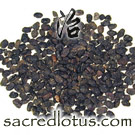 Dan Dou Chi12-30 gCool, Spicy Herbs that Release the Exterior
Preparation & dosage
How is Cong Chi Tang prepared?
Cong Chi Tang is a simple decoction, cooked briefly (about 5–10 minutes) so the volatile, exterior-releasing properties of both herbs are not lost to prolonged boiling. Cong Bai is traditionally used as the whole stalk with its root/root-beard attached, reflecting a preference for the freshest, most complete part of the plant for this purpose; Dan Dou Chi, a fermented soybean preparation, is added to the same brief decoction, with the balance between the two herbs sometimes shifted depending on whether the presentation leans more wind-cold or wind-heat. As with other mild exterior formulas, the decoction is traditionally taken warm, sometimes with the patient resting under a light cover afterward to help a mild sweat along.
Source: Sacred Lotus sources & references (preparation notes); Bensky & Barolet, Formulas & Strategies.
Safety — read before use
What are the cautions for Cong Chi Tang?
Cong Chi Tang is one of the mildest formulas in the Chinese materia medica and carries very few specific cautions, but that mildness is also its limitation: it is not adequate on its own for a fully developed wind-cold, wind-heat, or more severe exterior pattern.
- Not a substitute for stronger formulas: if fever, chills, or other exterior symptoms are pronounced or persist beyond the earliest stage, a more targeted formula (for example Ma Huang Tang, Gui Zhi Tang, Yin Qiao San, or Sang Ju Yin) is generally indicated instead.
- Not for interior patterns or deficiency unrelated to an exterior invasion — it addresses only the exterior-invasion stage.
- Soy sensitivity: Dan Dou Chi is a fermented soybean preparation; those with a known soy allergy or intolerance should be aware of the ingredient.
- Any fever or respiratory illness that worsens, or occurs in infants, the elderly, or those with underlying illness, should be medically evaluated rather than managed with this or any herbal formula alone.
Source: Bensky & Barolet, Formulas & Strategies. Traditional-use framing; not medical advice.
Originally Appeared In:
- Emergency Formulas to Keep Up One's Sleeve (Zhou Hou Bei Ji Fang)
Notes:
How does Cong Chi Tang differ from Yin Qiao San and Ma Huang Tang?
Cong Chi Tang, Yin Qiao San, and Ma Huang Tang all release the exterior, but they sit at very different points on the strength-and-specificity spectrum.
- vs Ma Huang Tang: Ma Huang Tang is a strong wind-cold diaphoretic (Ma Huang, Gui Zhi, Xing Ren, Zhi Gan Cao) meant for a robust patient with a fully developed, more severe wind-cold pattern — no sweating, body aches, a tight/floating pulse. Cong Chi Tang is far gentler and is used earlier, before the pattern has fully formed, or when the patient cannot tolerate a strong sweat-inducing formula.
- vs Yin Qiao San: Yin Qiao San is a dedicated wind-heat formula with a larger, more specifically cooling herb set; Cong Chi Tang is pattern-neutral enough to be used before it is clear whether the invasion will lean wind-cold or wind-heat.
- As a “kitchen medicine”: because it uses only a food-grade allium bulb and a fermented soybean preparation, Cong Chi Tang has long been used as a simple home remedy at the first sign of a cold — its teaching role is as the mildest formula on the exterior-releasing spectrum, not one reserved for clinical severity.
Source: Bensky & Barolet, Formulas & Strategies (comparative analysis); cross-referenced against multiple online sources.
Clinical Studies & Research:
Is there modern research on Cong Chi Tang?
No dedicated clinical trial of the combined two-herb formula was found; the available modern research instead studies its ingredient Dan Dou Chi (fermented soybean, Semen Sojae Praeparatum) on its own. A 2026 network-pharmacology and laboratory study identified genistein and daidzein as key anti-inflammatory constituents of Dan Dou Chi acting on influenza-relevant pathways, and used the findings to optimize the traditional fermentation process for enhanced antiviral activity (PMID 41957261). Separate research has profiled how different traditional fermentation methods change Dan Dou Chi’s isoflavone content and its effects on gut bacteria in animal models (PMID 40002115). These findings describe the pharmacology of one ingredient; they do not validate Cong Chi Tang as a formula-level treatment for cold or flu.
Sources: PubMed 41957261; PubMed 40002115. Ingredient-level research context only; not a formula-level clinical claim.
Sources & References
Compiled and edited by Thomas Dehli, Founder & Editor, Sacred Lotus Updated
The information here is referenced from numerous sources — teachers, practitioners, class notes from Five Branches University, the books below, and the published research literature, with citations given as resolvable PubMed identifiers. Where sources disagree, I have flagged the discrepancies directly. If facts couldn't be verified, I have left them out. How we source our content.
Reference information for students and practitioners — not medical advice. Consult a qualified practitioner. Terms of use.
Chinese Formulas Books & References
 https://amzn.to/4fYI3f8
 https://amzn.to/4j55NRA
 https://amzn.to/4gMROyv
 https://amzn.to/4h7msSK