
Actions
What does Cang Er Zi San do?
Cang Er Zi San dispels wind, unblocks the nasal passages, and stops the pain and discharge of sinus congestion. It is the foundational formula in the "open the nasal orifices" category, built around a single strategy: use acrid, dispersing herbs to drive wind evil out of the head and reopen a blocked nose.
The four ingredients divide by role:
- Chief: Cang Er Zi (Xanthium Fruit) — acrid, warm, and unusually able to travel to the top of the head and into the nasal sinuses, where it disperses wind-damp and breaks up deep congestion.
- Deputies: Xin Yi Hua (Magnolia Flower) opens the more superficial nasal passages and helps clear yang qi rise to the head; Bai Zhi (Angelica Dahurica Root) enters the Yangming channels of the face, gives strong analgesic action for frontal headache, and helps discharge congested, turbid nasal mucus.
- Assistant/envoy: Bo He (Mint), acrid and cool, disperses wind-heat, clears the head and eyes, and tempers the warm, drying nature of the other three herbs while guiding the formula's action upward to the head.
Some sources frame the formula strictly as a wind-heat prescription; others describe it more broadly as a wind-dispelling formula for turbid nasal discharge regardless of cold/heat origin, with Bo He's coolness balancing the warmth of Cang Er Zi, Xin Yi Hua, and Bai Zhi so it adapts to either presentation with modification.
Source: Sacred Lotus sources & references + Bensky & Barolet, Formulas & Strategies (chief/deputy/assistant analysis; Sacred Lotus does not flag chief/deputy/assistant roles, so the breakdown above follows the standard classical analysis). Traditional-use framing; not medical advice.
Indications
What is Cang Er Zi San used for?
Cang Er Zi San treats bi yuan (sinus congestion/nasal obstruction) — nasal congestion with thick, turbid nasal discharge and a frontal or sinus headache caused by wind evil attacking the head. It is the classic starting-point formula for what modern practice calls sinusitis and rhinitis with congestion.
Its classic clinical presentation:
- Nasal signs: a blocked, congested nose with copious, thick (often turbid or yellow-tinged) discharge, and a diminished sense of smell.
- Head pain: a dull, distending frontal headache or sinus-area pain, often worse leaning forward or bending over.
- Accompanying exterior signs: may present with mild aversion to wind, or a stuffy, heavy-headed feeling consistent with wind invading the upper body.
Tongue and pulse: commonly a thin white or slightly yellow tongue coating with a floating pulse, consistent with a wind pattern lodged in the head.
Source: Sacred Lotus sources & references on pattern + Bensky & Barolet, Formulas & Strategies. Traditional-use framing; not medical advice.
Western Uses:
What is Cang Er Zi San used for in modern practice?
In modern practice Cang Er Zi San is referenced for nasal congestion, allergic rhinitis, and sinusitis with thick discharge — the biomedical conditions that most closely track its traditional bi yuan presentation. It remains one of the most cited classical formulas in the Chinese herbal literature on rhinosinusitis, appearing in medical texts spanning the 13th through early 20th centuries.
These biomedical correlates are offered as a reference to the formula's traditional use, not as a claim that it treats any diagnosed disease. A related six-herb formula built around the same Xanthium-plus-Magnolia core (Shi-Bi-Lin) has been tested in a placebo-controlled human trial for perennial allergic rhinitis, but it is not identical in composition to Cang Er Zi San itself — see research. Any use for a diagnosed condition belongs with a qualified practitioner and appropriate medical care.
Source: traditional-use correlates summarized from Bensky & Barolet, Formulas & Strategies, cross-checked against PubMed 40329241 (Cui et al., BMC Complement Med Ther 2025, text-mining study of classical rhinosinusitis formulas). Reference only, not a treatment claim.
Ingredients
4 substances in Cang Er Zi San — each links to its full herb monograph.
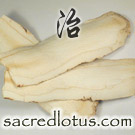 Bai Zhi6-9 gWarm, Spicy Herbs that Release the Exterior
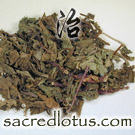 Bo He3-6 gCool, Spicy Herbs that Release the Exterior
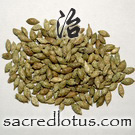 Cang Er Zi6-9 gDispel Wind-Dampness
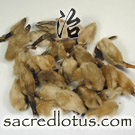 Xin Yi Hua3-6 gWarm, Spicy Herbs that Release the Exterior
Preparation & dosage
How is Cang Er Zi San prepared?
Cang Er Zi San was traditionally taken as a fine powder (san), swallowed with a scallion-and-tea decoction or plain tea; today it is most often prepared as a decoction or granule formula instead. Properly processed (stir-fried) Cang Er Zi is required — see cautions.
- Xin Yi Hua is conventionally wrapped in cloth before decocting, since its fine hairs can irritate the throat and digestive tract if left loose in the liquid.
- Bo He is added near the end of cooking (a short simmer) because its aromatic, dispersing properties are lost with prolonged heating.
Source: Bensky & Barolet, Formulas & Strategies (traditional powder form and standard decoction handling of Xin Yi Hua and Bo He). Traditional-use framing; not medical advice.
Traditionally a fine powder taken 6 g at a time with a scallion-and-tea decoction; commonly prepared today as a decoction. Reference relative amounts: Cang Er Zi (processed/stir-fried) 6-9 g; Bai Zhi 6-9 g; Xin Yi Hua 3-6 g (cloth-wrapped); Bo He 3-6 g (added near the end of cooking). Reference only.
Safety — read before use
What are the cautions for Cang Er Zi San?
Cang Er Zi (Xanthium Fruit) is a documented toxic herb, so this formula must use properly processed material and stay within reference dosage. The raw fruit contains the diterpenoid glycosides carboxyatractyloside and atractyloside, which are hepatotoxic; stir-frying/roasting the fruit ("chao cang er zi") substantially reduces the more dangerous carboxyatractyloside, which is why processed rather than raw Cang Er Zi is required in this formula.
- Never use raw, unprocessed Cang Er Zi or exceed reference dosing — excess raw fruit or seed has been associated with liver and kidney injury.
- Children are more sensitive to Xanthium's toxic components than adults; pediatric use requires extra caution around both dose and processing.
- Drying/dispersing nature: the formula is not appropriate for blood- or yin-deficient headache, or for prolonged use once the wind pattern has resolved, since its acrid, dispersing herbs can further deplete fluids.
- Exterior-releasing formula: not intended for chronic nasal congestion without an active wind component; reassess if symptoms persist beyond a short course.
Source: PubMed 26287695 (Nikles et al., Planta Med 2015, processing reduces carboxyatractyloside/atractyloside content in Xanthium sibiricum fruit) + PubMed 30669496 (Fan et al., Molecules 2019, toxicology review noting stir-baking reduces toxicity) + Bensky & Barolet, Formulas & Strategies. Traditional-use framing; not medical advice.
Originally Appeared In:
- Formulas to Aid the Living (Ji Sheng Fang)
Notes:
How is Cang Er Zi San different from Xin Yi San, Yu Ping Feng San, and Shi-Bi-Lin?
Cang Er Zi San is the classic four-herb starting formula for wind-pattern nasal congestion with thick discharge; related formulas either narrow or broaden that same strategy.
- vs Xin Yi San: a related nasal-opening formula built around Xin Yi Hua rather than Cang Er Zi as chief, generally used for a milder presentation without the same degree of turbid discharge.
- vs Yu Ping Feng San: Yu Ping Feng San tonifies defensive (wei) qi to prevent recurrent wind invasion in a chronically deficient patient; Cang Er Zi San is a dispersing formula for an active wind-pattern nasal obstruction, not a long-term preventive tonic. The two are sometimes combined or alternated — disperse the acute pattern first, then consolidate the exterior.
- vs Shi-Bi-Lin: Shi-Bi-Lin is a related, modified six-herb formula (adding Fang Feng, Long Dan Cao, and Ma Bian Cao to a Xanthium-and-Magnolia core) studied in a placebo-controlled trial for perennial allergic rhinitis — it is not the same composition as Cang Er Zi San and should not be treated as equivalent.
Common modifications: add Huang Qin or Yu Xing Cao for more pronounced heat/turbid-yellow discharge; add Fang Feng for stronger wind-dispelling in early-stage exterior invasion; combine with qi-tonifying herbs (e.g., Huang Qi) for patients prone to recurrent wind invasion once the acute pattern has cleared.
Source: Bensky & Barolet, Formulas & Strategies (formula comparisons and modifications) + PubMed 19118617 (Zhao et al., J Ethnopharmacol 2009, Shi-Bi-Lin composition and trial).
Clinical Studies & Research:
Is there modern research on Cang Er Zi San?
Yes — clinical meta-analysis in pediatric allergic rhinitis, historical text-mining of its use for rhinosinusitis, and preclinical work on Cang Er Zi (Xanthium Fruit) itself in an allergic-rhinitis model. A 2024 meta-analysis of 15 randomized controlled trials (1,361 children) found Cang-Er-Zi-San improved allergic rhinitis symptom outcomes compared with conventional therapy alone. A 2025 text-mining study of classical Chinese rhinosinusitis formulas identified Cang Er Zi San as the most frequently cited formula across historical medical texts (1253-1911), though it noted the formula is not included in a 2012 contemporary clinical guideline despite its historical prominence.
- Pediatric allergic rhinitis (clinical meta-analysis): Cang-Er-Zi-San improved symptom outcomes across 15 RCTs versus conventional therapy (PMID 39705439).
- Historical/clinical text-mining: Cang Er Zi San was the single most-cited classical formula for rhinosinusitis in a systematic review of historical Chinese medical literature, referenced in 47 source texts (PMID 40329241).
- Xanthium Fruit mechanism (preclinical, single herb): in an ovalbumin-sensitized mouse allergic-rhinitis model, Xanthii Fructus reduced sneezing, serum histamine and IgE, inflammatory cytokines (TNF-alpha, IL-1beta, IL-5, IL-6), and nasal eosinophil infiltration (PMID 26664025).
- Related formula (Shi-Bi-Lin, not identical composition): a double-blind, placebo-controlled trial of this modified six-herb Xanthium-based formula in 126 adults with perennial allergic rhinitis found improved nasal-blockage symptoms sustained at least two weeks post-treatment (PMID 19118617).
Sources: PubMed 39705439; PubMed 40329241; PubMed 26664025; PubMed 19118617. Research context, not a therapeutic claim; direct clinical trial evidence on the unmodified four-herb Cang Er Zi San formula itself remains limited.
Sources & References
Compiled and edited by Thomas Dehli, Founder & Editor, Sacred Lotus Updated
The information here is referenced from numerous sources — teachers, practitioners, class notes from Five Branches University, the books below, and the published research literature, with citations given as resolvable PubMed identifiers. Where sources disagree, I have flagged the discrepancies directly. If facts couldn't be verified, I have left them out. How we source our content.
Reference information for students and practitioners — not medical advice. Consult a qualified practitioner. Terms of use.
Chinese Formulas Books & References
 https://amzn.to/4fYI3f8
 https://amzn.to/4j55NRA
 https://amzn.to/4gMROyv
 https://amzn.to/4h7msSK