
Herba Lycopi Lucidi Bugleweed
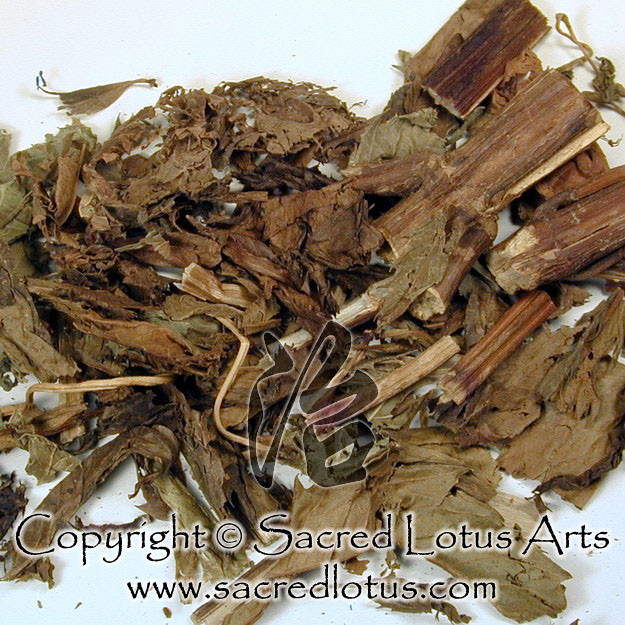
Materia Medica Data
- Temperature
- Slightly Warm
- Nature & Flavour
- Bitter, Spicy, Slightly Warm, Aromatic
- Channels Entered
- LIV, SP
- Latin (pharmaceutical)
- Herba Lycopi Lucidi
- Chinese
- 泽兰
- Tone Marks
- zé lán
- Translation
- Marsh Orchid
Chinese Herb Actions
What is Ze Lan used for in Chinese medicine?
Ze Lan is a gentle blood-moving herb used above all in gynaecology — for painful, irregular or absent periods, post-partum abdominal pain, and post-partum retention of lochia, where blood stasis is the pattern. It is bitter, acrid (spicy) and slightly warm, aromatic, and enters the Liver and Spleen channels. A second, milder action promotes urination and reduces swelling.
Its traditional actions:
- Invigorates the blood and dispels stasis — painful menstruation, irregular menstruation, amenorrhoea, post-partum abdominal pain and retained lochia; it warms the channels, which is how it moves the blood.
- Reduces swelling and disperses masses / traumatic injury — used internally and topically for traumatic injury, bruising, sores and abscesses.
- Promotes urination and regulates water circulation — a mild effect used for post-partum oedema, post-partum painful urinary dribbling, and facial or generalised oedema. This water-moving action is unusual among the blood-invigorating herbs and is part of what defines Ze Lan.
The classical characterisation is “moves the blood without damaging the blood.” Ze Lan is regarded as one of the mildest of the blood-invigorating herbs — strong enough to be a mainstay in menstrual and post-partum medicine, gentle enough to be used where a harsh blood-breaker would be inappropriate.
Source: our own herb record (category “Herbs that Invigorate Blood and Remove Stagnation”; bitter, spicy, slightly warm, aromatic; Liver and Spleen channels); published materia medica consensus (Bensky 3rd ed.; Chen & Chen), cross-referenced against multiple online sources. Traditional-use framing; not medical advice.
Chinese Herb Dosage
What is the typical dosage of Ze Lan?
Roughly 9–15 g in decoction — our record gives 9–15 g (Bensky) and 10–15 g (Chen), a narrow and well-agreed range. It is a leafy aerial herb (the above-ground parts of Lycopus lucidus), so it is decocted in the ordinary way with no special preparation step.
- Standard decoction — 9–15 g; some sources allow up to about 30 g in stubborn stasis patterns under professional care.
- Topical use — the fresh or powdered herb is applied externally for traumatic injury, bruising and sores; topical amounts are determined by the size of the area, not by a weight range.
- Preparation — no special processing (no pre-decocting, no dissolving) is required.
Source: our own herb record (Bensky and Chen ranges); published materia medica consensus. Reference only — not a prescription.
Chinese Herb Contraindications & Cautions
Are there cautions for Ze Lan?
The principal caution is pregnancy. Our record follows the standard split: contraindicated in pregnancy (Chen) and to be used with caution in pregnancy (Bensky). As a blood-invigorating herb, the conservative reading — avoid in pregnancy unless prescribed and supervised by a qualified practitioner — is the safe one.
- Pregnancy — contraindicated (Chen) / use with caution (Bensky). Treat as contraindicated outside professional supervision.
- Heavy menstrual bleeding (hypermenorrhoea) — do not use; moving the blood can worsen excessive bleeding.
- Blood deficiency — use with caution; blood-movers can further deplete an already deficient blood level unless paired with tonifying herbs.
- No blood stasis present — do not use. Ze Lan is pattern-specific; without a stasis picture there is no indication for it.
Species caution (repeated here because it is a safety point): anyone reading Western material on “bugleweed” for thyroid conditions is reading about a different Lycopus species. Do not use Ze Lan on the strength of that literature, and do not self-treat a thyroid condition with any herb.
Source: our own herb record cautions (Bensky and Chen); published materia medica consensus. Reference note, not a safety guarantee — consult a qualified practitioner.
Chinese Herb Toxicity & Overdose
- None noted
Herb-Drug Interactions
Does Ze Lan interact with medications?
No well-established clinical herb–drug interactions are documented for Ze Lan. Two areas warrant practitioner awareness on theoretical grounds rather than demonstrated evidence:
- Anticoagulant and antiplatelet medication — a precautionary flag common to blood-invigorating herbs as a class. No clinical interaction has been demonstrated for Ze Lan specifically.
- Thyroid medication — flagged only to close the loop on the species confusion. The thyroid-parameter findings belong to Lycopus europaeus, not to Lycopus lucidus; there is no evidence base for a Ze Lan–thyroid-drug interaction in either direction.
Patients on prescription medication should tell both their doctor and their herbalist what they are taking. (Precautionary reference note, not a demonstrated interaction.)
Western / Biomedical Research
Chinese Herb Clinical Studies & Research
Provided as research context — a summary of published biomedical study, not a therapeutic or medical claim.
Is there modern research on Ze Lan (Lycopus lucidus)?
Yes — but it is laboratory and animal research, with no clinical trials in humans. The chemistry is reasonably well described: analytical work using UHPLC-Q-TOF-MS and HPLC-MS/MS characterised 37 constituents of Lycopus lucidus including 15 phenolic acids, 12 flavonoids, three triterpenoids and seven organic acids (DOI 10.1002/bmc.3867). Earlier work isolated rosmarinic acid and its methyl and ethyl esters plus luteolin and a luteolin glucuronide, all showing antioxidant activity in a superoxide-scavenging assay (PMID 15022718).
- Vascular and anti-inflammatory (preclinical) — L. lucidus extract inhibited high-glucose-induced vascular inflammation in human umbilical vein endothelial cells (PMID 18083068). A mouse and cell study reported that it reduced skin inflammation in a DNCB-induced atopic dermatitis model, suppressing serum IgE and IL-6 and inhibiting NF-κB, ERK and JNK signalling (PMID 34581418, PMC 8503738, DOI 10.3892/mmr.2021.12467).
- Kidney and microvascular models (preclinical) — aqueous extract reduced streptozotocin-induced diabetic renal damage in rats via TGF-β1 signalling (PMID 23827664), with related podocyte and retinal work in animal models (PMID 31632540; PMID 31307239).
- Bone (preclinical) — inhibited osteoclast formation in RAW 264.7 cells and bone loss in an ovariectomised rat model (PMID 30915145, PMC 6409043).
- Amyloid aggregation (in vitro) — phenylpropanoids from L. lucidus (schizotenuin A, lycopic acids A and B) inhibited amyloid-β and hIAPP fibrillisation in a thioflavin-T assay (PMID 32219646).
None of this constitutes clinical evidence, and none of it corresponds directly to the herb’s traditional gynaecological use — that use rests on the classical record, not on trials.
Important research caveat — do not merge the two bugleweeds. There is a clinical literature on “bugleweed” and thyroid function, including an open study of Lycopus europaeus in people with low TSH and hyperthyroid-associated symptoms which reported increased urinary T4 excretion and reduced thyroid-related symptoms (PMID 18083505, DOI 10.1016/j.phymed.2007.11.001), plus animal work on cardiac signs of hyperthyroidism (PMID 16150466). That research was conducted on Lycopus europaeus, not on Lycopus lucidus. It is listed here only so readers who arrive via the shared English name can see the distinction clearly. It is not evidence about Ze Lan and no thyroid claim should be attached to Ze Lan on its basis.
Sources: PMID 15022718; DOI 10.1002/bmc.3867; PMID 18083068; PMID 34581418, PMC 8503738, DOI 10.3892/mmr.2021.12467; PMID 23827664; PMID 31632540; PMID 31307239; PMID 30915145, PMC 6409043; PMID 32219646. Species-distinction references: PMID 18083505, DOI 10.1016/j.phymed.2007.11.001; PMID 16150466 (both L. europaeus). Research context, not a therapeutic claim.
Chinese Herb Notes
Is Ze Lan the same as the Western herb bugleweed? And how does it differ from Pei Lan?
No — and this is the single most important thing to get right about Ze Lan. Ze Lan is Lycopus lucidus. The English name “bugleweed” is also used for Lycopus virginicus (Virginia bugleweed) and Lycopus europaeus (gypsywort), which in Western herbal medicine are used for mild hyperthyroid and Graves-type presentations and have their own separate research literature on thyroid parameters. Those are different species with a different indication, and that Western thyroid use must not be read across to Ze Lan. Ze Lan’s role in Chinese medicine is blood-moving in gynaecology and trauma; no traditional Chinese source assigns it a thyroid indication, and the thyroid research was not conducted on L. lucidus.
- Ze Lan — Lycopus lucidus — Chinese materia medica; invigorates blood, regulates menstruation, promotes urination; Liver and Spleen.
- Western “bugleweed” — L. virginicus / L. europaeus — Western herbal tradition; used for hyperthyroid-type symptoms. Same genus, same common English name, different plant and different tradition.
Ze Lan and Pei Lan — two different herbs with similar-sounding names
Ze Lan (泽兰) and Pei Lan (佩兰) are unrelated herbs whose pinyin names are easily confused. Both end in “lan,” both are aromatic aerial herbs, and both are traditionally associated with the Spleen — but their categories are completely different:
- Ze Lan — Lycopus lucidus (mint family). Bitter, spicy, slightly warm. Liver and Spleen. Invigorates blood for menstrual and post-partum stasis.
- Pei Lan — Eupatorium fortunei (daisy family). Spicy, neutral. Spleen and Stomach. Transforms and resolves dampness — an aromatic damp-transforming herb for a greasy tongue coating, a sweet-sticky taste in the mouth, nausea and poor appetite. It has no blood-moving role.
What is Ze Lan commonly combined with?
Ze Lan is a partner herb rather than a solo agent. It is classically paired with other blood-movers and blood-regulators — for example with Dang Gui and Chuan Xiong for menstrual pain with blood deficiency, with Yi Mu Cao for post-partum stasis with oedema (the two reinforce each other’s combined blood-moving and urination-promoting effect), and with Chi Shao or Hong Hua where the stasis is more marked. (Traditional formula context, not treatment advice.)
Note: Our own record lists no formula links for Ze Lan. That reflects our formula coverage, not the herb’s standing — Ze Lan appears in classical and modern gynaecological prescriptions that are simply not in our current formula set.
Source: our own herb records for Ze Lan and Pei Lan (identity, category, nature and channels); published materia medica consensus; species distinction confirmed against the botanical and Western-herbal literature. Traditional context only.
Sources & References
Compiled and edited by Thomas Dehli, Founder & Editor, Sacred Lotus Updated
The information here is referenced from numerous sources — teachers, practitioners, class notes from Five Branches University, the books below, and the published research literature, with citations given as resolvable PubMed identifiers. Where sources disagree, I have flagged the discrepancies directly. If facts couldn't be verified, I have left them out. How we source our content.
Reference information for students and practitioners — not medical advice. Consult a qualified practitioner. Terms of use.
Chinese Herbs Books & References
 https://amzn.to/3WfB3DK
 https://amzn.to/3DR1VUh
 https://amzn.to/42aMz73
 https://amzn.to/3PuD4bt