
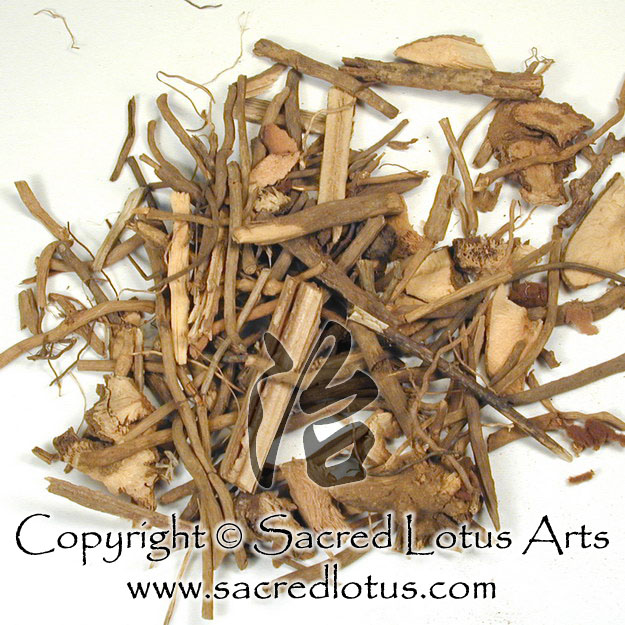
Materia Medica Data
- Temperature
- Neutral
- Nature & Flavour
- Bitter, Sour, Neutral
- Channels Entered
- LIV, KI
- Latin (pharmaceutical)
- Radix Achyranthis
- Chinese
- 牛膝
- Tone Marks
- niú xī
- Translation
- Local Ox's Knee
Chinese Herb Actions
What is Tu Niu Xi used for in Chinese medicine?
Tu Niu Xi is used chiefly to drain fire and resolve toxins in the throat — it is the “Niu Xi” that treats sore, swollen throat rather than the one that treats the knees. Our record classifies it as bitter, sour and neutral, entering the Liver and Kidney channels, and places it among the herbs that clear heat and eliminate toxins — a completely different category from its two better-known namesakes, both of which sit among the blood-invigorating herbs. Its name means “local ox’s knee.”
Its main traditional actions, as held on this record:
- Drains fire and reduces toxins — painful, swollen throat, with our record singling out diphtheria and pneumonia as the conditions for which it was considered especially effective. This is its defining use and the reason it is categorised where it is.
- Clears heat toxins on the skin — abscesses and skin sores, and traditionally applied to relieve the effects of snakebite.
- Invigorates the blood — amenorrhoea and dysmenorrhoea. This is the action it shares with Huai Niu Xi and Chuan Niu Xi, and the reason the three are grouped under one nickname at all.
Part used: the root, per our record.
Source: Sacred Lotus sources & references (this herb’s recorded actions, category, nature, flavour, channels, translated name, part used and Latin name, as held on file); published materia medica consensus (Bensky, Materia Medica 3rd ed.; Chen & Chen), cross-referenced against multiple online sources; the throat indication is independently reflected in pharmacological work on a source species of this drug in an acute pharyngitis model (PMID 40334821, DOI 10.1016/j.fitote.2025.106593). Traditional-use framing; not medical advice.
Chinese Herb Dosage
What is the typical dosage of Tu Niu Xi?
Our record gives 15–30 g, using the root. That is a notably larger range than either of the other two Niu Xi — Chuan Niu Xi is recorded at 3–10 g and Huai Niu Xi at roughly 9–15 g — which is a useful practical tell that the three are not interchangeable and that a prescription written for one cannot simply be filled with another at the same weight.
- Tu Niu Xi — 15–30 g, root (this record). The heat-clearing, toxin-resolving member of the group, dosed like a heat-clearing herb.
- Huai Niu Xi — roughly 9–15 g in decoction on its own record.
- Chuan Niu Xi — 3–10 g in decoction (Chen & Chen), 4.5–9 g (Bensky), or 1–1.5 g as powder, on its own record.
Source: Sacred Lotus sources & references (the recorded dosage and part used for Tu Niu Xi, and the recorded ranges for Huai Niu Xi and Chuan Niu Xi, as held on file). Reference only — not a prescription.
Chinese Herb Contraindications & Cautions
Are there cautions for Tu Niu Xi?
Tu Niu Xi is contraindicated in pregnancy — that is the caution our record holds, and it is shared by all three Niu Xi. The shared warning follows from the blood-invigorating, downward-moving action common to the group, and getting the identification right does not relax it for any of them.
- Pregnancy — contraindicated. There is preclinical support for this specific herb rather than only a category rule: an abortifacient principle was isolated from Achyranthes aspera in early work, and a later study reported effects on fetal abortion, uterine and pituitary weights, and serum lipids and hormones in an animal model. Animal findings, recorded as corroboration of the traditional contraindication.
- Correct identification — because “Niu Xi” is used loosely for at least three different roots that are documented as being confused in practice, the qualifier and the botanical source on the label both matter. A substitution here changes the category of the herb, not just its strength.
- General prudence — as a cold, heat-clearing, blood-moving herb it is a poor fit for cold patterns and pure deficiency without heat or stasis, and it is used with care where digestion is weak. Best used under a qualified practitioner.
Source: Sacred Lotus sources & references (recorded pregnancy contraindication for Tu Niu Xi, and the same contraindication on the Huai Niu Xi and Chuan Niu Xi records, as held on file); PMID 606650 (abortifacient principle of Achyranthes aspera); PMID 16916302, PMC 1831979, DOI 10.5555/afhs.2006.6.2.108 (fetal abortion, uterine and pituitary weights, serum lipids and hormones in an animal model); confusion between the three drugs per PMID 36739718, DOI 10.1016/j.jpba.2023.115272. Neutral reference disclosures, not usage instructions.
Chinese Herb Toxicity & Overdose
Is Tu Niu Xi toxic?
No toxicity is recorded for Tu Niu Xi in our own reference, and the wider Niu Xi group carries no toxicity classification. The reason to be careful with this herb is its pregnancy contraindication and the identification problem described above, not an intrinsic poison profile.
One preclinical observation is worth recording for completeness rather than concern: a study of the anticonvulsant activity of Achyranthes aspera also reported an acute neurotoxic profile for the extract at the doses examined, which is the kind of dose-ceiling laboratory finding that belongs on file for a herb dosed at 15–30 g. That is an animal study of a plant extract, not a clinical toxicity report, and no case literature of harm from the dispensed herb was found.
Source: Sacred Lotus sources & references (no recorded toxicity for this herb; “none noted” for the Niu Xi group, as held on file); PMID 28315457, DOI 10.1016/j.jep.2017.03.018 (anticonvulsant activity and acute neurotoxic profile of Achyranthes aspera, animal study). Reference note, not a safety guarantee.
Herb-Drug Interactions
Does Tu Niu Xi interact with medications?
No clinical herb–drug interaction is documented for Tu Niu Xi, and no human pharmacokinetic study of it could be found. Two precautionary points follow from the preclinical literature rather than from any observed interaction. First, oestrogen-like and hormonal effects have been reported for the genus — an animal study of Achyranthes aspera found changes in pituitary weight and serum hormones, and network-pharmacology work has modelled an oestrogenic mechanism in post-menopausal bone loss — which is worth a practitioner’s attention in hormone-sensitive situations and reinforces the pregnancy contraindication. Second, its traditional blood-invigorating action is the usual reason for caution alongside anticoagulant and antiplatelet medication, as it is for the other two Niu Xi. Neither is a demonstrated clinical interaction. (Precautionary; flagged for practitioner confirmation.)
Sources: PMID 16916302, PMC 1831979, DOI 10.5555/afhs.2006.6.2.108 (uterine and pituitary weights, serum lipids and hormones); PMID 39469676, PMC 11513486, DOI 10.1016/j.heliyon.2024.e38792 (oestrogenic anti-osteoporotic mechanism, network pharmacology). Preclinical context, not a clinical interaction claim.
Western / Biomedical Research
Chinese Herb Clinical Studies & Research
Provided as research context — a summary of published biomedical study, not a therapeutic or medical claim.
Is there modern research on Tu Niu Xi (Achyranthes aspera)?
Yes — considerably more than for most minor Chinese herbs, because Achyranthes aspera is also a major medicinal plant in Ayurveda and in African ethnomedicine, and much of the published work comes from those traditions rather than from Chinese medicine. It is mostly preclinical, with a small amount of human dental research. None of it establishes a therapeutic claim for the Chinese use.
- Chemistry and identification — comparative polysaccharide profiling separates this drug from Achyranthes bidentata and Cyathula officinalis using fructan chain length and the relative contents of fructose, glucuronic acid, galacturonic acid and glucose. A qualitative phytochemical fingerprint combined with network-pharmacology analysis has been published for the extracts, and four new flavonoid C-glycosides were isolated from the plant and shown to inhibit nitric oxide production in a laboratory assay — a plausible anti-inflammatory signal for a heat-clearing herb.
- Throat and mucosal inflammation — closest to the traditional use — extract of the closely related source species Achyranthes longifolia and its saponin chikusetsusaponin IVa reduced pharyngeal redness, swelling and inflammatory cytokines in an ammonia-induced acute pharyngitis rat model, with the mechanism attributed to Nrf2 activation and NF-κB inhibition.
- Human research exists, but it is dental — a subgingivally delivered Achyranthes aspera gel was assessed clinically and microbiologically in chronic periodontitis, and a mouthwash containing this plant with Trachyspermum ammi was tested in a randomised controlled non-inferiority trial, with supporting antibacterial and cytotoxicity work. Small studies of a topical oral preparation, not of the decocted root.
- Anti-inflammatory, neurological and protective models — reported effects include amelioration of stress-induced depression in mice via neuroinflammatory cytokines, improvement in a rat cerebral ischaemia–reperfusion model, protection against cisplatin-induced kidney injury by way of oxidative stress and inflammation, protection in murine allergic-disorder models, and anticonvulsant activity (alongside the acute neurotoxicity finding noted in the toxicity section). A 2025 review surveys the plant in neurodegenerative disease.
- Antimicrobial and antitumour — extracts have been reported as adjuvants against antibiotic resistance, and a leaf extract showed anticancer effects in a Dalton’s lymphoma model via PKCα signalling and mitochondrial apoptosis. Cell and animal work.
Honest summary: the sore-throat indication that defines Tu Niu Xi in Chinese practice has a matching animal study in an attributed source species and a plausible anti-inflammatory chemistry behind it — and nothing more. Most of the volume of research on this plant addresses uses that have nothing to do with the Chinese materia medica entry.
Sources: PMID 36739718, DOI 10.1016/j.jpba.2023.115272 (comparative polysaccharides of the three drugs); PMID 32616875, PMC 7331806, DOI 10.1038/s41598-020-67679-y (chloroplast genomes); PMID 32340217, PMC 7221715, DOI 10.3390/molecules25081973 (phytochemical fingerprint and network pharmacology); PMID 37409765, DOI 10.1002/cbdv.202300853 (flavonoid C-glycosides and nitric oxide inhibition); PMID 40334821, DOI 10.1016/j.fitote.2025.106593 (acute pharyngitis model); PMID 37654350, PMC 10466649, DOI 10.4103/jpbs.jpbs_656_22 (subgingival gel in chronic periodontitis); PMID 39055999, PMC 11269283, DOI 10.1016/j.jobcr.2024.06.006 and PMID 39427482, PMC 11533660, DOI 10.1016/j.jaim.2024.101046 (mouthwash trial and supporting laboratory work); PMID 36325246, PMC 9618396, DOI 10.1016/j.jtcme.2022.06.001 (stress-induced depression model); PMID 30223049, DOI 10.1016/j.jep.2018.09.018 (cerebral ischaemia–reperfusion model); PMID 37648176, DOI 10.1016/j.jep.2023.117097 (cisplatin-induced nephrotoxicity model); PMID 38270668, DOI 10.1007/s11033-023-09137-2 (murine allergic-disorder models); PMID 28315457, DOI 10.1016/j.jep.2017.03.018 (anticonvulsant activity and acute neurotoxic profile); PMID 40271071, PMC 12014640, DOI 10.3389/fphar.2025.1511011 (review in neurodegenerative disease); PMID 36297652, PMC 9609114, DOI 10.3390/pharmaceutics14102219 (antibiotic-resistance adjuvant); PMID 33771640, DOI 10.1016/j.jep.2021.114060 (anticancer effects in a lymphoma model); PMID 39469676, PMC 11513486, DOI 10.1016/j.heliyon.2024.e38792 (oestrogenic anti-osteoporotic network pharmacology). Research context, not a therapeutic claim. Animal and cell findings do not establish clinical benefit in people, and research on one attributed source species does not automatically transfer to another.
Chinese Herb Notes
What is the difference between Tu Niu Xi, Huai Niu Xi and Chuan Niu Xi?
Three different plants share the nickname “Niu Xi” (Ox Knee), and the qualifier in front of it is the whole of the information. Tu Niu Xi is the heat-clearing, toxin-resolving one used for the throat; Huai Niu Xi tonifies the Liver and Kidney and strengthens the sinews and bones; Chuan Niu Xi breaks blood stasis and drives fire and damp-heat downward. All three invigorate blood to some degree, which is why the nickname stuck — but only Tu Niu Xi is filed on this site under clearing heat and eliminating toxins, and only Tu Niu Xi is dosed at 15–30 g. Reading “Niu Xi” without checking the qualifier is one of the commonest errors in this part of the materia medica.
- Tu Niu Xi (this page) — “local ox’s knee”; bitter, sour, neutral; Liver and Kidney; clears heat and eliminates toxins. Sore and swollen throat (diphtheria, pneumonia in our record), skin sores and abscesses, snakebite, plus blood-invigorating use in amenorrhoea and dysmenorrhoea. 15–30 g.
- Huai Niu Xi — “ox’s knee from the Huai region”; Achyranthes bidentata; bitter, sour, neutral; Liver and Kidney; tonifies Liver and Kidney, strengthens sinews and bones, with a gentler blood-invigorating and downward-guiding action. The everyday choice for chronic weak, sore lower back and knees, and the most commonly used of the three.
- Chuan Niu Xi — “ox’s knee from Sichuan”; Cyathula officinalis; bitter, sour, neutral; Liver and Kidney; breaks blood stasis, unblocks the channels, drains damp-heat and fire downward. The forceful downward-driving option.
Memory hook: Tu clears, Huai builds, Chuan drives. Tu Niu Xi goes to the throat and the toxin; Huai Niu Xi fills the Liver and Kidney and firms the knees; Chuan Niu Xi pushes blood, fire and damp downward.
Which plant is Tu Niu Xi?
Tu Niu Xi is a native, locally gathered Achyranthes distinct from the cultivated Achyranthes bidentata that yields Huai Niu Xi — the name literally marks it as the local, wild-growing kind. The species most often referred to it is Achyranthes aspera, and Achyranthes longifolia is also used as a source in some regions. Both attributions have support in the analytical and pharmacological literature, and the distinction between the three drugs is treated as real by researchers even while they acknowledge it is routinely blurred in practice.
- They are handled as three distinct drugs in the analytical literature — a 2023 study compared polysaccharides from 22 batches of Achyranthes bidentata, Cyathula officinalis and Achyranthes aspera, opening with the observation that although these are different drugs they are “always confused in clinical practice” because of their similar chemistry and functions. All three proved to be built mainly on fructans, with differing degrees of polymerisation and differing relative contents of fructose, glucuronic acid, galacturonic acid and glucose — markers proposed precisely to tell them apart.
- The genus has been sequenced with this problem in mind — chloroplast genomes of Achyranthes longifolia, Achyranthes bidentata and Achyranthes aspera were sequenced together in a 2020 study aimed at germplasm identification, confirming that all three are recognised as medicinally relevant members of one closely related group.
- The throat indication tracks the botany — an extract of Achyranthes longifolia, and its major saponin chikusetsusaponin IVa, were tested in an ammonia-induced acute pharyngitis rat model and reported to reduce pharyngeal redness and swelling. That is the classical Tu Niu Xi indication, studied in one of its attributed source plants.
Identity fields flagged, not corrected — two points for owner decision. (1) The stored Chinese characters for this entry are the bare two-character form of “Niu Xi”, without the leading character that marks it as the local kind. Huai Niu Xi and Chuan Niu Xi both store their qualifier correctly, so as our records stand, this entry’s characters are indistinguishable from the generic name and do not identify the herb. This is one of three truncated names picked up by our character audit. (2) Our Latin field reads “Radix Achyranthis” with no species epithet — which is the same genus name Huai Niu Xi carries, and which does not distinguish the two. The forms used in the literature for this drug are species-qualified. We have left both fields exactly as held; correcting them is an owner decision, and we would not want a pinyin-collision fix made from a single source.
Formula context: our own formula records do not currently link Tu Niu Xi to any formula, and it is not linked to any herb combination in our records, so none is named here.
Source: Sacred Lotus sources & references (the identity, category, nature, flavour, channel, dosage and translated-name records for Tu Niu Xi, Huai Niu Xi and Chuan Niu Xi, and the absence of any formula link, as held on file); PMID 36739718, DOI 10.1016/j.jpba.2023.115272 (three drugs routinely confused in clinical practice; comparative polysaccharide markers); PMID 32616875, PMC 7331806, DOI 10.1038/s41598-020-67679-y (chloroplast genomes of the three Achyranthes species); PMID 40334821, DOI 10.1016/j.fitote.2025.106593 (Achyranthes longifolia extract in an acute pharyngitis model); traditional differentiation per published materia medica consensus, cross-referenced against multiple online sources. Disambiguation note, not treatment advice.
Sources & References
Compiled and edited by Thomas Dehli, Founder & Editor, Sacred Lotus Updated
The information here is referenced from numerous sources — teachers, practitioners, class notes from Five Branches University, the books below, and the published research literature, with citations given as resolvable PubMed identifiers. Where sources disagree, I have flagged the discrepancies directly. If facts couldn't be verified, I have left them out. How we source our content.
Reference information for students and practitioners — not medical advice. Consult a qualified practitioner. Terms of use.
Chinese Herbs Books & References
 https://amzn.to/3WfB3DK
 https://amzn.to/3DR1VUh
 https://amzn.to/42aMz73
 https://amzn.to/3PuD4bt