
Herba Andrographitis Paniculatae Green Chiretta or Kariyat or Andrographis
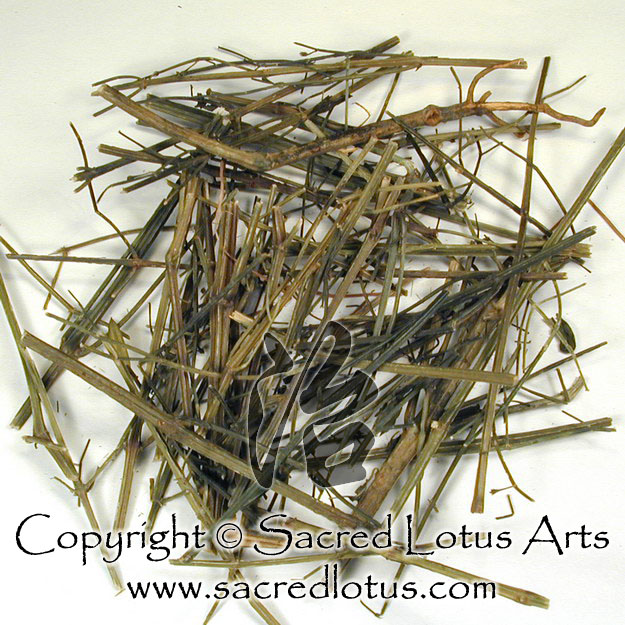
Materia Medica Data
- Temperature
- Cold
- Nature & Flavour
- Bitter, Cold
- Channels Entered
- LI, LU, SI, ST
- Latin (pharmaceutical)
- Herba Andrographitis Paniculatae
- Chinese
- 穿芯连
- Tone Marks
- chuān xīn lián
- Translation
- Thread the heart lotus
Chinese Herb Actions
What is Chuan Xin Lian used for in Chinese medicine?
Chuan Xin Lian is a bitter, cold herb that clears heat and drains fire toxins — classified with the herbs that clear heat and eliminate toxins, and traditionally used for heat and toxin in the Lungs and throat, for damp-heat in the intestines and urinary tract, and topically for damp-heat skin lesions. It is one of the most intensely bitter herbs in the materia medica, which shapes how it is prepared and dosed.
Its traditional actions:
- Clears heat and eliminates toxins — heat and fire in the Lungs and throat presenting as sore, swollen throat, cough or wheezing, and Lung abscess; also used for toxic sores, carbuncles and toxic skin disorders.
- Drains damp-heat, especially from the intestines and lower burner — acute damp-heat diarrhoea and dysenteric disorder, and hot, painful urinary dysfunction (lin syndrome).
- Cools heat toxin externally — applied as a powder, wash or ointment for eczema and weeping, itchy lesions attributed to damp-heat, and for snakebite and insect bites in the folk tradition.
- Enters the Lung, Large Intestine, Small Intestine and Stomach channels — which is why its use clusters around the respiratory tract, the gut and the urinary tract rather than the deeper yin organs.
It is a comparatively late addition to the Chinese materia medica. Long used in Indian (Ayurvedic and Siddha, as kalmegh) and Southeast Asian traditions, it entered mainstream Chinese practice in the modern era and is now widely used for acute infectious heat patterns.
Source: our own herb record (category, nature and flavour, channels, indications), cross-referenced against multiple online sources and published materia medica consensus. Traditional-use framing; not medical advice.
Chinese Herb Dosage
What is the typical dosage of Chuan Xin Lian?
Our record gives 9–15 g in decoction, or 1–1.5 g as a powder, with the practical note that the powdered form is usually taken in capsules because the herb is extremely bitter. In practice the powder or pill form is often preferred over decoction for exactly that reason: the taste is difficult for many patients, and prolonged boiling is not required to extract its active constituents.
- Decoction — 9–15 g.
- Powder — 1–1.5 g, encapsulated.
- External use — applied as a powder, wash or ointment; no internal dose applies.
- Standardised extracts — commercial Western products are dosed by andrographolide content, not by gram weight of raw herb, and are not interchangeable with the doses above (see research).
Source: our own herb record dosage entry, cross-referenced against multiple online sources. Reference only — not a prescription.
Chinese Herb Contraindications & Cautions
Are there cautions for Chuan Xin Lian?
Yes — our record's core caution is that long-term use may injure the Stomach qi. Chuan Xin Lian is bitter and cold, and bitter cold herbs used at length can weaken digestion, producing poor appetite, loose stools, abdominal discomfort and nausea. It is a short-course herb for acute heat patterns, not a maintenance herb.
- Spleen and Stomach deficiency-cold — poor appetite, loose stools, cold intolerance; use is inappropriate or requires warming, digestion-protecting herbs alongside.
- Pregnancy — traditionally avoided. Animal work supports caution: extracts have been shown to relax uterine smooth muscle by blocking voltage-operated calcium channels, and to alter plasma progesterone in pregnant rats. These are animal findings, not human data, but they align with the traditional caution.
- Male fertility (animal data) — repeated animal studies report reversible antifertility effects of andrographolide on the testis and epididymal sperm, and androgen suppression in rats. A phase I human study of the fixed combination Kan Jang found no effect on semen quality over the period studied. The picture is unsettled; a precautionary flag is reasonable for men actively trying to conceive.
- Gastrointestinal and skin reactions — the most common adverse events in clinical trials are mild gastrointestinal upset and skin/rash reactions (see toxicity).
- Autoimmune disease and immunosuppressant therapy — the herb is immunologically active in laboratory models; practitioner supervision is sensible in these patients. Precautionary, not a demonstrated clinical problem.
Source: our own herb record caution; adverse-event data from the systematic reviews cited under research; animal reproductive data PMID 11351359, PMID 10439479, PMID 10960897, PMID 34479074; human semen-quality study PMID 16008115. Reference information, not medical advice.
Chinese Herb Toxicity & Overdose
Is Chuan Xin Lian toxic or safe?
Preparations of the whole herb have a good safety record; concentrated pharmaceutical injections derived from andrographolide do not. This distinction is the single most important safety fact about this herb, and it is easy to miss because the same plant name sits behind both.
- Herbal preparations — a systematic review and meta-analysis of adverse events across 262 clinical studies concluded that herbal preparations of the plant are essentially safe, with reported reactions mainly mild-to-moderate gastrointestinal and skin/subcutaneous effects.
- Andrographolide-derivative injections — the same review found that in 9,490 participants receiving injections of andrographolide derivatives, 383 (4.04%) reported adverse drug reactions; 55 patients experienced life-threatening anaphylactic shock and three deaths were attributed to the injections. These are hospital pharmaceutical products used in China, not herbal medicine, and they should not be conflated with a decoction or capsule.
- Adverse-event frequency in trials — a separate safety meta-analysis of oral monotherapy found serious adverse events very rare (pooled incidence 0.02 per 1,000 patients from randomised trials) but non-serious adverse events very common (pooled incidence 102.6 per 1,000 from randomised trials), most often gastrointestinal and skin-related.
- Liver enzymes — a 2025 systematic review of trials in mild-to-moderate COVID-19 noted mild adverse events, primarily liver enzyme elevations, which resolved without severe complications.
Sources: PMID 35153776, PMC 8831758 (adverse effects of andrographolide derivative medications vs herbal preparations); PMID 33372366, DOI 10.1002/pds.5190 (safety systematic review and meta-analysis); PMID 40822451, PMC 12351123 (COVID-19 systematic review, adverse events). Neutral reference facts, not a safety guarantee.
Herb-Drug Interactions
Does Chuan Xin Lian interact with medications?
No well-established clinical herb–drug interactions are documented for Chuan Xin Lian, but there is enough laboratory and animal signal to warrant practitioner awareness — particularly for patients on anticoagulants, blood-glucose-lowering drugs, or narrow-therapeutic-index medicines metabolised by cytochrome P450 enzymes.
- Cytochrome P450 (laboratory) — andrographolide inhibits CYP3A4 expression and metabolic activity in modified Caco-2 cells, and andrographolide and 14-deoxy-11,12-didehydroandrographolide inhibit cytochrome P450 enzymes in HepG2 hepatoma cells. Human hepatic microsome and rat studies have also examined P450 effects. These are in vitro and animal results; no human interaction study confirms clinical significance.
- Warfarin (animal) — andrographolide has been reported to influence warfarin pharmacokinetics in rats. Animal data only; a precautionary flag for patients on anticoagulation, not a demonstrated human interaction.
- Blood-glucose-lowering drugs (animal) — a pharmacokinetic/pharmacodynamic interaction with glyburide has been modelled in diabetic rats.
- Immunosuppressant therapy — theoretical, based on the herb's immunological activity in laboratory models; flagged for practitioner confirmation rather than demonstrated.
Sources: PMID 21925256 (CYP3A4, Caco-2); PMID 21219911 (CYP inhibition, HepG2); PMID 21365364 (human hepatic P450 activities in vitro); PMID 19041297 (rat hepatic P450); PMID 29983086, PMC 6130436 (warfarin pharmacokinetics in rats); PMID 26762235 (glyburide interaction in diabetic rats). Preclinical context; patients should confirm with their prescriber.
Western / Biomedical Research
Chinese Herb Clinical Studies & Research
Provided as research context — a summary of published biomedical study, not a therapeutic or medical claim.
Is there modern research on Chuan Xin Lian (Andrographis paniculata)?
Yes — and unusually for a Chinese herb, a substantial part of it is human clinical research on acute respiratory tract infection. The largest synthesis, a 2017 systematic review and meta-analysis of 33 randomised controlled trials in 7,175 patients, reported that A. paniculata improved cough (standardised mean difference −0.39; 95% CI −0.67 to −0.10) and sore throat (SMD −1.13; 95% CI −1.37 to −0.89) versus placebo, and shortened time to symptom resolution versus usual care. The authors were explicit that the methodological quality of the included trials was overall poor and that the findings should be interpreted cautiously.
What was actually studied matters. Most of this evidence comes from commercially manufactured, standardised extracts dosed by andrographolide content — not from a traditional decoction of the raw herb at the doses given above. The two are not interchangeable, and the trial literature seldom reported manufacturing or quality-control details.
- Respiratory tract infection (systematic review) — 33 randomised trials, 7,175 patients; benefit for cough, sore throat and overall symptom scores versus placebo and usual care; no major adverse events, minor adverse events mainly gastrointestinal; trial quality poor and heterogeneous.
- KalmCold / AP-Bio (standardised leaf extract) — a phase III double-blind randomised placebo-controlled trial in 300 participants with uncomplicated upper respiratory viral infection found significantly lower WURSS-21 symptom scores in both the 200 mg/day and 400 mg/day extract groups versus placebo on day 3, but not on days 5 or 7. Objective secondary measures (nasal mucus weight, mucociliary clearance, interleukin-8) trended favourably without reaching significance.
- Kan Jang (fixed combination with Eleutherococcus senticosus) — a randomised, quadruple-blind, placebo-controlled trial in 86 adults with mild COVID-19 (90 mg andrographolides daily for 14 days alongside supportive care) reported interim results on symptom duration and inflammatory markers. Note this is a two-herb product, not Chuan Xin Lian alone.
- COVID-19 (systematic review and meta-analysis, 2025) — pooling six randomised trials in 660 adults with mild-to-moderate COVID-19, single-herb A. paniculata products showed no significant improvement in fever resolution (RR 1.12; 95% CI 0.90–1.38) or cough resolution (RR 0.98; 95% CI 0.74–1.31) versus antivirals or supportive care, and no significant differences in C-reactive protein or interleukin-6. A useful counterweight to more enthusiastic reporting.
- Chemistry and pharmacology — the characteristic constituents are diterpene lactones, principally andrographolide, neoandrographolide and 14-deoxy-11,12-didehydroandrographolide, reviewed alongside antimicrobial pharmacology and clinical safety and efficacy.
Overall: a real but imperfect clinical evidence base for symptomatic relief in acute respiratory infection, negative results for COVID-19 outcomes, and a large preclinical literature (antiviral, anti-inflammatory, anticancer) that has not been translated into clinical proof. None of this is a treatment recommendation.
Sources: PMID 28783743, PMC 5544222, DOI 10.1371/journal.pone.0181780 (systematic review and meta-analysis, 33 RCTs; erratum PMID 30427943, PMC 6235384); PMID 36842634, DOI 10.1016/j.ctim.2023.102934 (KalmCold/AP-Bio phase III RCT); PMID 36015163, PMC 9415141 (Kan Jang mild COVID-19 RCT interim analysis); PMID 40822451, PMC 12351123 (COVID-19 systematic review and meta-analysis); PMID 33923529, PMC 8072717 (phytochemistry, antimicrobial pharmacology and clinical safety review). Research context, not a therapeutic claim.
Chinese Herb Notes
How is Chuan Xin Lian different from other heat-clearing, toxin-resolving herbs?
Chuan Xin Lian is distinguished by its extreme bitterness, its strong drying action, and its reach across the respiratory, digestive and urinary tracts at once — where several of its neighbours in the same category are narrower in scope. It is used for acute, hot, toxic presentations rather than for lingering deficiency-heat.
- Jin Yin Hua and Lian Qiao — sweeter and lighter, they release exterior heat as well as clearing toxin, so they suit the early stage of a warm-heat disease. Chuan Xin Lian is more purely internal and more drying.
- Ban Lan Gen — strongly focused on the throat and on toxic heat with sore throat; Chuan Xin Lian covers the throat but also the intestines and urinary tract.
- Pu Gong Ying and Bai Jiang Cao — sores, abscesses and intestinal abscess; less used for cough and wheezing than Chuan Xin Lian.
- Yu Xing Cao — the closer Lung analogue for Lung abscess and phlegm-heat cough, but it is not as bitter or as drying.
Common pairings: with Ban Lan Gen or Jin Yin Hua for toxic heat sore throat; with Huang Lian or Huang Bai for damp-heat in the intestines; with Pu Gong Ying for toxic sores. (Traditional formula context, not treatment advice.)
Note on the Chinese characters: our record writes the name as 穿芯连, while the herb is standardly written 穿心莲 (chuān xīn lián, “thread-through-the-heart lotus”) — which is also what our own English translation of the name renders. Readers searching either form are looking at the same herb, Andrographis paniculata. The identity field is left unchanged pending owner confirmation.
Source: our own herb record and category placement; comparative differentiation cross-referenced against multiple online sources and published materia medica consensus.
Sources & References
Compiled and edited by Thomas Dehli, Founder & Editor, Sacred Lotus Updated
The information here is referenced from numerous sources — teachers, practitioners, class notes from Five Branches University, the books below, and the published research literature, with citations given as resolvable PubMed identifiers. Where sources disagree, I have flagged the discrepancies directly. If facts couldn't be verified, I have left them out. How we source our content.
Reference information for students and practitioners — not medical advice. Consult a qualified practitioner. Terms of use.
Chinese Herbs Books & References
 https://amzn.to/3WfB3DK
 https://amzn.to/3DR1VUh
 https://amzn.to/42aMz73
 https://amzn.to/3PuD4bt