
Xiao Xian Xiong Tang
Minor Sinking Into the Chest Decoction
- Category
- Formulas that Treat Phlegm
- Subcategory
- Formulas that Clear Heat and Transform Phlegm
- Ingredients
- 3 herbs
Actions
What does Xiao Xian Xiong Tang do?
Xiao Xian Xiong Tang clears heat, transforms phlegm, and opens (unblocks) the chest — it loosens a clump of phlegm-heat lodged just below the heart, in the epigastrium and lower chest, using only three herbs built around a classic bitter-descending / acrid-opening pairing.
The three ingredients divide by role:
- Chief: Gua Lou (whole trichosanthes fruit) clears heat from the chest, transforms sticky phlegm-heat, and moves it downward and out via the stool, without the harshness of a true purgative.
- Deputies: Huang Lian (bitter, cold) drains heat and disperses the stuffiness below the heart; Ban Xia (acrid, warm) dries dampness, transforms phlegm, and redirects rebellious qi downward. Together they form an “acrid-opening, bitter-descending” pair — Huang Lian’s cold checks Ban Xia’s warmth (so it does not add heat), while Ban Xia’s acrid, drying action keeps Huang Lian’s cold from congealing the phlegm.
Source: Sacred Lotus sources & references + Bensky & Barolet, Formulas & Strategies (chief/deputy analysis; acrid-opening/bitter-descending pairing). Traditional-use framing; not medical advice.
Indications
What is Xiao Xian Xiong Tang used for?
Xiao Xian Xiong Tang treats “minor chest bind” (xiao jie xiong) — phlegm-heat clumping in the epigastrium and chest that is milder and more superficial than the water-heat binding of Da Xian Xiong Tang (Major Decoction Sunk in the Chest). Heat combines with turbid phlegm, and the two lodge together below the heart: the heat makes the phlegm sticky and hard to disperse, while the phlegm traps the heat.
Its classic clinical presentation:
- Focal distention and fullness in the epigastrium/chest that feels soft to the touch but is painful on pressure — unlike Da Xian Xiong Tang’s stone-hard mass that is painful even without pressure.
- Cough with thick, yellow, difficult-to-expectorate sputum, sometimes with a stifling sensation in the chest.
- Tongue: yellow, greasy coat, reflecting phlegm-heat.
Sources describe the pulse two ways: some (and our legacy field) give “floating and slippery” — read as the pathogen sitting relatively superficially, less deeply bound than Da Xian Xiong Tang’s deep, tight pulse — while others give “slippery and rapid,” emphasizing the heat component. Both descriptions appear in reputable modern sources; they are not contradictory so much as different emphases (depth vs. heat), so both are noted here rather than silently picking one.
Source: Sacred Lotus sources & references on pattern/tongue + Bensky & Barolet, Formulas & Strategies. Traditional-use framing; not medical advice.
Western Uses:
What is Xiao Xian Xiong Tang used for in modern practice?
In modern practice Xiao Xian Xiong Tang is referenced for conditions where a Western clinician would find phlegm/mucus and inflammation-type heat signs in the chest or upper digestive tract. Practitioners have traditionally applied its phlegm-heat-clearing pattern to acute and chronic bronchitis with thick yellow sputum, acute/chronic gastritis and reflux-type epigastric fullness, and — per its “phlegm and blood stasis” angina pattern — as an adjunct alongside conventional care for chest-oppression symptoms associated with coronary heart disease.
These biomedical correlates are offered as a reference to the formula’s traditional use, not as a claim that it treats any disease. Contemporary study is largely preclinical/mechanistic, with one clinical network meta-analysis noted under research. Any use for a diagnosed condition belongs with a qualified practitioner and appropriate medical care.
Source: traditional-use correlates summarized from Bensky & Barolet, Formulas & Strategies, cross-checked against modern clinical/pharmacology literature (see research). Reference only, not a treatment claim.
Ingredients
3 substances in Xiao Xian Xiong Tang — each links to its full herb monograph.
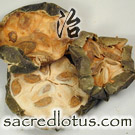 Gua Lou24-30 gcrushedCool and Transform Phlegm-Heat
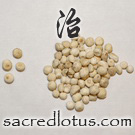 Ban Xia9-12 gGinger friedWarm Herbs that Transform Phlegm-Cold
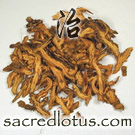 Huang Lian3 gClear Heat and Dry Dampness
Preparation & dosage
How is Xiao Xian Xiong Tang prepared?
Classically, the Gua Lou is decocted alone first, then the other two herbs are added. The whole trichosanthes fruit is crushed and simmered by itself for a period to draw out its heat-clearing, phlegm-moistening action before Huang Lian and Ban Xia (ginger-processed) are added and cooked together; the strained decoction is traditionally taken warm in divided doses.
Source: Sacred Lotus sources & references + Bensky & Barolet, Formulas & Strategies (classical Shang Han Lun preparation sequence). Reference only.
Decoction. Reference relative amounts (Sacred Lotus sources & references): Gua Lou (whole fruit, crushed) 24-30 g; Huang Lian 3 g; Ban Xia (ginger-fried) 9-12 g — an approximate 5:1:3 ratio of Gua Lou to Huang Lian to Ban Xia. Gua Lou traditionally decocted alone first, then Huang Lian and Ban Xia added. Reference only; not a prescription.
Safety — read before use
What are the cautions for Xiao Xian Xiong Tang?
Xiao Xian Xiong Tang is built on cold, bitter, heat-clearing herbs, so it is inappropriate without genuine phlegm-heat signs. It should not be used for cold-phlegm patterns (thin, white, easily-expectorated sputum; a cold, non-tender chest/epigastrium) or where the Spleen and Stomach are already deficient and cold, since Huang Lian’s bitter cold can further injure digestion, causing loose stools or reduced appetite.
- Not for severe/deep binding: if the epigastric-to-abdominal pain is stone-hard and unbearable even without pressure, that is Da Xian Xiong Tang’s territory (a stronger, purgative formula) — Xiao Xian Xiong Tang is too mild for it.
- Spleen-Stomach deficiency/cold: use cautiously, or modify, if digestion is already weak.
- Pregnancy: contains Ban Xia — use only under professional guidance.
Source: Bensky & Barolet, Formulas & Strategies (cautions for heat-clearing/phlegm-transforming formulas; comparison to Da Xian Xiong Tang). Traditional-use framing; not medical advice.
Originally Appeared In:
- On Cold Damage (Shang Han Lun)
Notes:
How is Xiao Xian Xiong Tang different from Da Xian Xiong Tang and other related formulas?
Xiao Xian Xiong Tang and Da Xian Xiong Tang (Major Decoction Sunk in the Chest) both come from the Shang Han Lun and both treat a “chest bind” pattern, but they differ sharply in severity and mechanism. Da Xian Xiong Tang treats a deep, severe binding of heat with fluid (water-heat) using the drastic purgatives Da Huang, Mang Xiao, and Gan Sui — pain is stone-hard from chest to lower abdomen and unbearable even without pressure. Xiao Xian Xiong Tang treats a milder, more superficial binding of phlegm-heat alone (no fluid accumulation) confined to the epigastrium, with pain only on pressure.
- vs Da Xian Xiong Tang: choose the major formula only for severe, hard, unremitting pain with constipation and a deep, forceful pulse; Xiao Xian Xiong Tang is far gentler.
- vs Xiao Chai Hu Tang: both address discomfort in the area below the heart, but Xiao Chai Hu Tang harmonizes Shao Yang (alternating chills/fever, chest-and-rib-side fullness) rather than clearing a local phlegm-heat clump.
- Common modifications: add Zhi Ke and Jie Geng to strengthen the opening/regulating of chest qi; add Chen Pi or Fu Ling to reinforce phlegm transformation when dampness is more prominent.
Source: Bensky & Barolet, Formulas & Strategies (Shang Han Lun chest-bind formula comparisons).
Clinical Studies & Research:
Is there modern research on Xiao Xian Xiong Tang?
Yes, mostly preclinical network-pharmacology and mechanistic work, plus one clinical network meta-analysis. A 2023 network meta-analysis of 26 randomized controlled trials (2,098 participants) comparing six Chinese herbal formulas added to conventional care for angina pectoris with a phlegm-and-blood-stasis pattern included a modified Xiaoxianxiong decoction, which ranked highest for overall response-rate improvement and performed strongly on inflammatory markers (hs-CRP) — though a different formula (modified Zhi Shi Xie Bai Gui Zhi Tang) ranked best overall across outcomes. Separately, network-pharmacology and cell-line studies have modeled possible anticancer and anti-atherosclerotic mechanisms.
- Angina pectoris / phlegm-blood-stasis pattern (clinical synthesis): network meta-analysis of 26 RCTs; modified Xiaoxianxiong decoction ranked highest for response-rate improvement (PMID 37454248).
- Non-small-cell lung cancer (preclinical): network pharmacology (156 disease-matched targets, 20 survival-associated) plus cell-line assays reported dose-dependent growth inhibition via the PI3K-AKT pathway (PMID 34938346).
- Atherosclerosis (preclinical): UHPLC-Q Exactive MS/MS chemical profiling (59 compounds) with network pharmacology and experimental validation identified candidate targets and pathways (DOI 10.1002/bmc.70062).
Sources: PubMed 37454248; PubMed 34938346; DOI 10.1002/bmc.70062 (Biomedical Chromatography, 2025). Research context, not a therapeutic claim; direct clinical trial evidence remains limited.
Sources & References
Compiled and edited by Thomas Dehli, Founder & Editor, Sacred Lotus Updated
The information here is referenced from numerous sources — teachers, practitioners, class notes from Five Branches University, the books below, and the published research literature, with citations given as resolvable PubMed identifiers. Where sources disagree, I have flagged the discrepancies directly. If facts couldn't be verified, I have left them out. How we source our content.
Reference information for students and practitioners — not medical advice. Consult a qualified practitioner. Terms of use.
Chinese Formulas Books & References
 https://amzn.to/4fYI3f8
 https://amzn.to/4j55NRA
 https://amzn.to/4gMROyv
 https://amzn.to/4h7msSK