
Ke Xue Fang
Coughing of Blood Formula
- Category
- Formulas that Stop Bleeding
- Subcategory
- Formulas that Clear Heat and Stop Bleeding
- Ingredients
- 5 herbs
Actions
What does Ke Xue Fang do?
Ke Xue Fang (Coughing of Blood Formula) clears Liver Fire, cools the Blood, transforms heat-phlegm, and astringes the Lungs to stop the cough itself. It treats hemoptysis caused by Liver Fire scorching the Lungs — the classic “wood insulting metal” pattern — by removing the fire that is driving the bleeding rather than by direct hemostatic action.
The five ingredients divide by role:
- Chief: Qing Dai (Indigo) and Zhi Zi (Gardenia Fruit) clear Liver Fire at its source and cool the Blood, addressing the pattern’s root.
- Deputies: Gua Lou Ren (Trichosanthes Seed) and Fu Hai Shi (Pumice) clear heat and transform the thick, sticky phlegm that Liver Fire generates in the Lungs, while moistening Lung dryness.
- Assistant: He Zi (Myrobalan Fruit) astringes the Lungs and contains the counterflow of Lung qi, stopping the cough that is driving the bleeding.
No ingredient is a dedicated hemostatic herb; by clearing the fire that forces blood from the vessels, the bleeding is expected to settle on its own.
Source: Sacred Lotus sources & references + role analysis per Bensky & Barolet, Formulas & Strategies methodology, cross-checked against additional published formula references. Traditional-use framing; not medical advice.
Indications
What is Ke Xue Fang used for?
Ke Xue Fang treats hemoptysis — coughing up blood-streaked sputum — caused by Liver Fire attacking and injuring the Lungs. When Liver Fire flares upward along the Wood-to-Metal relationship, it scorches Lung fluids into thick phlegm and damages the fine vessels of the Lung, producing blood-tinged sputum together with clear signs of Liver-Fire excess.
Its classic clinical presentation:
- Core sign: cough with blood-streaked, thick sputum.
- Liver-Fire signs: chest or rib-side pain, irritability, a bitter taste or dry throat, red cheeks, constipation.
Tongue and pulse: Sacred Lotus sources & references lists a yellow coat and a wiry, rapid pulse; published formula references commonly describe the tongue body itself as red as well, consistent with heat at the Blood level.
Source: Sacred Lotus sources & references on pattern/tongue/pulse + Bensky & Barolet, Formulas & Strategies, cross-checked against additional published formula references. Traditional-use framing; not medical advice.
Western Uses:
What is Ke Xue Fang used for in modern practice?
In modern practice, Ke Xue Fang is referenced for hemoptysis (coughing blood) arising in conditions such as pulmonary tuberculosis, bronchiectasis, and acute or chronic bronchitis — contexts where Western medicine recognizes blood-tinged sputum from irritated or damaged airways.
These biomedical correlates describe the formula’s traditional use pattern, not a claim that it treats any diagnosed disease. Any coughing of blood, especially if heavy or recurrent, needs prompt medical evaluation; direct clinical-trial evidence for this formula itself is limited (see research).
Source: traditional-use correlates cross-checked across multiple published formula references; reference only, not a treatment claim.
Ingredients
5 substances in Ke Xue Fang — each links to its full herb monograph.
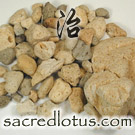 Fu Hai Shi9 gCool and Transform Phlegm-Heat
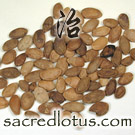 Gua Lou Ren9 gCool and Transform Phlegm-Heat
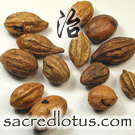 He Zi6-9 gAstringe, Stabilize, Bind
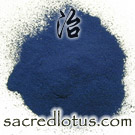 Qing Dai6-9 gClear Heat and Eliminate Toxins
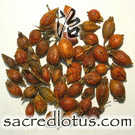 Zhi Zi9 gDrain Fire
Preparation & dosage
How is Ke Xue Fang prepared?
Ke Xue Fang is prepared as a decoction of its five ingredients. Reference amounts: Qing Dai 6–9 g, Zhi Zi 9 g, Gua Lou Ren 9 g, Fu Hai Shi 9 g, He Zi 6–9 g.
Source: Sacred Lotus sources & references/preparation fields, cross-checked against published formula references for consistent reference dosages. Reference only, not a prescription.
Decoction. Reference amounts: Qing Dai 6-9 g; Zhi Zi 9 g; Gua Lou Ren 9 g; Fu Hai Shi 9 g; He Zi 6-9 g. Reference only.
Safety — read before use
What are the cautions for Ke Xue Fang?
Ke Xue Fang is a cold, fire-clearing formula for an excess Liver-Fire pattern, so it is not appropriate for deficiency-type bleeding or coughs of a cold nature. Its bitter, cold ingredients can injure Spleen-Stomach function with prolonged use.
- Avoid in Lung-Kidney Yin deficiency (e.g., blood-streaked sputum with afternoon fever, night sweats, and a thin rapid pulse) — a deficiency-heat pattern that calls for nourishing formulas instead.
- Avoid with Spleen qi deficiency and loose stools, and with Wind-Cold cough or thin white phlegm — the formula’s cold nature can worsen both.
- Pregnancy: contains cold, descending, Blood-level herbs — use only under professional guidance.
- Any significant or recurrent coughing of blood warrants prompt medical evaluation; this formula does not substitute for that care.
Source: cross-checked across multiple published formula references (contraindications for cold, fire-clearing stop-bleeding formulas). Traditional-use framing; not medical advice.
Originally Appeared In:
- Teachings of Dan Xi (Dan Xi Xin Fa)
Notes:
How is Ke Xue Fang different from Bai He Gu Jin Tang?
Both formulas address coughing with blood-streaked sputum, but from opposite root causes. Ke Xue Fang targets an excess pattern — Liver Fire scorching the Lungs, marked by irritability, a bitter taste, and a wiry rapid pulse — while Bai He Gu Jin Tang targets a deficiency pattern of Lung-Kidney Yin with empty heat, marked by afternoon fever, night sweats, and a thin rapid pulse.
In practice the two are differentiated by excess versus deficiency signs, and Ke Xue Fang is sometimes followed by a nourishing, Yin-building formula once the acute Fire has been cleared.
Source: pattern differentiation cross-checked across multiple published formula references (Liver-Fire excess vs. Lung-Kidney Yin deficiency).
Clinical Studies & Research:
Is there modern research on Ke Xue Fang?
No clinical trials or pharmacological studies of the whole five-herb formula were found in PubMed/PMC as of this review — direct evidence is absent, not negative. What exists is preclinical, herb-level research on two of its members that is consistent with the formula’s traditional actions.
- Qing Dai (chief herb): a comprehensive pharmacology review documents anti-inflammatory, antioxidant, and immunomodulatory activity for indigo naturalis, alongside its traditional use for hemoptysis (PMID 34135755).
- He Zi (assistant herb): a water-extracted polysaccharide fraction from Terminalia chebula suppressed citric-acid-induced cough in animal studies, supporting its traditional antitussive role (PMID 23878602).
Sources: PubMed 34135755; PubMed 23878602. Herb-level, largely preclinical evidence; not a claim of formula-level clinical efficacy.
Sources & References
Compiled and edited by Thomas Dehli, Founder & Editor, Sacred Lotus Updated
The information here is referenced from numerous sources — teachers, practitioners, class notes from Five Branches University, the books below, and the published research literature, with citations given as resolvable PubMed identifiers. Where sources disagree, I have flagged the discrepancies directly. If facts couldn't be verified, I have left them out. How we source our content.
Reference information for students and practitioners — not medical advice. Consult a qualified practitioner. Terms of use.
Chinese Formulas Books & References
 https://amzn.to/4fYI3f8
 https://amzn.to/4j55NRA
 https://amzn.to/4gMROyv
 https://amzn.to/4h7msSK