

Chi Shao (Red Peony Root)
Radix Rubrus Paeoniae Lactiflorae Red Peony Root
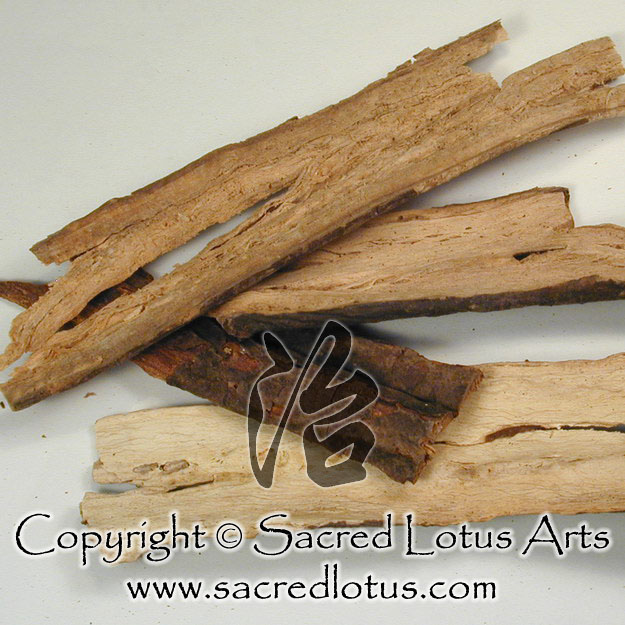
Materia Medica Data
- Category
- Herbs that Cool the Blood
- Temperature
- Slightly Cold
- Nature & Flavour
- Sour, Bitter, Slightly Cold
- Channels Entered
- LIV, SP
- Latin (pharmaceutical)
- Radix Rubrus Paeoniae Lactiflorae
- Chinese
- 赤芍
- Tone Marks
- chì sháo
- Translation
- Red Peony
Chinese Herb Actions
What is Chi Shao (Red Peony Root) used for in Chinese medicine?
Chi Shao is a sour, bitter, slightly cold herb entering the Liver and Spleen channels, classified among the herbs that cool the blood — traditionally used to clear heat and cool the Blood, invigorate Blood and dispel stasis, and clear Liver Fire, for patterns of heat entering the Blood, Blood stasis with pain or masses, and ascending Liver Fire.
Its main traditional actions:
- Clears Heat and cools the Blood — for heat in the Blood level causing fever, a red-purple tongue, skin blotches (macules), and bleeding; also for gynecological disorders arising from heat in the Blood, such as dysmenorrhea or menorrhagia.
- Invigorates Blood, removes stagnation and swelling — for amenorrhea, dysmenorrhea, acute inflammations, abdominal pain, and abdominal masses; also used for swelling and stagnation following internal or external injury (trauma), rashes, and abscess.
- Clears Liver Fire — for ascending Liver Fire affecting the eyes, with redness and swelling.
Source: Sacred Lotus reference content, cross-checked against Bensky & Barolet and Chen & Chen, Chinese Herbal Medicine: Materia Medica (cool-the-blood category). Traditional-use framing; not medical advice.
Chinese Herb Dosage
What is the typical dosage of Chi Shao (Red Peony Root)?
Roughly 4.5–9 g in decoction — the part used is the root, dried and typically left unpeeled (distinguishing it from the processed Bai Shao). This is consistent with standard materia medica ranges for the herb.
Source: Sacred Lotus reference content; standard materia medica dosage ranges. Reference only — not a prescription.
Chinese Herb Combinations:
- Bai Shao (Radix Albus Paeoniae Lactiflorae)
- Chi Shao (Radix Rubrus Paeoniae Lactiflorae)
Chinese Herb Contraindications & Cautions
Are there cautions for Chi Shao (Red Peony Root)?
Chi Shao is contraindicated in patterns of Blood deficiency, and for amenorrhea arising from cold due to deficiency — its cooling, Blood-moving action is unsuited to these deficiency-cold presentations. As a Blood-invigorating herb, materia medica sources also advise caution in pregnancy.
- Bleeding risk (reference note) — because Chi Shao moves Blood, combining it with anticoagulant or antiplatelet medication warrants practitioner awareness (see Drug Interactions).
Source: Sacred Lotus reference content (legacy contraindication); Bensky & Barolet / Chen & Chen materia medica consensus for the pregnancy/Blood-invigorating caution.
Chinese Herb Toxicity & Overdose
Low. Chi Shao is not flagged as toxic or endangered in this site’s database, and materia medica sources do not report significant toxicity at standard decoction doses. The main practical caution is bleeding risk from its Blood-invigorating action — in pregnancy, or alongside anticoagulant/antiplatelet therapy — supported by the antiplatelet pharmacology below.
Source: materia medica consensus; pharmacology research (below). Reference note, not a safety guarantee.
Herb-Drug Interactions
No dedicated clinical herb–drug interaction trial has been published, but preclinical pharmacology supports caution. Compounds isolated from Paeonia lactiflora — including paeoniflorin — inhibited platelet aggregation and blood coagulation in vitro (PMID 20824965). This is a theoretical basis for additive bleeding risk if Chi Shao is combined with anticoagulant or antiplatelet drugs (e.g. warfarin, aspirin, clopidogrel); practitioner awareness/monitoring is reasonable. (Precautionary, not a demonstrated clinical interaction.)
Western / Biomedical Research
Chinese Herb Clinical Studies & Research
Provided as research context — a summary of published biomedical study, not a therapeutic or medical claim.
Is there modern research on Chi Shao (Radix Paeoniae Rubra / Paeonia lactiflora)?
Yes — mostly preclinical pharmacology, plus one small human trial. Paeoniflorin is the principal active monoterpene glycoside studied, with reported cardiovascular-protective, anti-inflammatory, antioxidant, and antiplatelet activity.
- Human clinical (single RCT) — a double-blind, placebo-controlled randomized trial in 60 adults with moderately severe acute pancreatitis gave a coloclyster (rectal instillation) of red peony root granules (15 g twice daily for 7 days) alongside standard care; versus placebo it reported faster fever and abdominal-pain resolution, quicker return of bowel function, and greater reductions in inflammatory markers (IL-6, TNF-α) and CT severity scores. Note the administration route (rectal, not oral decoction) and that this is a single, small trial — treat as preliminary.
- Preclinical cardiovascular/anti-inflammatory — a Paeonia lactiflora root extract and its isolated compounds reduced early-atherosclerosis biomarkers in cell and mouse models: suppressed TNF-α-induced monocyte adhesion, lower VCAM-1 expression, reduced NF-κB signaling, and lower pro-inflammatory cytokines (TNF-α, IL-6, CCL2). Cell/animal evidence, not clinical proof.
- Preclinical antiplatelet/anticoagulant — compounds isolated from Paeonia lactiflora and P. suffruticosa (paeoniflorin, paeonol, benzoylpaeoniflorin, benzoyloxypaeoniflorin) inhibited platelet aggregation and blood coagulation in vitro, consistent with the traditional Blood-invigorating action. Laboratory research, not a clinical bleeding-risk finding.
Human clinical evidence remains limited to the single pancreatitis trial (non-oral route); most support for Chi Shao’s traditional actions is preclinical.
Sources: PMID 32774431, PMC 7396111, DOI 10.1155/2020/8401239 (randomized placebo-controlled trial); PMID 34679642, PMC 8532938, DOI 10.3390/antiox10101507 (atherosclerosis biomarkers, preclinical); PMID 20824965 (platelet aggregation/coagulation, preclinical). Research context, not a therapeutic claim.
Chinese Herb Notes
How is Chi Shao (Red Peony) different from Bai Shao (White Peony), and what are its key combinations?
Chi Shao (red peony root) clears heat and moves Blood stasis — Bai Shao (white peony root) nourishes Blood and softens/calms the Liver. Both derive from the same plant, but Bai Shao is processed (boiled, peeled) to emphasize a sour, nourishing, yin-preserving action, while Chi Shao is left unpeeled and used instead to cool the Blood and invigorate Blood stasis. In practice they represent near-opposite strategies: Bai Shao tonifies and holds, Chi Shao clears and moves.
Key combinations, grounded in this site’s formula data:
- Chi Shao + Sheng Di Huang + Mu Dan Pi — the classic Blood-cooling trio, as in Xi Jiao Di Huang Tang (Rhinoceros Horn and Rehmannia Decoction, Chi Shao 9–12 g) and Qing Wen Bai Du Yin (Chi Shao 6–12 g) — for heat entering the Blood level with fever, bleeding, or rash.
- Chi Shao + Dang Gui + Chuan Xiong + Tao Ren + Hong Hua — an invigorate-Blood combination seen in Bu Yang Huan Wu Tang (Chi Shao 4.5 g, qi-and-Blood stasis after stroke/paralysis) and Xue Fu Zhu Yu Tang (Chi Shao 6 g, Blood stasis in the chest).
- Chi Shao also appears in Sheng Ma Ge Gen Tang (6–9 g), Xian Fang Huo Ming Yin (3 g, toxic swelling/early-stage abscess), and Zai Zao San (3 g). (Traditional formula context, not treatment advice.)
Note: Sacred Lotus records Chi Shao’s Latin source as Paeonia lactiflora only. Several materia medica sources (and the Chinese Pharmacopoeia) note that commercial Chi Shao may also be sourced from the related species Paeonia veitchii (sometimes distinguished in trade as “Chuan Chi Shao”); both are used interchangeably as Chi Shao in practice, so this is a sourcing nuance rather than a factual conflict — flagged here for reference.
Source: Sacred Lotus ingredient links (amounts per formula above); differentiation per Bensky & Barolet / Chen & Chen materia medica consensus.
This herb is incompatible with:
- Li Lu (Radix Et Rhizoma Veratri)
Sources & References
Compiled and edited by Thomas Dehli, Founder & Editor, Sacred Lotus Updated
The information here is referenced from numerous sources — teachers, practitioners, class notes from Five Branches University, the books below, and the published research literature, with citations given as resolvable PubMed identifiers. Where sources disagree, I have flagged the discrepancies directly. If facts couldn't be verified, I have left them out. How we source our content.
Reference information for students and practitioners — not medical advice. Consult a qualified practitioner. Terms of use.
Chinese Herbs Books & References
 https://amzn.to/3WfB3DK
 https://amzn.to/3DR1VUh
 https://amzn.to/42aMz73
 https://amzn.to/3PuD4bt