
Zhu Ye Shi Gao Tang
Lophatherus and Gypsum Decoction
- Category
- Formulas that Clear Heat
- Subcategory
- Formulas that Clear Heat from the Qi Level
- Ingredients
- 7 herbs
Actions
What does Zhu Ye Shi Gao Tang do?
Zhu Ye Shi Gao Tang clears lingering heat, generates fluids, augments the qi, harmonizes the Stomach, and directs rebellious qi downward. It is written for the aftermath of a warm-febrile (or cold-damage) disease: the main pathogen has largely resolved, but residual heat lingers in the qi level while the illness has left both qi and fluids depleted.
The seven ingredients divide by role:
- Chief: Shi Gao (Gypsum) clears the lingering qi-level heat and stops thirst; Ren Shen (Ginseng) augments the depleted qi and generates fluid — together they address both halves of the pattern, heat and deficiency.
- Deputies: Mai Men Dong (Ophiopogon) enriches yin and moistens the Stomach and Lung, reinforcing Ren Shen's fluid-generating action; Zhu Ye (Dan Zhu Ye / Lophatherum) clears heat and relieves vexation, reinforcing Shi Gao.
- Assistant: Ban Xia (Pinellia) harmonizes the Stomach and directs rebellious qi downward to stop nausea and dry heaves; its warm, drying nature is restrained by the much larger quantity of Shi Gao and Mai Men Dong, so it does not further damage fluids.
- Envoys: Zhi Gan Cao and Geng Mi (rice) protect Stomach qi, harmonize the other herbs, and moderate the coldness of Shi Gao so the formula does not injure the middle.
Source: Sacred Lotus sources & references + Bensky & Barolet, Formulas & Strategies (chief/deputy/assistant/envoy analysis). Traditional-use framing; not medical advice.
Indications
What is Zhu Ye Shi Gao Tang used for?
Zhu Ye Shi Gao Tang treats residual heat with qi and fluid damage in the recovery stage of a febrile disease — the classical picture of someone whose fever has largely broken but who remains weak, thirsty, and unsettled because the illness burned through both qi and fluids before the heat fully cleared.
Its classic clinical presentation:
- Lingering heat / fluid damage: low-grade fever, irritability or vexation, thirst with a desire to drink, dry mouth, lips, and throat.
- Qi deficiency: fatigue, weakness, shortness of breath, a thin or weak voice.
- Rebellious qi: nausea, dry heaves, or a tendency to vomit; sometimes a stifling sensation in the chest and restlessness or insomnia.
Tongue and pulse: the tongue is red with a scanty, dry, or peeled coating; the pulse is deficient, thin, and rapid (or weak and rapid).
Source: Sacred Lotus sources & references on pattern/tongue/pulse + Bensky & Barolet, Formulas & Strategies; Chen & Chen, Chinese Medical Herbology and Pharmacology. Traditional-use framing; not medical advice.
Western Uses:
What is Zhu Ye Shi Gao Tang used for in modern practice?
In modern practice Zhu Ye Shi Gao Tang (and modified variants of it) is referenced for the convalescent phase after a febrile illness, and for dryness and nausea arising from cancer treatment. Practitioners have traditionally applied its heat-clearing, fluid-generating, qi-tonifying pattern to post-viral fatigue with dry mouth and low-grade fever, and modified/compound versions have been studied specifically for radiotherapy-related esophagitis and for phlegm-heat exacerbations of chronic lung disease.
These biomedical correlates are offered as a reference to the formula’s traditional use, not as a claim that it treats any disease. The clinical trial evidence below used a modified or compound version of the formula, not the unmodified classical seven-herb decoction (see research and the discrepancy note there). Any use for a diagnosed condition belongs with a qualified practitioner and appropriate medical care.
Source: traditional-use correlates summarized from Bensky & Barolet, Formulas & Strategies, cross-checked against the research studies cited below; reference only, not a treatment claim.
Ingredients
7 substances in Zhu Ye Shi Gao Tang — each links to its full herb monograph.
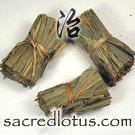 Dan Zhu Ye9-15 gDrain Fire
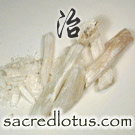 Shi Gao30 gDrain Fire
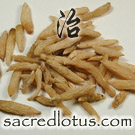 Mai Men Dong9-18 gTonify Yin
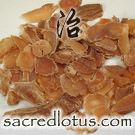 Ren Shen6 gTonify Qi
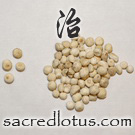 Ban Xia9 gWarm Herbs that Transform Phlegm-ColdNo specimen photographGeng Mi12-15 gTonify Qi
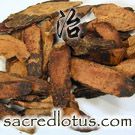 Zhi Gan Cao3-6 gTonify Qi
Preparation & dosage
How is Zhu Ye Shi Gao Tang prepared?
Zhu Ye Shi Gao Tang is prepared as a water decoction, following the classical Bai Hu Tang-family method: Shi Gao is typically decocted first to extract its mineral constituents, the remaining herbs are added, and the Geng Mi (rice) is simmered along with the herbs until the rice is fully cooked — a traditional sign that the decoction is ready and that Stomach qi is being protected throughout.
Source: Bensky & Barolet, Formulas & Strategies (standard preparation method for the Bai Hu Tang family). Traditional-use framing; not medical advice.
Decoction. Reference relative amounts (from Sacred Lotus sources & references): Shi Gao 30 g (often decocted first); Dan Zhu Ye (Zhu Ye) 9-15 g; Ren Shen 6 g (Dang Shen may substitute at a higher dose); Mai Men Dong 9-18 g; Ban Xia 9 g; Zhi Gan Cao 3-6 g; Geng Mi (rice) 12-15 g, simmered with the other herbs until cooked. Reference only; not a prescription.
Safety — read before use
What are the cautions for Zhu Ye Shi Gao Tang?
Zhu Ye Shi Gao Tang is written specifically for the depleted, residual-heat stage of a febrile disease, not for a full-strength exterior fever or for cold-pattern deficiency. Used at the wrong stage or in the wrong pattern, its cold, moistening ingredients can do more harm than good.
- Not for early-stage exterior conditions where fever, chills, and a pathogen at the exterior are still present — this formula is for the aftermath, once the exterior has resolved.
- Not for vigorous excess heat with intact fluids and no qi deficiency — Bai Hu Tang (without the qi-tonifying additions) is the more appropriate choice when there is no underlying depletion.
- Caution with Spleen-Stomach yang deficiency or cold: Shi Gao is cold and Mai Men Dong is rich and moistening; both can aggravate loose stools, poor appetite, or cold limbs in a patient whose middle qi is yang-deficient rather than heat-and-fluid depleted.
Source: Bensky & Barolet, Formulas & Strategies (cautions for heat-clearing, fluid-generating formulas containing Shi Gao and Mai Men Dong). Traditional-use framing; not medical advice.
Originally Appeared In:
- On Cold Damage (Shang Han Lun)
Notes:
How is Zhu Ye Shi Gao Tang different from Bai Hu Jia Ren Shen Tang and Bai Hu Tang?
Zhu Ye Shi Gao Tang is essentially Bai Hu Jia Ren Shen Tang (White Tiger Decoction Plus Ginseng) with Zhi Mu removed and Zhu Ye, Ban Xia, and Mai Men Dong added — the formula shifts from strongly clearing excess qi-level heat toward gently clearing lingering heat while nourishing fluids and directing rebellious qi downward, matching a later, more depleted stage of the same illness.
- vs Bai Hu Tang: Bai Hu Tang (Shi Gao, Zhi Mu, Zhi Gan Cao, Geng Mi) clears strong, unresolved qi-level heat with high fever and profuse sweating but no significant qi or fluid deficiency; Zhu Ye Shi Gao Tang is for the weaker, depleted aftermath.
- vs Bai Hu Jia Ren Shen Tang: that formula adds Ren Shen to Bai Hu Tang for qi-and-fluid damage with heat still relatively vigorous; Zhu Ye Shi Gao Tang goes further — heat is milder and more residual, and Zhu Ye, Mai Men Dong, and Ban Xia are added to relieve vexation, nourish fluids more richly, and settle rebellious qi (nausea).
- Key substitution: Geng Mi (Chinese rice) may be used interchangeably with Jing Mi in most formularies; both refer to the same rice added to protect Stomach qi and moderate Shi Gao.
Source: Bensky & Barolet, Formulas & Strategies (comparison of the Bai Hu Tang family of formulas); Chen & Chen, Chinese Medical Herbology and Pharmacology.
Clinical Studies & Research:
Is there modern research on Zhu Ye Shi Gao Tang?
Yes, though most published studies use a modified or compound version of the formula rather than the unmodified classical seven herbs, and the evidence base is small. The strongest piece is a human randomized controlled trial of Compound Zhuye Shigao Granule for acute radiation-induced esophagitis in cancer patients; the remaining studies are animal or mechanistic work.
- Radiation-induced esophagitis (clinical RCT, modified formula): a blinded, controlled trial in 120 lung, esophageal, or mediastinal cancer patients receiving chemoradiotherapy found Compound Zhuye Shigao Granule reduced the incidence of grade 2-or-higher acute radiation esophagitis versus the comparator (PMID 28035542).
- Radiation-induced esophagitis (animal, modified formula): in irradiated rats, Compound Zhuye Shigao Granule dose-dependently lessened esophageal tissue injury and cellular infiltration and reduced weight loss (PMID 21486557).
- COPD exacerbation (animal, combined formula): Zhuye Shigao Decoction combined with Qingqi Huatan Pills reduced lung inflammation in a rat model of acute COPD exacerbation, associated with IL-6-mediated JAK1/STAT3 signaling (PMID 35571736).
Sources: PubMed 28035542; PubMed 21486557; PubMed 35571736. Research context, not a therapeutic claim; all three studies used a modified or combination formula rather than the unmodified classical decoction, and direct clinical trial evidence on the base formula remains limited.
Sources & References
Compiled and edited by Thomas Dehli, Founder & Editor, Sacred Lotus Updated
The information here is referenced from numerous sources — teachers, practitioners, class notes from Five Branches University, the books below, and the published research literature, with citations given as resolvable PubMed identifiers. Where sources disagree, I have flagged the discrepancies directly. If facts couldn't be verified, I have left them out. How we source our content.
Reference information for students and practitioners — not medical advice. Consult a qualified practitioner. Terms of use.
Chinese Formulas Books & References
 https://amzn.to/4fYI3f8
 https://amzn.to/4j55NRA
 https://amzn.to/4gMROyv
 https://amzn.to/4h7msSK