
Tuber Dioscoreae Bulbiferae Dioscorea Bulbifera Tober
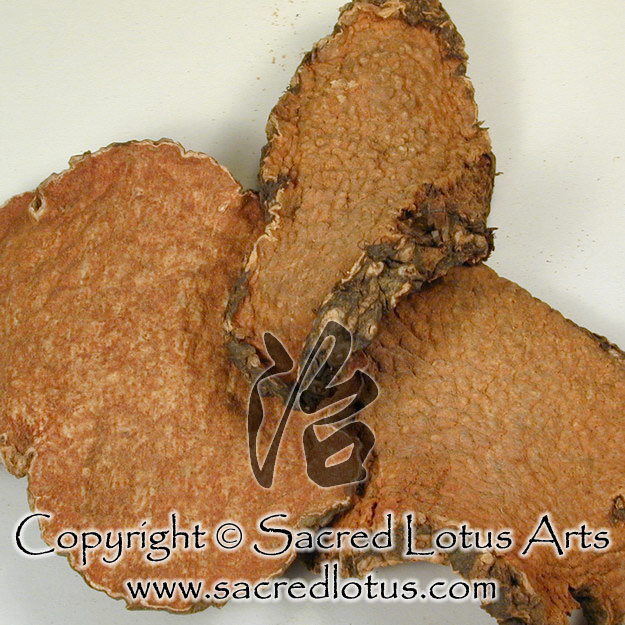
Materia Medica Data
- Temperature
- Neutral
- Nature & Flavour
- Bitter, Neutral
- Channels Entered
- HT, LIV, LU
- Latin (pharmaceutical)
- Tuber Dioscoreae Bulbiferae
- Tone Marks
- huáng yào zĭ
- Translation
- Yellow Medicine
Chinese Herb Actions
What is Huang Yao Zi used for in Chinese medicine?
Huang Yao Zi is the dried tuber of Dioscorea bulbifera, used traditionally to dissipate nodules and reduce goitre, to clear heat and resolve toxins, and to cool the blood and stop bleeding. Our record classifies it as bitter and neutral, entering the Heart, Liver and Lung channels, among the herbs that cool and transform phlegm-heat. The goitre and nodule indication is the one it is best known for, and it is the indication the modern review literature leads with as well.
Its main traditional actions, as held on this record:
- Dissipates nodules and reduces goitre — swellings of the neck and thyroid region, and other palpable lumps treated as phlegm accumulation. This is its defining role.
- Clears heat and resolves toxins — sore throat, animal and snake bite, and, in modern Chinese practice, tumours of the oesophagus, stomach, liver, colon and thyroid. The tumour use is recorded here as documented traditional and modern practice, not as evidence of benefit.
- Cools the blood and stops bleeding — vomiting of blood, coughing of blood, nosebleed and uterine bleeding.
- Stops cough and wheezing — cough, breathlessness, acute and chronic bronchitis, whooping cough and asthma.
Read this page with its safety sections. Huang Yao Zi is not an ordinary herb. It carries a substantial published record of liver injury (see toxicity below), and no herb page should present its indications without that alongside.
Source: Sacred Lotus sources & references (this herb’s recorded actions, category, nature, flavour, channels, translated name and Latin name, as held on file); traditional indications independently described as dispelling nodules and reducing goitre, clearing heat and resolving toxins, and cooling blood to stop bleeding in PMID 41655723, DOI 10.1016/j.jep.2026.121331; goitre, breast lumps and tumours as the popular traditional uses per PMID 32757959, DOI 10.1080/03602532.2020.1800724; published materia medica consensus (Bensky, Materia Medica 3rd ed.; Chen & Chen), cross-referenced against multiple online sources. Traditional-use framing; not medical advice.
Chinese Herb Dosage
What dosage of Huang Yao Zi is recorded in the reference literature?
Our record carries 10–15 g in decoction (Chen & Chen) and 6–15 g in decoction (Bensky). Those figures are reproduced here as bibliographic reference literature, in the same way the site records every published range. They are not a prescription and not a self-use instruction, and for this particular herb the number is the least informative thing on the page.
- Why the figure is not the safety-relevant fact. The liver injury documented for this herb is described in the mechanistic literature as arising from metabolic activation of furan-containing constituents — a route that is not well described by a simple dose ceiling. Our record separately notes that it is not used long term. A reader who takes the gram range as the safety boundary has misread the record.
- Processing is part of the traditional picture. Review literature notes that traditional processing methods such as boiling and roasting, and co-administration with protective herbs, have been studied as ways of reducing its toxicity, and experimental work on processing with licorice juice examines exactly that classical rationale. Recorded as the documented reason processing traditions exist — not as a preparation method.
- Professional context only. This is a restricted, practitioner-dispensed herb. It has no role in self-administration, and this page gives no guidance on obtaining or preparing it.
Source: Sacred Lotus recorded reference ranges (10–15 g, Chen & Chen; 6–15 g, Bensky) and the recorded caution against long-term use, as held on file; metabolic-activation mechanism per PMID 32757959, DOI 10.1080/03602532.2020.1800724; processing and protective-herb co-administration per PMID 41461207, DOI 10.1055/a-2779-6570 and PMID 37913830, DOI 10.1016/j.jep.2023.117372. Reference literature only — not a prescription and not a preparation instruction.
Chinese Herb Contraindications & Cautions
Are there cautions for Huang Yao Zi?
Yes, and they are unusually specific: our own record states that it is not used long term, that it is not used where liver function is already impaired — naming hepatitis and cirrhosis — and that gastrointestinal effects including vomiting, diarrhoea and abdominal pain occur. The reason for the liver caution is set out in the toxicity section below: this herb has a documented herb-induced liver injury record, not a theoretical one.
- Existing liver disease — our record excludes use in hepatic dysfunction, including hepatitis and cirrhosis.
- Duration — our record states it is not for long-term use. Severe outcomes in the published record are associated with prolonged use in particular.
- Gastrointestinal effects — reduced appetite, nausea, vomiting, diarrhoea and abdominal pain are recorded on this file as effects that occur at ordinary doses, not only in overdose.
- Other organ signals reported in review. A 2026 critical review of the species records nephrotoxicity, cardiotoxicity, gastrointestinal irritation and thyroid dysfunction alongside the hepatotoxicity. That is a summary of preclinical and case literature, listed here for completeness.
- Practitioner supervision. This is a herb for qualified professional dispensing only, and this page publishes no monitoring protocol — what testing is appropriate, if any, is a clinical judgement for the practitioner and the patient’s doctor, not something a reference page should specify.
Source: Sacred Lotus sources & references (recorded cautions: no long-term use; not used in hepatic dysfunction including hepatitis or cirrhosis; gastrointestinal effects, as held on file); additional organ-toxicity signals per PMID 41461207, DOI 10.1055/a-2779-6570. Neutral reference disclosures, not usage instructions.
Chinese Herb Toxicity & Overdose
Is Huang Yao Zi toxic to the liver?
Yes. Huang Yao Zi is one of the clearest herb-induced liver injury signals in the Chinese materia medica: more than 100 cases of liver injury attributable to its use in China have been reported over the past half-century, and the responsible constituents and the chemical mechanism have both been identified. This is stated as a matter of published record, not as a prediction about any individual, and not as a reason to panic about a herb most readers will never encounter.
What is actually documented:
- The scale of the clinical record — a 2020 review in Drug Metabolism Reviews states that more than 100 cases of liver injury from use of this herb have been reported in China in the past half-century. Our own record independently describes the picture: jaundice, respiratory distress and toxic hepatitis in severe cases after long-term use.
- The responsible compounds — the furanoditerpenoids diosbulbin B and 8-epidiosbulbin E acetate. Both have been isolated and studied individually, and diosbulbin B in particular has been characterised as an important component responsible for the hepatotoxicity and for covalent protein binding.
- The mechanism — the toxic effect requires oxidation of the furan ring by cytochrome P450 enzymes, chiefly the CYP3A subfamily. The resulting cis-enedial intermediates react with nucleophilic sites on proteins and DNA. Metabolic activation of the furan moiety is what makes the compound hepatotoxic; this has been shown directly in experimental work.
- Corroborating experimental work — hepatotoxicity has been reproduced in mice and rats and characterised by liver-specific metabolomics, integrated metabolomics and proteomics, altered liver microRNA profiles, bile-acid analysis, transporter changes and a purpose-developed mechanism-based exposure biomarker. Fingerprint-toxicity relationship modelling has been used to identify hepatotoxic-equivalent combinatorial markers in the tuber.
- Where the tradition and the science meet — a large body of experimental work asks whether the classical processing and pairing practices actually reduce the toxicity. Licorice (Glycyrrhiza uralensis) juice as a processing excipient, licorice extract, glycyrrhizin, glycyrrhetinic acid, Angelica sinensis, scutellarin, puerarin, paeoniflorin and a fungal polysaccharide have all been tested against the injury in animal models, generally by interfering with the metabolic activation step. These are animal studies of a mechanism, not a protective regimen, and nothing here makes the herb safe to use casually.
- Human trials do not exist — a 2026 critical review of the species notes the complete absence of human trials, alongside phytochemical variability and non-standardised preparations, as the reason clinical translation has stalled.
Why this is worth stating plainly. Most herbs carry a theoretical caution. This one carries a case series, a named toxin, an identified enzyme and a described chemical mechanism. A reference site that soft-pedalled that would be failing the reader.
Sources: PMID 32757959, DOI 10.1080/03602532.2020.1800724 (more than 100 reported cases in China; diosbulbin B and 8-epidiosbulbin E; P450-mediated furan oxidation and cis-enedial intermediates; CYP3A); PMID 35660353, DOI 10.1016/j.phymed.2022.154174 (diosbulbin B and protein covalent binding); PMID 25851819, DOI 10.1007/s00204-015-1495-8 (metabolic activation of the furan moiety); PMID 31626840, DOI 10.1016/j.fct.2019.110887 (8-epidiosbulbin E acetate); PMID 35680040, DOI 10.1016/j.toxlet.2022.05.008 (adduction with reactive metabolite); PMID 20448345 (hepatotoxicity in mice); PMID 28899093, DOI 10.1021/acs.chemrestox.7b00176 and PMID 30052031, DOI 10.1021/acs.chemrestox.8b00066 and PMID 30114519, DOI 10.1016/j.jep.2018.08.014 (metabolomic and proteomic characterisation in rats); PMID 27609015, DOI 10.1177/0960327116666651 (liver microRNA profile); PMID 21465807 (bile-acid based evaluation); PMID 28262508, DOI 10.1016/j.etap.2017.02.023 (hepatic transporters); PMID 35609388, DOI 10.1016/j.phymed.2022.154172 (mechanism-based exposure biomarker); PMID 29323207, PMC 5764974, DOI 10.1038/s41598-017-18929-z (hepatotoxic equivalent combinatorial markers); PMID 31955824, DOI 10.1016/S1875-5364(20)30005-4 (metabolic regulation and differential hepatotoxicity of the furanoids); PMID 37913830, DOI 10.1016/j.jep.2023.117372 and PMID 39778784, DOI 10.1016/j.jep.2025.119319 (licorice processing and protection, animal studies); PMID 36807597, DOI 10.1002/jat.4450; PMID 37794747, DOI 10.1002/jbt.23549; PMID 25382441, DOI 10.5582/bst.2014.01076; PMID 25701748, DOI 10.1016/j.jep.2015.02.031; PMID 39380211, DOI 10.1093/jpp/rgae123; PMID 39686661, DOI 10.1080/01480545.2024.2440451; PMID 41812939, DOI 10.1016/j.ijbiomac.2026.151315 (protective-agent animal studies); PMID 41461207, DOI 10.1055/a-2779-6570 (critical review; absence of human trials; additional organ toxicities); PMID 41655723, DOI 10.1016/j.jep.2026.121331 (benefits, hepatotoxicity and detoxification strategies); recorded toxicity description as held on this site. Neutral reference record of published findings — not a safety assessment of any product, not a monitoring protocol and not medical advice.
Herb-Drug Interactions
Does Huang Yao Zi interact with medications?
No clinical herb–drug interaction study of Huang Yao Zi could be found, but the mechanism of its liver toxicity gives a clear, principled reason for caution: the toxic constituents are activated by cytochrome P450 enzymes, chiefly the CYP3A subfamily, which is also the main metabolic route for a very large share of prescription medicines. Anything that changes CYP3A activity in either direction sits on the same pathway. Experimental work has also examined the herb’s effect on hepatic uptake and efflux transporters (Ntcp, Oatp2, Bsep, Mrp2), which are the transporters involved in a good deal of drug handling and bile-acid disposition. The other obvious point of overlap is any co-administered medicine with its own hepatic risk. None of this is a demonstrated clinical interaction — it is a mechanistic overlap that a prescribing practitioner would want on file. (Precautionary; flagged for practitioner and clinician confirmation.)
Sources: PMID 32757959, DOI 10.1080/03602532.2020.1800724 (CYP3A-mediated metabolic activation); PMID 28262508, DOI 10.1016/j.etap.2017.02.023 (Ntcp, Oatp2, Bsep and Mrp2 in the injury). Mechanistic context, not a clinical interaction claim.
Western / Biomedical Research
Chinese Herb Clinical Studies & Research
Provided as research context — a summary of published biomedical study, not a therapeutic or medical claim.
Is there modern research on Huang Yao Zi (Dioscorea bulbifera)?
Yes — a substantial literature, but it is lopsided: the toxicology is far better developed than the efficacy research, and there are no human clinical trials of the herb. Two recent reviews frame it exactly that way, one titled around the plant being a “double-edged sword” and the other a critical review weighing phytotherapeutic potential against toxicological risk.
- Constituents — steroidal saponins, flavonoids and diterpenoids dominate the tubers and bulbils. Review work notes a chemotaxonomic split, with African material richer in clerodane diterpenoids and Asian material richer in saponins and flavonoids — a real complication for anyone reading the literature as if it described one uniform material. Steroidal sapogenins and glycosides from the rhizome have been isolated and characterised, and several showed cytotoxic activity.
- Thyroid and tumour work — matching the traditional indication — a 2023 study combined network pharmacology with laboratory experiments to examine the plant’s action in thyroid cancer, which is the closest modern analogue to the classical goitre-and-nodule use. Antitumour activity of the rhizome has been reported in vivo; a tuber polysaccharide combined with cyclophosphamide enhanced an anti-cervical-cancer effect while reducing immunosuppression and oxidative stress in mice; antitumour-promoting constituents were identified in mouse epidermal cells; and diosbulbin B — the same compound implicated in the liver injury — has been studied for cell-cycle arrest and apoptosis in non-small-cell lung cancer models. All animal and cell work.
- Other reported activities — antiproliferative, antioxidant, anti-inflammatory, antimicrobial, antidiabetic and neuroprotective effects are reported preclinically; 8-epidiosbulbin E acetate has been examined as a plasmid-curing agent against multidrug-resistant bacteria. Preclinical only.
- Toxicology — by volume this is the largest and most mature part of the literature. It is covered in full in the toxicity section of this page.
Honest summary: the traditional goitre-and-nodule use has some laboratory support pointing in the same direction, and no clinical evidence. The safety literature, by contrast, is specific, mechanistic and clinically grounded. That asymmetry is the fact worth carrying away.
Sources: PMID 41655723, DOI 10.1016/j.jep.2026.121331 (recent advances in benefits and hepatotoxicity); PMID 41461207, DOI 10.1055/a-2779-6570 (critical review; chemotaxonomic split; absence of human trials); PMID 39283965, DOI 10.1002/cbdv.202401408 (ethnobotany, phytochemistry and pharmacology review); PMID 37600377, PMC 10432970, DOI 10.1016/j.heliyon.2023.e18886 (network pharmacology and experimental study in thyroid cancer); PMID 22178682, DOI 10.1016/j.fitote.2011.12.001 (antitumour activity in vivo); PMID 26753518, PMC 4709656, DOI 10.1038/srep19185 (polysaccharide with cyclophosphamide, mouse model); PMID 12230129, DOI 10.1248/bpb.25.1241 (antitumour-promoting constituents); PMID 38761775, DOI 10.1016/j.phymed.2024.155734 (diosbulbin B in non-small-cell lung cancer models); PMID 21165820, DOI 10.1055/s-0030-1250633 and PMID 19842682, DOI 10.1021/np900255h (steroidal saponins and sapogenins); PMID 18718743, DOI 10.1016/j.ijantimicag.2008.05.013 (8-epidiosbulbin E acetate as a plasmid-curing agent). Research context, not a therapeutic claim. Animal and cell findings do not establish clinical benefit in people.
Chinese Herb Notes
What is the difference between Huang Yao Zi and Shan Yao?
They are both Dioscorea — and that is where the resemblance ends. Shan Yao (Dioscorea opposita) is a sweet, neutral, food-grade tonic eaten as a vegetable and dosed at 9–30 g; Huang Yao Zi (Dioscorea bulbifera) is a bitter, restricted, practitioner-only herb with more than a hundred published cases of liver injury behind it. Same genus, opposite ends of the safety spectrum. Getting this pair confused is the single most consequential naming error in this part of the materia medica, and it is the most useful thing on this page.
- Shan Yao (Radix Dioscoreae Oppositae, 山药, Chinese yam) — sweet, neutral; Kidney, Lung and Spleen channels; a tonifying herb; 9–30 g in standard decoction, with much larger single-herb doses recorded for pronounced deficiency; eaten as an ordinary food across East Asia; no toxicity recorded on our file.
- Huang Yao Zi (Tuber Dioscoreae Bulbiferae, air potato) — bitter; Heart, Liver and Lung channels; a phlegm-heat-transforming herb for goitre, nodules and toxic heat; marked toxic on our own file; documented herb-induced liver injury; not used long term.
- Bei Xie (Rhizoma Dioscoreae Hypoglaucae, fish poison yam) — a third Dioscorea on this site, bitter and neutral, Bladder, Liver and Stomach channels, used to separate the clear from the turbid in damp urinary patterns. Different again from both.
Memory hook: Shan Yao you can eat; Huang Yao Zi you cannot. If a product label says “Dioscorea” without a species, that label is not telling you which of these three you have.
Which formulas on this site contain Huang Yao Zi?
None. We checked our own formula records and no formula held on this site lists Huang Yao Zi among its ingredients, and it is not linked to any herb combination in our records. Its classical role is chiefly as a single herb or in small goitre and nodule prescriptions; readers looking for the standard goitre formula in our reference should look at Hai Zao Yu Hu Tang, which is built on seaweed medicinals (Hai Zao, Kun Bu) rather than on this herb.
Identity fields flagged, not corrected. Two things on this record need an owner decision, and we have left both exactly as held. (1) The Chinese characters are missing entirely from this entry — one of a number of records whose character field is blank, and a gap that matters more here than usual, since the characters are what separate this toxic herb from the similarly named non-toxic ones. The name is normally written with three characters meaning “yellow medicine seed/child.” (2) Our nature-and-flavour field reads bitter, neutral, while the standard materia medica commonly adds cold and, more importantly, explicitly marks the herb toxic — and our own toxicity field on this same record already describes it as a toxic herb. The identity line and the toxicity line therefore disagree with each other. Both points are reported for correction rather than changed here.
Source: Sacred Lotus sources & references (the identity, category, channel, dosage and toxicity records for Huang Yao Zi, Shan Yao and Bei Xie, and the composition record for Hai Zao Yu Hu Tang, as held on file); more than 100 reported cases of liver injury in China per PMID 32757959, DOI 10.1080/03602532.2020.1800724; species distinction cross-referenced against multiple online sources. Disambiguation note, not treatment advice.
Sources & References
Compiled and edited by Thomas Dehli, Founder & Editor, Sacred Lotus Updated
The information here is referenced from numerous sources — teachers, practitioners, class notes from Five Branches University, the books below, and the published research literature, with citations given as resolvable PubMed identifiers. Where sources disagree, I have flagged the discrepancies directly. If facts couldn't be verified, I have left them out. How we source our content.
Reference information for students and practitioners — not medical advice. Consult a qualified practitioner. Terms of use.
Chinese Herbs Books & References
 https://amzn.to/3WfB3DK
 https://amzn.to/3DR1VUh
 https://amzn.to/42aMz73
 https://amzn.to/3PuD4bt